A Stronger Case for Strengths Based Dementia Programming
What the new National Institute on Aging report means for activity assessments, meaningful engagement, documentation, and person centered dementia care.

A newly released federal dementia care report reinforces an important direction for Activity Professionals: effective dementia programming should begin with what a resident can still do, not only with what the resident has lost.
In August 2026, the National Institute on Aging released the 2026 Dementia Care and Caregiving Research Summit Report. The report summarizes expert discussions and research priorities identified during a national summit held in March.
One of its most relevant themes for Activity Professionals is the value of a strengths based approach that supports the abilities and skills people living with dementia continue to possess.
Quick Answer: Strengths based dementia programming begins by identifying the resident’s remaining abilities, familiar routines, interests, relationships, and sources of identity. Activities are then adapted so the resident has a genuine opportunity to participate, contribute, connect, and succeed.
This report does not create a new CMS regulation or change the requirements associated with F679 or F680. It does, however, provide valuable insight into the direction of dementia care research, training, and professional practice.
What Is Strengths Based Dementia Care?
Dementia care is frequently organized around deficits.
A resident can no longer remember the date. She cannot complete a complicated craft. He cannot follow the rules of a familiar game. She no longer remembers the names of people she has known for years.
Those changes are real, but they do not describe the whole person.
A strengths based approach identifies the abilities, interests, relationships, routines, and sources of identity that remain. Programming is then adapted around those strengths.
The purpose is not to test the resident or disguise failure as success. It is to create genuine opportunities for involvement, expression, connection, and purpose.
Source: National Institute on Aging, 2026 Dementia Care and Caregiving Research Summit Report
Why This Matters in Senior Living
Activity programming is sometimes treated as an optional collection of entertainment events. In dementia care, it can be far more consequential.
A properly matched activity may help a resident communicate, use retained abilities, maintain a familiar routine, connect with another person, or experience a sense of contribution.
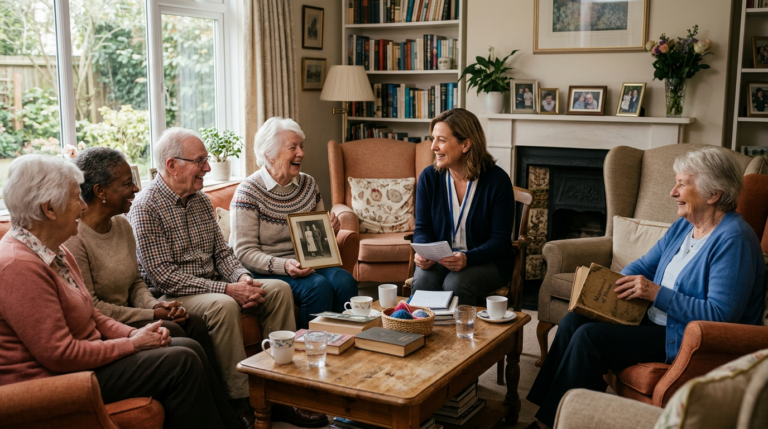
Activity Professionals also observe residents in circumstances that differ from nursing or clinical encounters. A resident who speaks very little may begin singing every word of a familiar song. Repetitive movement may decrease while a resident works with fabric. Another resident may become more communicative when discussing a former occupation.
Activities Can Reveal Remaining Strengths
The resident’s response during an activity can provide valuable information about communication, memory, movement, attention, comfort, identity, and social connection. These observations can help the entire care team understand how the resident experiences the environment.
Federal nursing home regulations already require activity programs to reflect each resident’s comprehensive assessment, care plan, interests, and physical, mental, and psychosocial needs. A strengths based approach supports those existing person centered expectations.
Regulatory reference: 42 CFR §483.24: Quality of Life and Activities
Begin With the Resident’s Abilities
A diagnosis alone does not tell an Activity Professional what will engage a resident.
Two residents with the same dementia diagnosis may have completely different abilities, histories, tolerances, and interests. One may respond immediately to music but become frustrated during group conversation. Another may dislike music but remain deeply engaged while working with plants or watching birds.
Look for Remaining Strengths
What abilities does the resident continue to use successfully?
What captures the resident’s attention?
What familiar motions or routines remain comfortable?
Look for Meaning
What roles have helped this person feel useful and valued?
What experiences create recognition or enjoyment?
What can staff change so the resident can participate successfully?
Document the resident’s specific abilities and responses whenever possible. A general statement such as “enjoys activities” is less useful to the team than a statement such as:
Resident recognizes familiar household objects, follows a demonstrated single step, and remains attentive while folding towels. She smiles, initiates conversation about caring for her family, and often continues the task for 15 to 20 minutes.
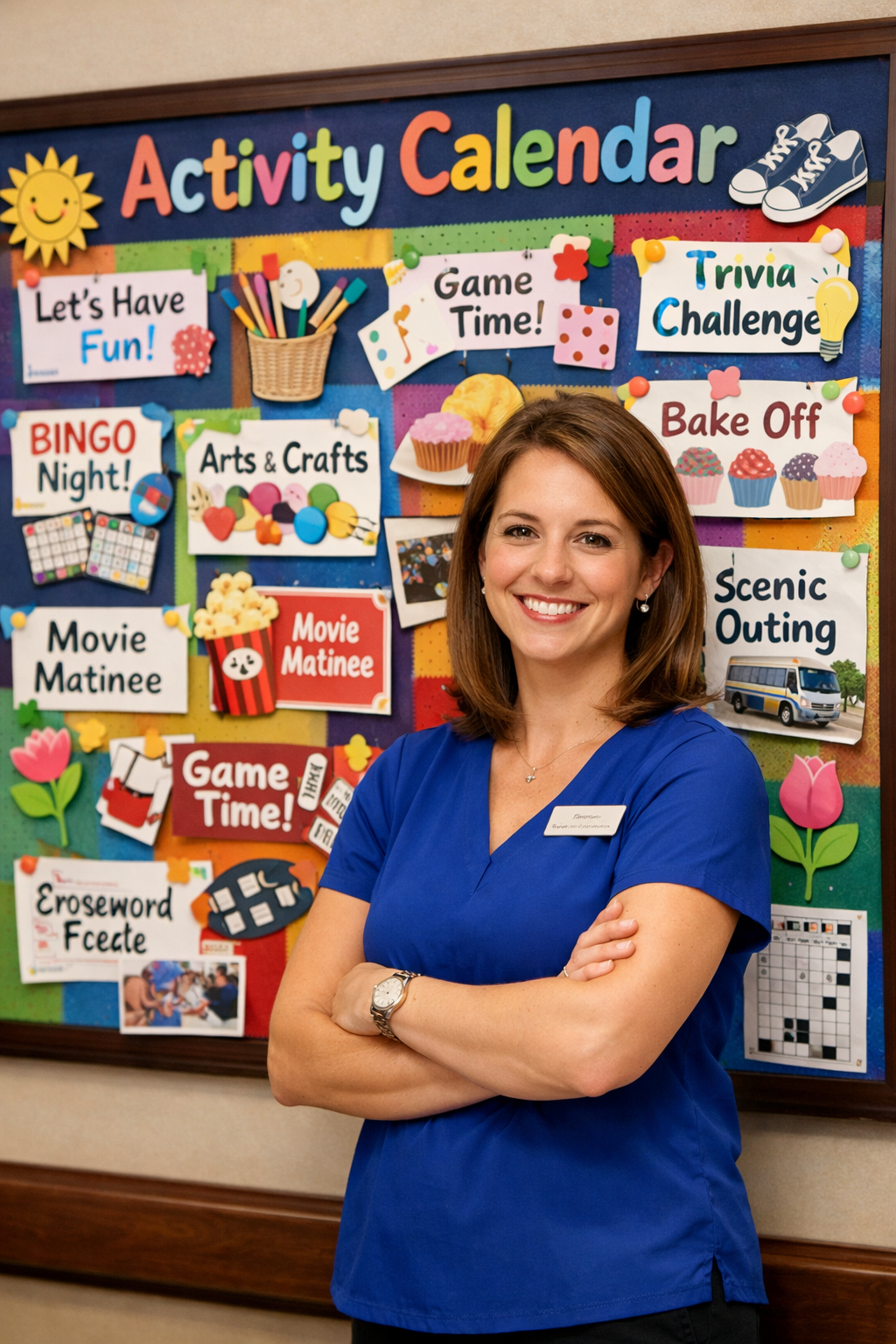
Calendar Club Monthly Activity System
Need fresh ideas that can be adapted around resident interests, abilities, culture, and personal history? Calendar Club gives Activity Professionals practical planning support, printable resources, and monthly inspiration.
Strengths Based Programming in Practice
Imagine a former homemaker who can no longer follow a written recipe independently.
An assessment focused only on limitations might conclude that cooking activities are no longer appropriate.
A strengths based assessment may reveal that she still enjoys stirring batter, identifying familiar ingredients, folding towels, setting a table, or talking about meals she prepared for her family.
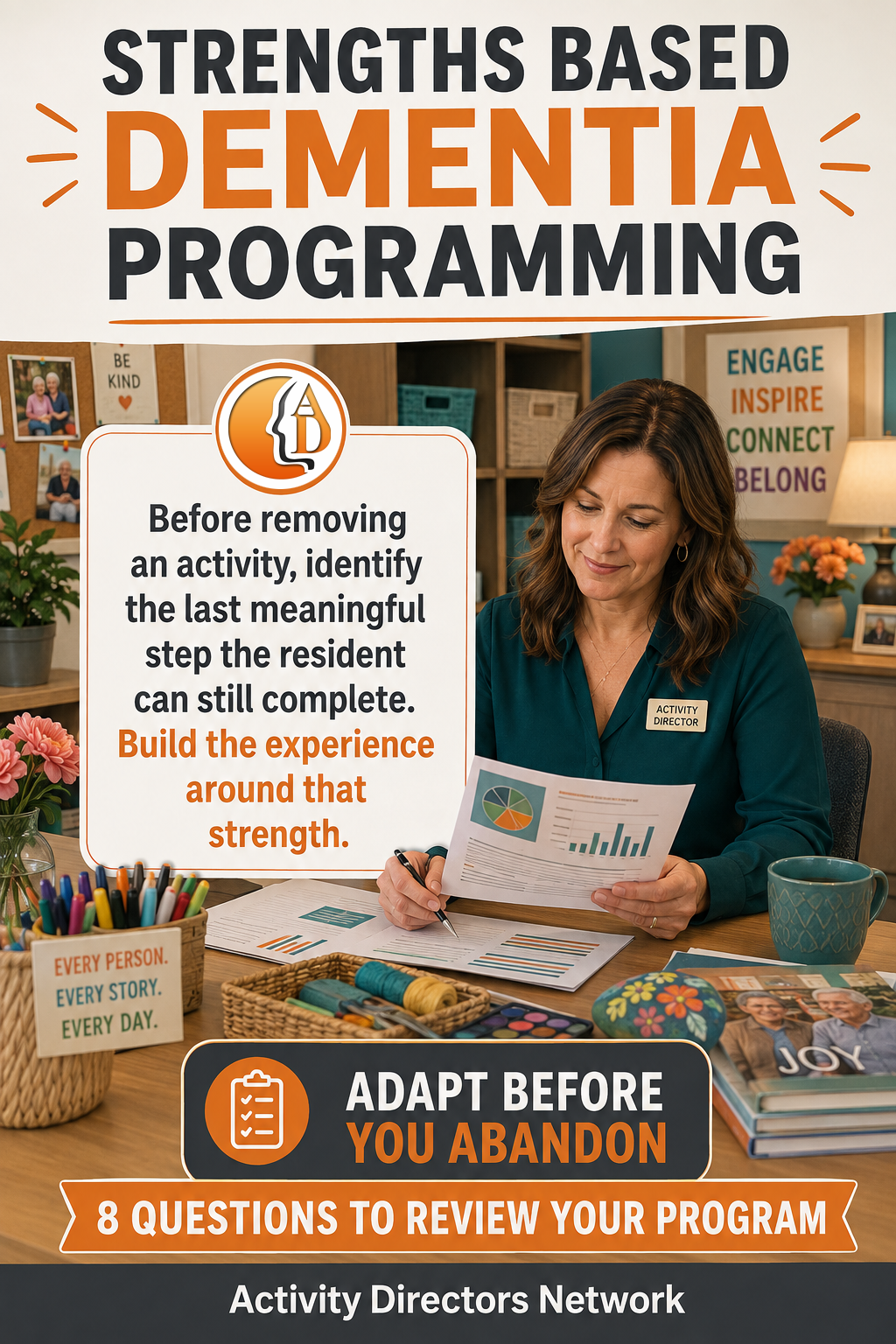
Adapt Before You Abandon
The resident may no longer be able to complete the entire activity independently. That does not mean the activity has lost its value. Look for a dignified point of entry that allows the resident to use a familiar ability.
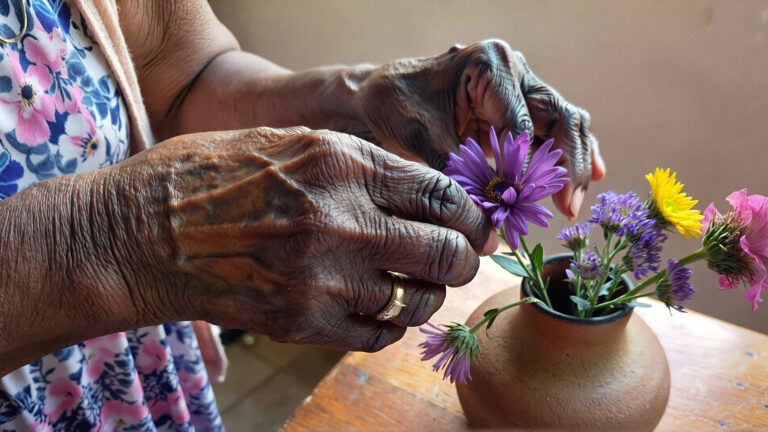
A resident who can no longer complete a woodworking project might still sort smooth pieces of wood, sand a prepared surface, identify familiar tools, or advise someone else about how the project should be assembled.
A former office worker may no longer be able to manage paperwork but may enjoy sorting envelopes, organizing supplies, stamping papers, or delivering a daily announcement.
These are not meaningless tasks provided merely to occupy time. When they are based on the resident’s actual history and preferences, they can reconnect the person with competence, identity, and familiar purpose.
Former Homemaker
Offer towel folding, table setting, recipe discussion, ingredient identification, stirring, flower arranging, or organizing familiar household items.
Former Office Worker
Offer envelope sorting, supply organization, stamping papers, delivering announcements, checking lists, or preparing materials for a group.
Former Craftsperson
Offer safe tool identification, sanding a prepared surface, sorting materials, choosing colors, examining finished projects, or giving advice based on past experience.
Former Gardener
Offer seed sorting, herb identification, watering, flower selection, soil preparation, garden observation, or conversation prompted by familiar plants.
The Difference Between Simplifying and Infantilizing
Adapting an activity does not mean turning it into a child’s activity.
An adult living with dementia remains an adult. Materials, conversation, music, images, and expectations should continue to reflect that person’s age, culture, experiences, and preferences.
- Replace complicated instructions with one or two repeatable steps.
- Prepare materials in advance without making the finished project look childish.
- Offer realistic household or occupational objects instead of toy versions.
- Use adult music, artwork, photography, and conversation topics.
- Provide choices without overwhelming the resident with too many options.
- Allow participation without requiring every resident to produce the same result.
The objective is not to make an adult activity look elementary. It is to remove the barriers preventing the resident from entering it.
Why Activity Assessments Matter
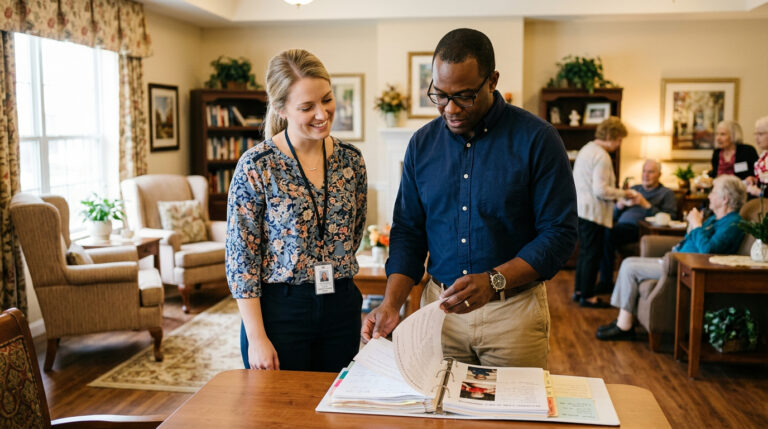
Strengths based programming cannot be produced from a diagnosis alone. It depends on the activity assessment, resident interview, family input, observation, care plan, and progress notes.
A strong assessment should help the Activity Professional identify:
Personal History
- Previous occupations
- Meaningful life roles
- Longstanding interests
- Cultural practices
- Preferred routines
Current Function
- Physical and cognitive abilities
- Communication strengths
- Sensory needs
- Successful cueing approaches
- Signs of comfort or distress
The calendar alone cannot demonstrate individualized programming. The connection between assessment, care planning, delivery, and documentation is what shows that the program is based on resident needs and preferences.
Related reading:
What Surveyors Really Look for in Activity Documentation
Questions to Ask About Your Current Program
- Does the care plan identify abilities and interests that remain, or does it mainly document limitations?
- Are activities adapted so residents can succeed at different levels?
- Do staff understand the difference between helpful cueing and taking over?
- Are residents offered meaningful roles in addition to entertainment?
- Do progress notes describe the resident’s response, assistance required, and abilities demonstrated?
- Are unsuccessful activities adjusted based on observation?
- Do materials and presentation preserve adult dignity?
- Can the department explain how a scheduled activity connects with an assessed resident need or preference?
Turn Remaining Strengths Into Useful Documentation
Good documentation connects the resident’s assessed abilities and interests with the support offered and the resident’s actual response.
Assessment Statement
Resident worked as a carpenter and continues to recognize familiar tools and materials. He enjoys sanding prepared wood, sorting supplies, and discussing previous projects. He benefits from demonstration and short verbal cues.
Progress Note
Resident participated in a 20 minute woodworking program. He identified three familiar tools, sanded a prepared piece with one verbal cue, and discussed furniture he built for his family. He remained attentive and requested to keep the finished piece in his room.
A note stating only “resident attended woodworking” does not capture the same information. Strong documentation records the resident’s choices, abilities, level of assistance, response, and continuing preferences.
The Activity Professional’s Role
The National Institute on Aging report does not prescribe a new activity calendar or mandate a specific intervention. Its importance lies in the broader direction it identifies.
Dementia care must account for the whole person. Research must translate into real care settings. Interventions must work for people with different backgrounds and circumstances. Remaining abilities should be recognized and supported.
Activity Professionals are in a valuable position to put those principles into practice. They can identify remaining strengths, preserve meaningful roles, adapt familiar experiences, record resident responses, and share important observations with the interdisciplinary team.
That is the difference between merely providing an activity and providing person centered dementia care.
Related reading:
One Small Shift for More Meaningful Activities in Senior Living


Strengths Based Dementia Programming
Save this article for activity planning, staff education, and future dementia care discussions.
Frequently Asked Questions
What is strengths based dementia care?
Strengths based dementia care identifies and supports the abilities, interests, relationships, routines, and sources of identity a person continues to possess. It does not ignore impairment. It uses remaining strengths to create meaningful opportunities for participation and connection.
Does the new NIA report change CMS activity requirements?
No. The report identifies research findings, gaps, and priorities. It does not create a new CMS regulation or change F679 or F680. Its strengths based direction is consistent with existing person centered activity requirements.
How can an activity be simplified without infantilizing the resident?
Use dignified adult materials and subjects while reducing the number of steps, preparing materials in advance, demonstrating the task, offering clear choices, and allowing different forms of participation.
How should strengths based dementia activities be documented?
Document the resident’s choice, abilities demonstrated, assistance or cueing required, level of engagement, emotional or behavioral response, and any preference that should guide future programming.