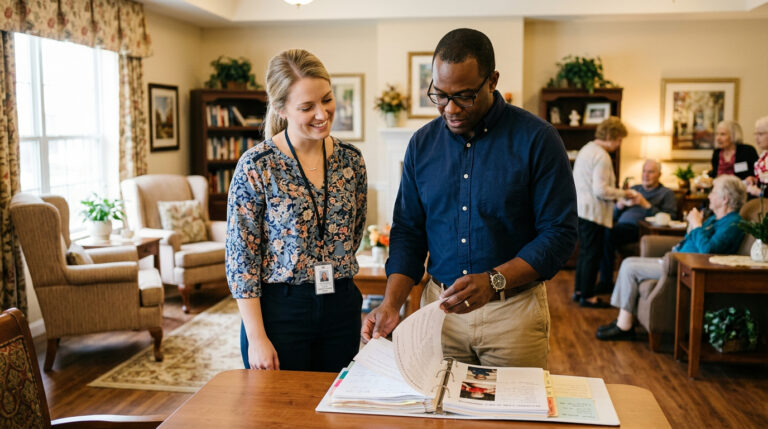
Group Activities for Seniors:
Creating Meaningful Engagement
How thoughtful activities help older adults feel connected, included, emotionally supported, and part of a real community.
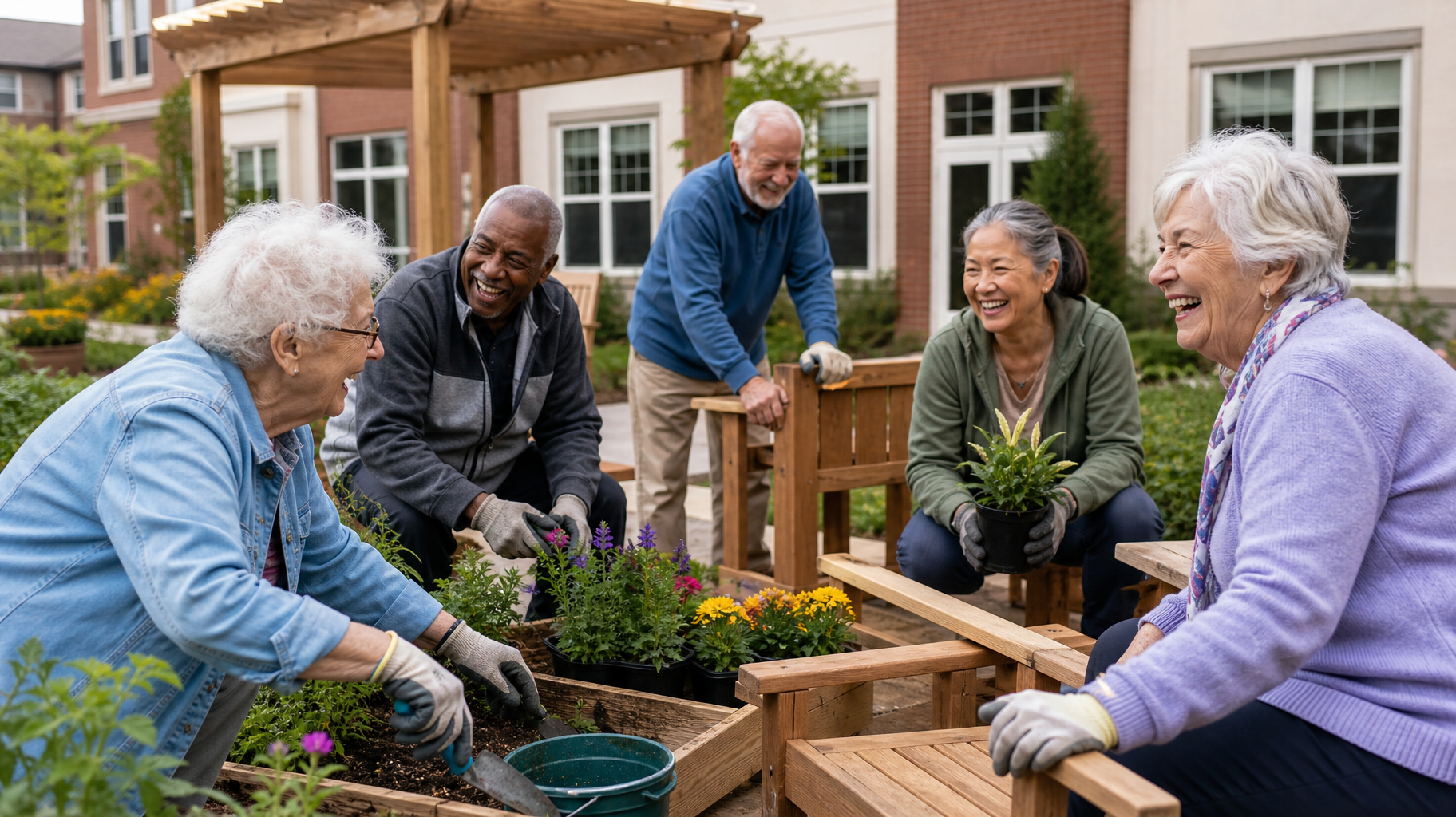
Sometimes the most meaningful activity of the day is not elaborate at all.
It might simply be:
- residents laughing over coffee during morning social hour
- a familiar Frank Sinatra song playing softly in the background
- a group sharing stories about childhood holidays
- someone smiling because another resident remembered their name
The best group activities in senior living are rarely about “keeping people busy.”
They are about helping people feel:
- connected
- included
- emotionally safe
- recognized
- part of something
- valued as individuals
Meaningful engagement is not about filling time.
It’s about helping residents experience connection, comfort, purpose, familiarity, identity, and joy.
Why Group Activities Matter So Much
Loneliness and isolation can affect emotional and physical well-being at any age, but especially later in life after major transitions like retirement, health changes, loss of loved ones, or moving into a care community.
That’s why activities matter so deeply.
A strong activity program helps create rhythm, familiarity, social connection, and opportunities for residents to continue expressing who they are.
The strongest Activity Professionals understand that engagement is not really about the calendar itself.
It’s about creating moments where residents can still feel:
- useful
- socially connected
- creative
- heard
- independent
- emotionally alive
If you want activities to feel more meaningful and less repetitive, this pairs perfectly with:
One Small Shift for More Meaningful Activities in Senior Living
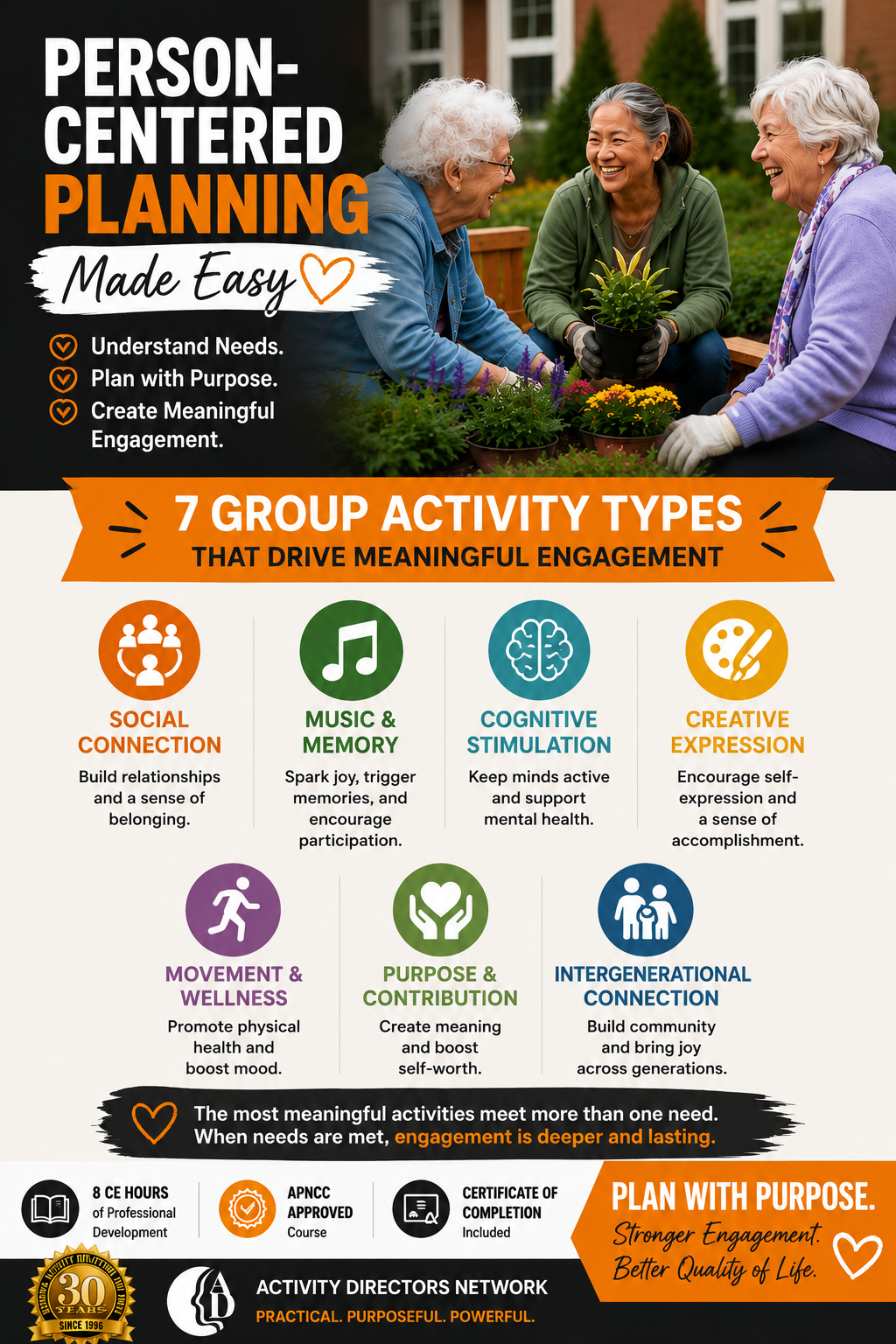
Save these meaningful activity ideas for future senior living programming inspiration.
The Activities Residents Often Remember Most
Interestingly, residents do not always remember the biggest or most expensive events.
Often, they remember:
- the conversation during coffee club
- the song that reminded them of high school
- the joke everyone laughed at during trivia
- the feeling of being included
- someone taking time to listen to their story
Simple social activities are often some of the most powerful:
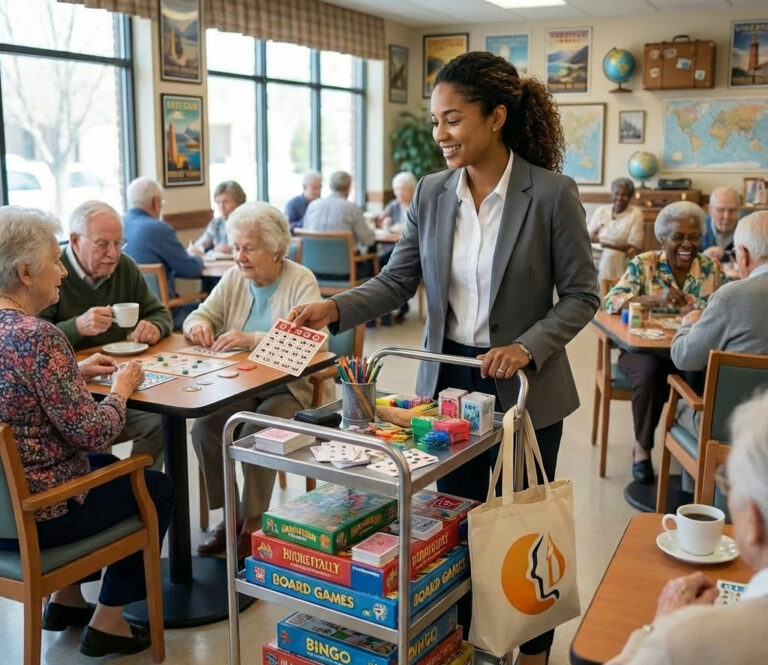
- coffee socials
- conversation circles
- ice cream socials
- birthday celebrations
- happy hours
- resident clubs
- storytelling groups
- intergenerational visits
Questions about childhood memories, favorite music, old jobs, first cars, holidays, or family traditions can naturally open the door to meaningful conversation.
You may also enjoy:
Activity Resource List Ideas That Actually Match Resident Interests
Why Music Activities Work So Well
Music often reaches emotional memory in ways ordinary conversation cannot.
A resident who barely spoke during the morning may suddenly sing every word to a favorite song from the 1950s.
Another resident may begin sharing memories about dances, weddings, military service, road trips, or raising children after hearing a familiar artist.
Music activities help encourage:
- participation
- movement
- memory recall
- social interaction
- emotional expression
- comfort and familiarity
Popular music-based activities include:
- jukebox socials
- name-that-tune
- karaoke
- movement-to-music groups
- resident playlists
- era-themed music hours
Related articles:
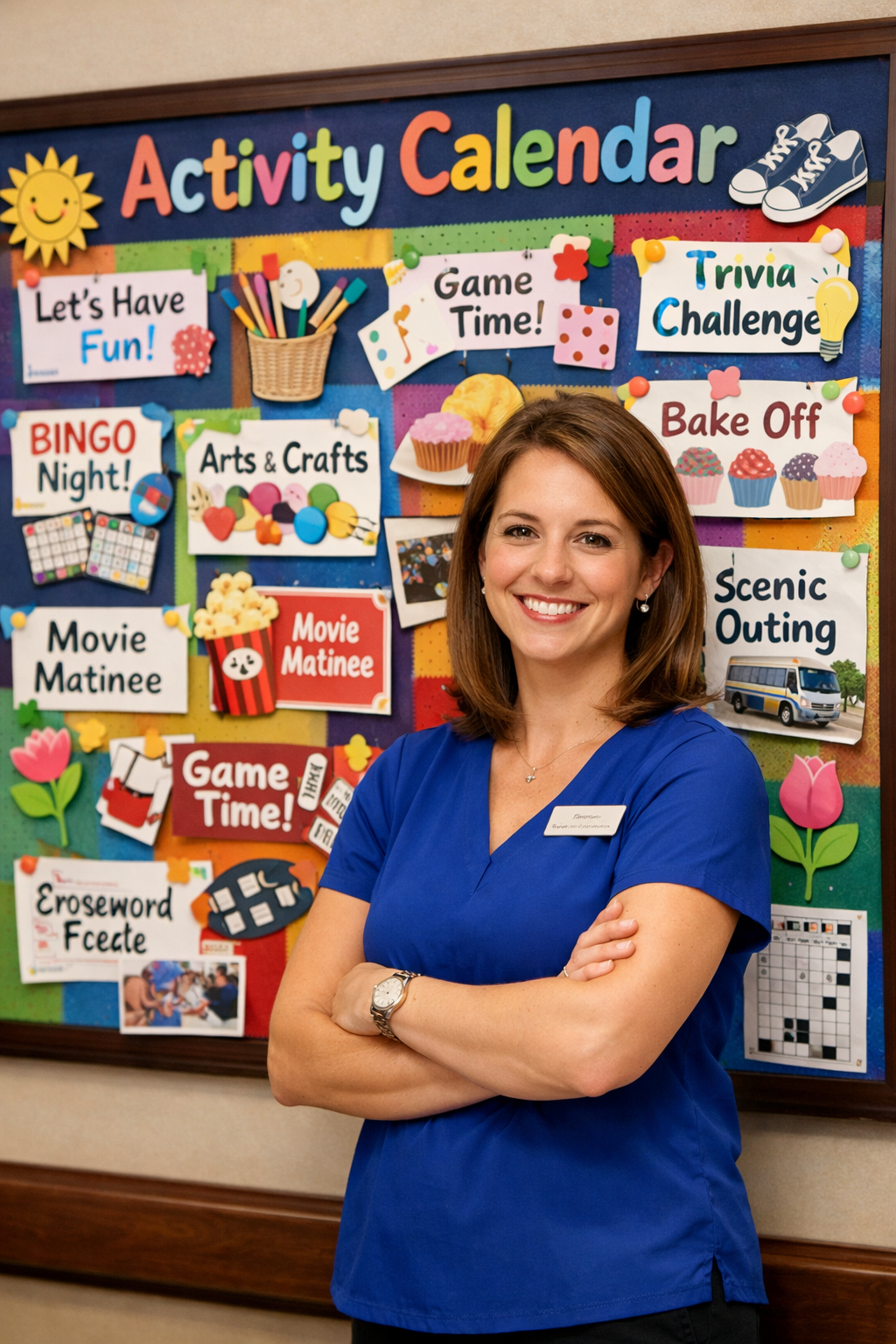
Calendar Club
Calendar Club helps Activity Professionals create stronger monthly programming with fresh activity ideas, themed inspiration, printables, newsletters, and engagement tools designed specifically for senior living communities.
Monthly Themes
Printables
Resident-Centered Ideas
Movement Activities Should Feel Encouraging — Not Intimidating
Physical activities in senior living are most successful when they feel welcoming and adaptable.
Residents should never feel embarrassed about ability level, mobility limitations, or needing modifications.
That’s why some of the best movement activities are simple:
- chair exercises
- walking groups
- balloon volleyball
- stretching circles
- movement-to-music sessions
- gentle dance groups
The goal is not athletic performance.
The goal is helping residents continue feeling physically engaged, socially included, and emotionally encouraged.
Creative Activities Give Residents a Way to Express Identity
Creative programming gives residents opportunities to continue expressing personality, humor, preferences, memories, and emotions.
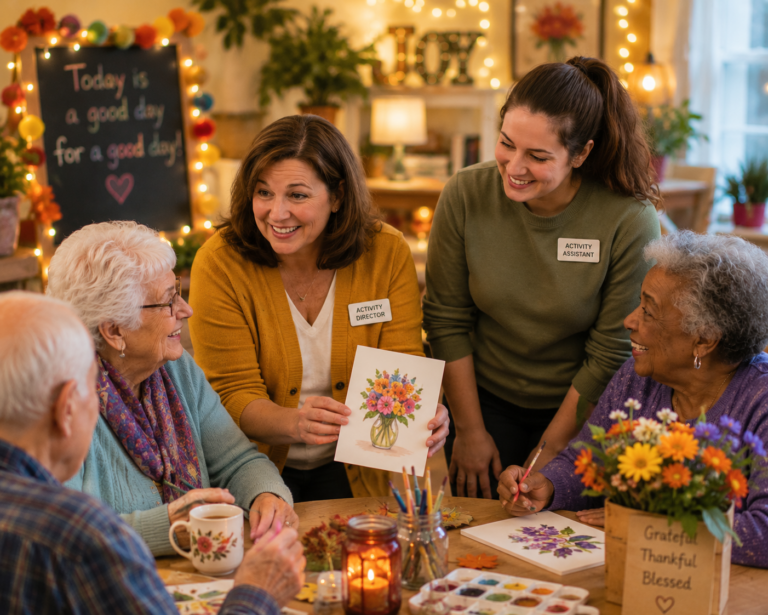
Sometimes a resident who says very little during group conversation becomes fully engaged during painting, flower arranging, coloring, or decorating activities.
Creative activities may include:
- painting
- seasonal crafts
- scrapbooking
- adult coloring
- group murals
- creative writing
- poetry
- memory collages
The strongest creative programs focus less on perfection and more on enjoyment, comfort, and self-expression.
Related reading:
- Why Adult-Oriented Coloring Matters in Senior Living
- Manicure Magic: Elevate Your Activity Program with Salon-Style Self-Care
Memory Care Activities Require a Different Mindset
Memory care programming works best when it focuses less on “success” and more on emotional experience.
Residents living with dementia may still strongly respond to:
- familiar music
- routine
- comforting textures
- visual stimulation
- nature experiences
- warm conversation
- simple participation opportunities
The goal is not testing memory.
The goal is helping residents feel safe, calm, included, and emotionally connected.
Helpful related reading:
- Visual Stimulation for Alzheimer’s Disease and Dmentia
- Familiar Words as a Gentle Bridge in Memory Care
- Missed Signs of Trauma in Senior Care
The Best Activity Departments Feel Human
Residents often remember how an activity made them feel more than the activity itself.
They remember:
- being welcomed
- someone learning their favorite song
- laughing with others
- sharing memories
- feeling included
- feeling emotionally safe
That’s why the best Activity Professionals are not simply planners.
They are relationship-builders, encouragers, facilitators, and emotional anchors within the community.
Related reading: