What Is
Person-Centered Planning?
Why modern Activity Professionals are moving beyond one-size-fits-all programming and focusing more deeply on comfort, connection, purpose, and meaningful engagement.

Over the past several decades, senior living has slowly shifted away from a more institutional model of care and toward something much more personal.
Today, most Activity Professionals understand that meaningful engagement is not simply about keeping residents busy or filling space on a calendar.
It is about understanding the individual resident — who they are, what matters to them, what comforts them, what frustrates them, what gives them confidence, and what helps them feel connected to life around them.
That philosophy sits at the heart of person-centered planning.
In many ways, person-centered planning represents one of the biggest mindset shifts the senior living field has experienced.
Years ago, care environments often operated around routines that primarily supported the needs of the building itself. Residents adapted to the system.
Today, the goal is increasingly the opposite:
How can we adapt the environment, activities, and care approach around the resident instead?
That question changes everything about activity programming.
Quick Answer: Person-centered planning is an approach to care and activity programming that focuses on each resident’s individual needs, preferences, routines, abilities, identity, and quality of life instead of using a generalized one-size-fits-all approach.
Why Person-Centered Planning Became So Important
As long-term care evolved, professionals began recognizing that emotional well-being matters just as much as physical care.
Families wanted their loved ones to feel known and respected. Residents wanted more autonomy and dignity. Staff members wanted better ways to create meaningful engagement instead of simply managing tasks and schedules.
At the same time, dementia care research continued expanding the industry’s understanding of emotional memory, environmental stress, responsive behaviors, and quality of life.
The field slowly began moving toward a more human-centered philosophy — one that recognized residents as people with histories, personalities, emotional needs, lifelong identities, and meaningful preferences that still mattered deeply.
This shift had a major impact on Activity Professionals. Activities were no longer viewed as simply entertainment or “something to do.”
Programming became increasingly connected to emotional support, social connection, identity preservation, confidence, dignity, purpose, belonging, and overall quality of life.
Related reading:
One Small Shift for More Meaningful Activities in Senior Living
The Challenge Activity Professionals Face
Of course, person-centered planning sounds wonderful in theory.
But many Activity Professionals quickly run into a very real challenge:
“How do I realistically personalize programming for 100 or 200 residents?”
Most activity departments are supporting residents with different personalities, cognitive levels, physical abilities, emotional needs, cultural backgrounds, and life experiences — often with limited time and staffing.
Trying to create completely individualized activity systems for every resident would overwhelm almost any department.
This is one reason many professionals initially struggle with the concept of person-centered planning. It can feel unrealistic or impossible at scale.
But this is where understanding human needs becomes incredibly helpful.
Where Maslow’s Hierarchy of Needs Fits In
One framework that many Activity Professionals find useful when exploring person-centered planning is Maslow’s Hierarchy of Needs.
Originally developed by psychologist Abraham Maslow, the theory suggests that human behavior is strongly connected to different layers of need.
At its core, the model reminds us that people are often searching for things like comfort, safety, connection, confidence, purpose, and meaning.
Even in senior living, those needs do not disappear. In many ways, they become even more important.
This framework becomes extremely practical in activity programming because it allows Activity Professionals to shift their thinking.
Instead of trying to build 200 entirely separate activity systems, professionals can begin planning around common human needs shared across many residents.
The activity itself becomes less important than the need it helps support.
For example, a gardening activity may help one resident feel calm and grounded while helping another reconnect with lifelong identity and purpose.
A discussion group may help reduce loneliness by creating social belonging.
A music activity may provide emotional comfort, reminiscence, and familiarity during stressful moments.
A volunteer project may restore confidence and meaning for residents who deeply miss contributing to others.
Related article:
What Activity Directors Actually Plan
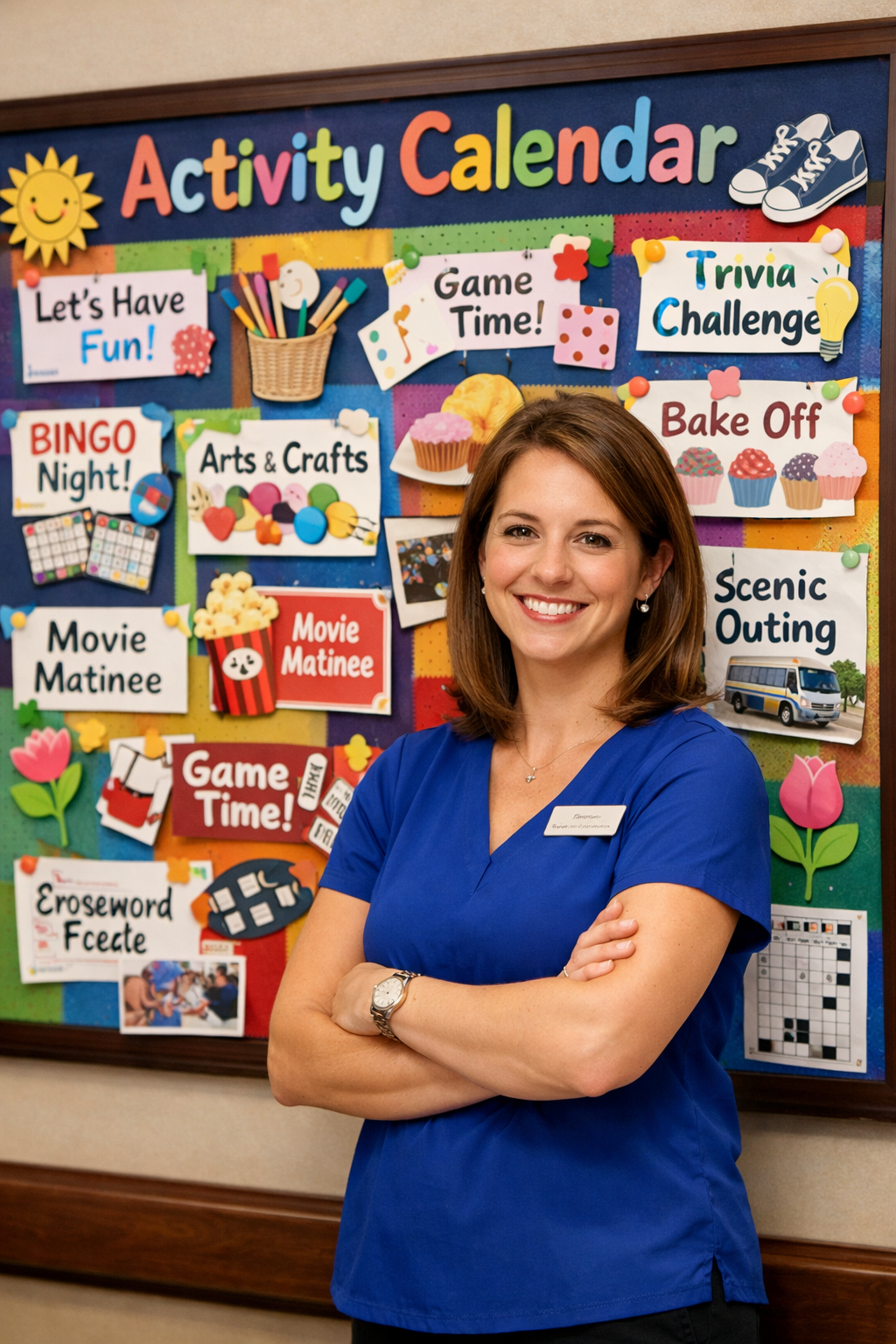
Calendar Club Monthly Activity System
Need fresh, resident-centered activity ideas every month? Calendar Club gives Activity Professionals practical planning support, printable resources, and monthly inspiration for real senior living communities.
Built to help you plan meaningful programs, support engagement, and stop starting from scratch every time a new month rolls around.
Printable Resources
Activity Ideas
Planning Around Needs Instead of Diagnoses
One of the most powerful aspects of person-centered planning is that it encourages professionals to look beyond diagnoses and care levels.
Two residents living with dementia may respond very differently to the exact same environment or activity.
One resident may crave social interaction while another becomes overwhelmed in groups.
One resident may need sensory stimulation while another needs calm and predictability.
One resident may feel comforted by reminiscing while another prefers staying focused on the present moment.
Person-centered planning encourages Activity Professionals to become more observant and curious about the person behind the behavior.
What helps this resident feel safe?
What helps them feel successful?
What environments increase stress?
What experiences create comfort, purpose, joy, or connection?
Those answers often lead to much more meaningful engagement than simply asking what activity should go on the calendar that day.
Related reading:
Missed Signs of Trauma in Senior Care
How This Changes Activity Programming
When Activity Professionals begin viewing programming through a needs-based lens, activities often become more flexible, more thoughtful, and more emotionally supportive.
The focus shifts away from simply running programs and toward creating experiences that support quality of life.
Instead of only asking:
“What activity should we do today?”
the question becomes:
“What human needs could this activity help support?”
That small shift changes the entire planning process.
A single activity can support multiple needs at once.
A baking group may support comfort, belonging, creativity, reminiscence, purpose, and sensory stimulation all within the same experience.
A walking club may support movement, routine, social connection, autonomy, and emotional regulation.
A resident-led discussion group may support esteem, contribution, identity, and belonging.
This approach makes person-centered planning much more realistic for real-world activity departments because it allows professionals to build adaptable programs around shared human needs instead of trying to create endless completely individualized calendars.
Related reading:
Familiar Words as a Gentle Bridge in Memory Care

Save this guide for future activity planning inspiration and person-centered care discussions.
Why Person-Centered Planning Continues Growing
As senior living continues evolving, residents and families increasingly expect communities to provide more than basic care.
They want environments where residents feel respected, emotionally supported, connected, purposeful, and genuinely known as individuals.
That expectation continues pushing the industry toward more individualized care philosophies and stronger resident-centered engagement practices.
Activity Professionals play an enormous role in making that shift possible.
Activities often become the place where residents experience connection, purpose, identity, joy, success, and belonging.
That is why person-centered planning continues becoming such an important part of modern Activity Professional education.
You may also want to explore:


Frequently Asked Questions
What is person-centered planning in senior living?
Person-centered planning is an approach that focuses on the individual needs, preferences, identity, comfort, and quality of life of each resident instead of using a generalized one-size-fits-all care model.
How does Maslow’s Hierarchy relate to activity programming?
Maslow’s Hierarchy helps Activity Professionals understand the human needs behind engagement, including comfort, safety, belonging, esteem, purpose, and meaning.
Why is person-centered care important in senior living?
Person-centered care helps residents feel more respected, emotionally supported, connected, and engaged while improving overall quality of life.
How can Activity Professionals create more meaningful activities?
Meaningful activities often begin by understanding the emotional, social, cognitive, and personal needs behind resident engagement instead of focusing only on the activity itself.