Common Activity Director Mistakes
(and How to Fix Them)
Simple shifts that can completely change how your department runs.
Every Activity Director makes mistakes—especially in the beginning. The difference is whether those mistakes turn into frustration… or growth.

Most challenges in an Activity Department don’t come from lack of effort.
They come from unclear systems.
Once you understand that, everything starts to shift.
Mistake #1: Planning Activities Without Resident Input
It’s easy to fall into the habit of choosing activities based on what seems fun or easy to organize.
But strong programs are built around:
- Resident history
- Preferences and interests
- Individual abilities
Fix: Build your programming from what residents actually respond to—not just what fills the calendar.
Mistake #2: Treating the Calendar Like a Checklist
A full calendar can look impressive—but it doesn’t always reflect meaningful engagement.
When activities are scheduled just to “fill space,” participation often drops.
Fix: Focus on intention over volume. Fewer, more meaningful activities will always outperform a packed schedule.

Struggling to Make Activities Feel Truly Person-Centered?
This course shows you how to simplify planning by focusing on universal human needs—so your programs feel meaningful without trying to reinvent something for every resident.
Mistake #3: Overcomplicating Documentation
Many Activity Directors struggle with documentation because they think it has to sound clinical or complex.
This leads to:
- Overthinking every note
- Inconsistent charting
- Unnecessary stress
Fix: Focus on clear, simple documentation that reflects what actually happened and how the resident responded.
Mistake #4: Disconnect Between Care Plans and Activities
One of the most common issues during survey is a lack of alignment.
Care plans say one thing—programming shows another.
Fix: Make sure your activities directly support the goals and needs outlined in each resident’s care plan.

Are Your Care Plans Truly Individualized—or Just Checking a Box?
This course walks you through building clear, meaningful care plans from assessment to completion—so your documentation reflects real resident needs and stands up during survey.
Mistake #5: Trying to Do Everything Alone
Activity Directors often feel like they have to manage everything themselves.
This leads to burnout quickly.
Fix: Build support systems:
- Involve other departments
- Use volunteers when possible
- Create repeatable systems
The Real Issue Behind Most Mistakes
Most of these challenges come back to one thing:
Lack of a clear system.
When you don’t have a structured way to approach programming, documentation, and planning, everything feels harder than it needs to be.
Bottom Line
You don’t need to do more—you need a better structure.
When your systems are clear, your confidence grows—and your entire department starts to run more smoothly.
Frequently Asked Questions
What is the biggest mistake Activity Directors make?
The most common mistake is operating without a clear system, leading to inconsistent programming, documentation, and care planning.
How do Activity Directors improve documentation?
By focusing on clear, simple notes that reflect resident engagement, preferences, and outcomes rather than trying to sound clinical or complex.
Why is person-centered planning important in activities?
Person-centered planning ensures that activities reflect individual needs, preferences, and abilities, leading to higher engagement and better outcomes.
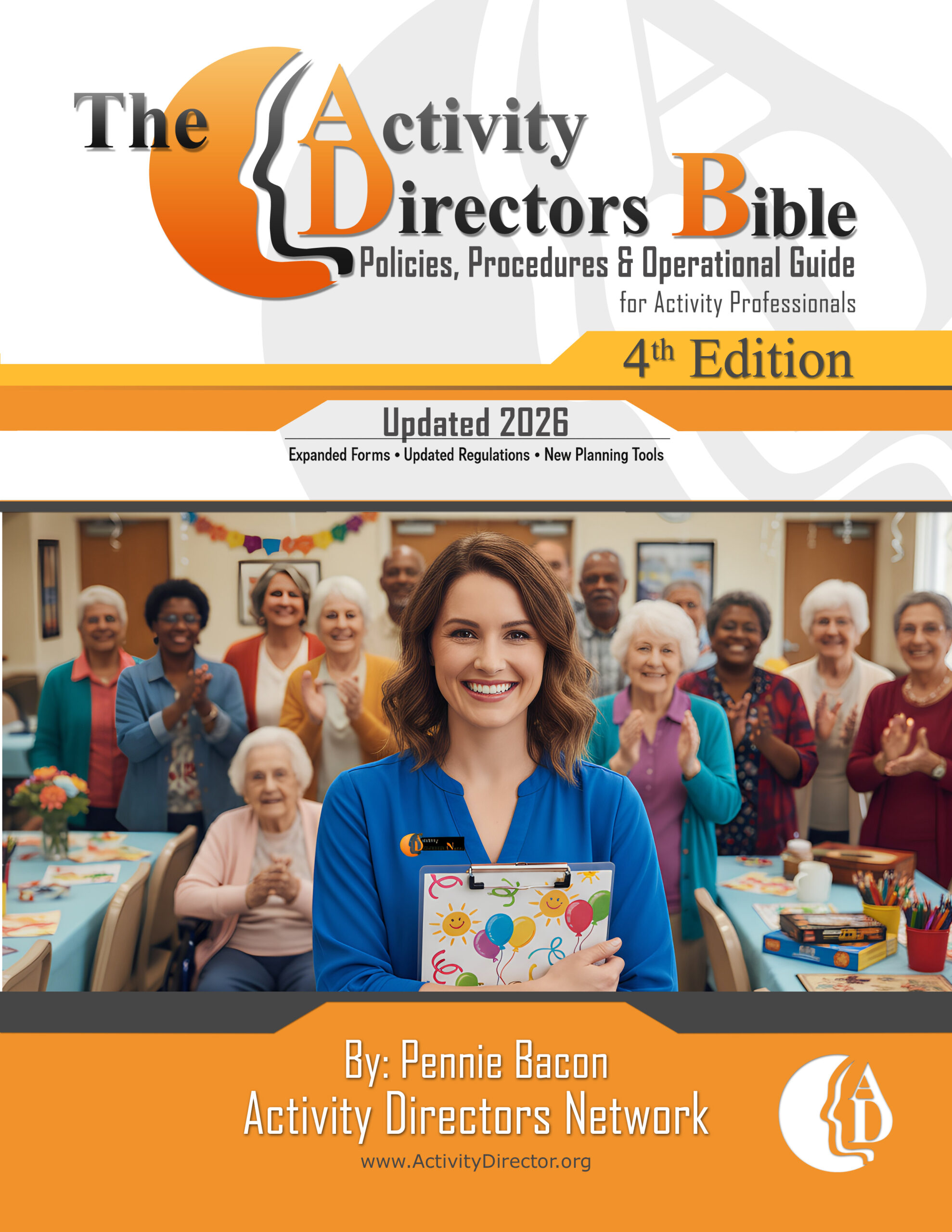
The Activity Directors Bible
A complete operational guide for Activity Professionals who want stronger systems, better documentation, and more confidence in daily practice.
Built to help you organize your department, support survey readiness, and stop reinventing everything from scratch.
Care Plan Support
Policies & Procedures