One Profession. Three Career Levels.
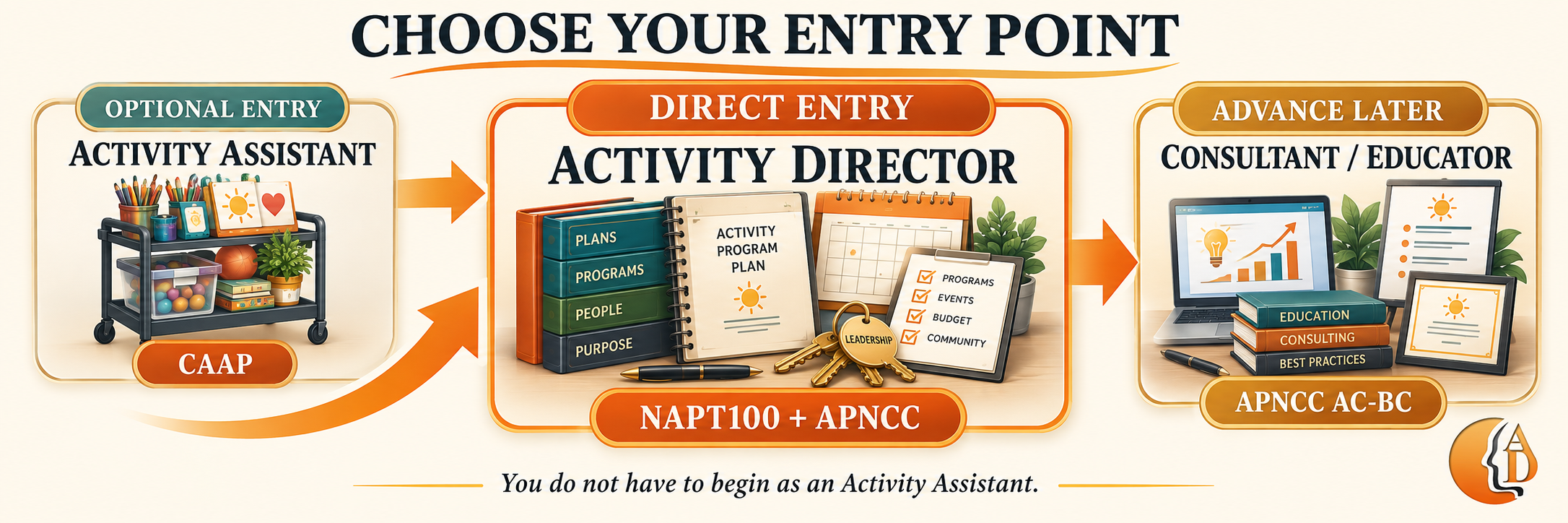
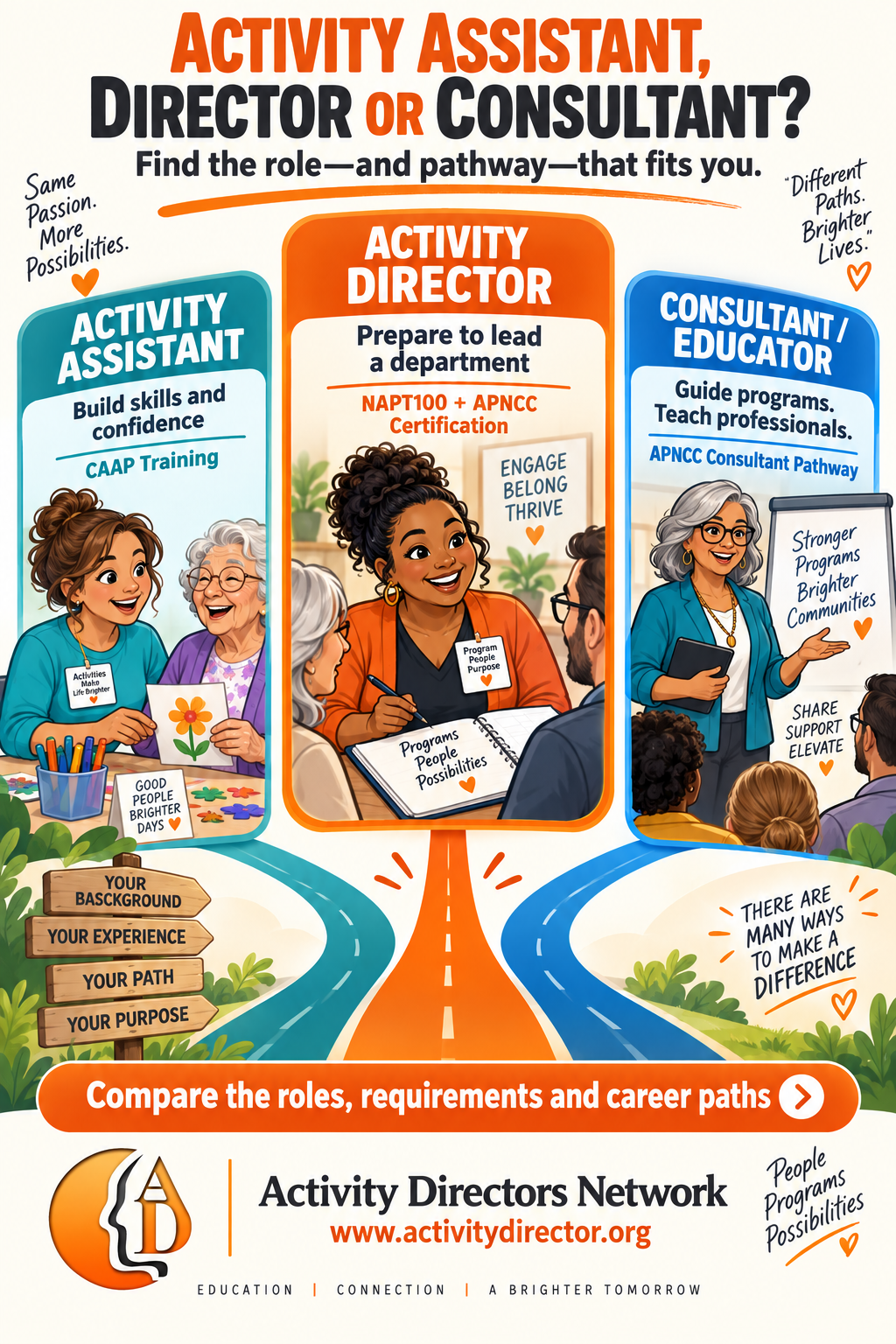
Choose your entry point: begin as an Activity Assistant, prepare directly for Activity Director leadership, or build toward consulting and education.

A career in activities can begin with helping set up a program or sitting beside one resident who needs encouragement. It can grow into leading an entire department, training a team, improving systems, and eventually helping other communities succeed.
The titles Activity Assistant, Activity Director, and Activity Consultant or Educator represent different levels of responsibility. They are also connected. Skills developed in one role can become the foundation for the next.
Quick Answer: Activity Assistants support daily resident engagement. Activity Directors assess, plan, manage, document, and lead the department. Activity Consultants and Educators use advanced experience to guide, evaluate, and teach other professionals or organizations.
You do not need to choose your final destination on your first day. You need to understand where you are, what the next role requires, and which education, experience, and credentialing steps can help you move forward.
There Is More Than One Legitimate Route to Board Certification
Activity Directors Network provides professional education. APNCC independently evaluates applicants, administers its examination, and awards national board certification. NAPT100 education and the APNCC credentialing pathway create a clear route into professional Activity Department leadership.
Start Here. Grow Here. Lead Here.
Three Roles, Three Levels of Responsibility
Job descriptions vary by setting, facility size, and state requirements, but the broad progression usually looks like this:
| Career Stage | Primary Focus | Typical Responsibility | Path to Explore |
|---|---|---|---|
| Activity Assistant | Direct resident support | Assist, engage, prepare, observe, and communicate | CAAP |
| Activity Director | Department leadership | Assess, plan, supervise, document, evaluate, and manage | NAPT100 plus APNCC Path Two |
| Consultant or Educator | Broader professional influence | Evaluate, advise, train, develop, and improve systems | APNCC AC-BC pathway |
Always review the employer’s job description and the rules that apply in your state and care setting. Titles alone do not determine qualification.
Activity Assistant
Learn the work. Build confidence. Make an impact.
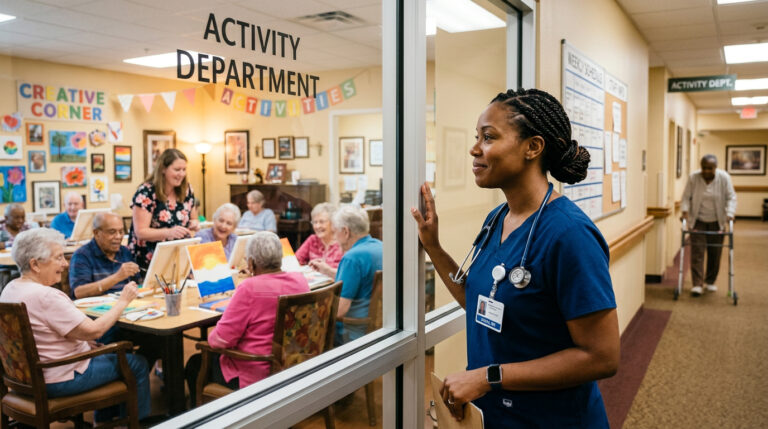
Activity Assistants are often the hands and heart of the daily program. They help transform plans on a calendar into real resident experiences.
What Assistants May Do
- Prepare rooms and activity materials
- Conduct or support group programs
- Provide one to one engagement
- Encourage choice and participation
- Observe and report resident responses
- Support department documentation
Skills Being Built
- Resident communication
- Meaningful engagement
- Dementia awareness
- Professional boundaries
- Team communication
- Adaptability and observation
This role can be a meaningful career in itself or the first step toward becoming an Activity Director. It gives a new professional the opportunity to learn how residents respond, how programs function, and how an Activity Department works from day to day.

Build Your Foundation With CAAP
The Certified Activity Assistant Professional course supports new team members with practical instruction in resident engagement, professionalism, dementia awareness, communication, and Activity Department teamwork.
Explore the CAAP CourseActivity Director
Lead the program. Support the resident. Strengthen the facility.
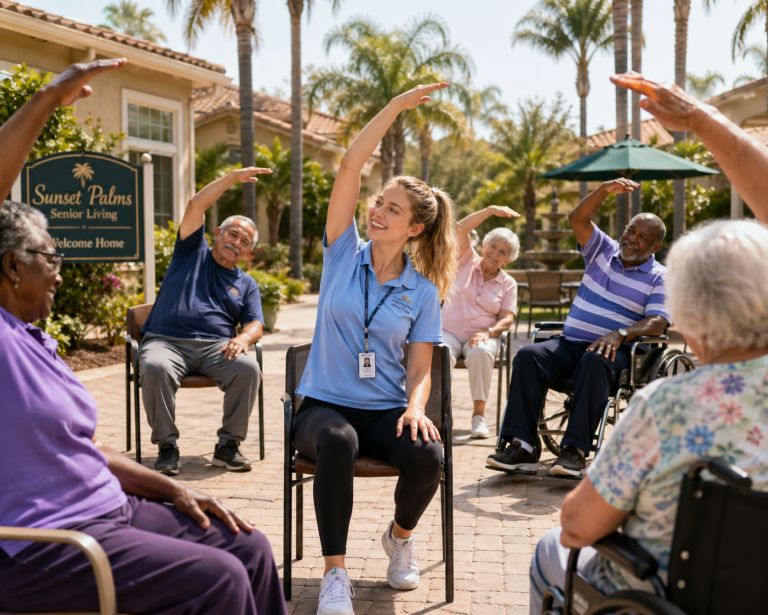
Activity Directors are responsible for far more than filling a calendar. They build and manage a program that reflects resident assessments, preferences, care plans, abilities, needs, and rights.
The Calendar Is the Visible Part
Behind it are assessments, care planning, resident interviews, documentation, staffing, budgeting, scheduling, quality improvement, regulatory awareness, and program evaluation.
An Activity Director may supervise assistants, coordinate volunteers, collaborate with nursing and therapy, communicate with families, oversee supplies and transportation, document resident response, and explain the department’s work during a survey.
This level requires stronger knowledge of both resident engagement and department operations. Creativity matters, but so do organization, leadership, professional judgment, and accountability.
Prepare to Lead With NAPT100
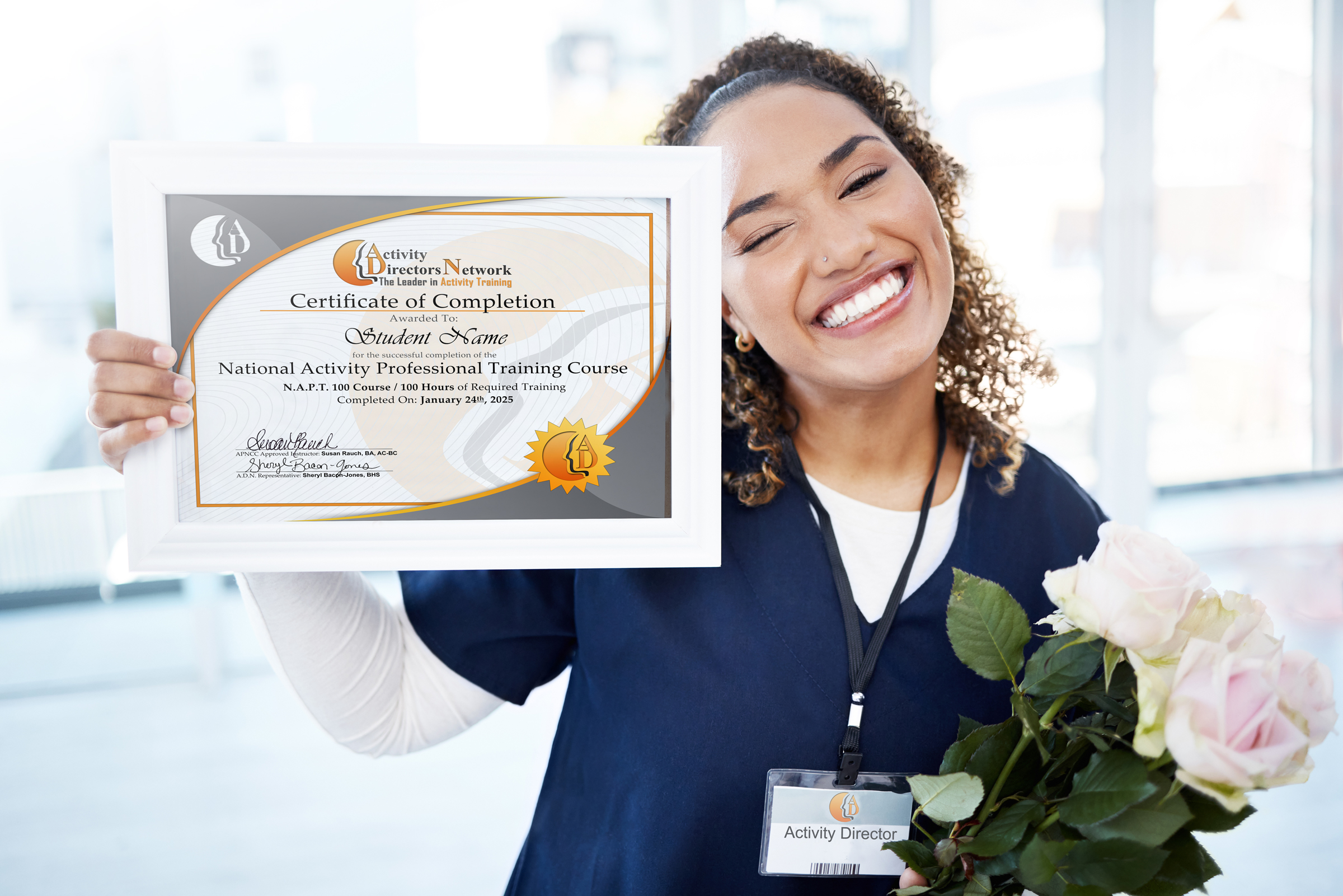
100 hours of professional coursework plus 12 live continuing education hours included.
NAPT100 goes well beyond APNCC Path Two’s minimum 36 hour course requirement and provides the live hours used for its 12 hour live education component. Training covers programming, documentation, care planning, regulations, dementia programming, and department leadership.
Important: ADN provides education. APNCC is a separate credentialing organization that determines eligibility and administers its board certification examination.
Explore NAPT100Education and Board Certification Are Separate
This distinction protects students, supports independent credentialing, and strengthens the profession.
Activity Directors Network
ADN provides professional education and career preparation through CAAP and NAPT100. NAPT100 includes 100 coursework hours and 12 live continuing education hours.

APNCC
APNCC reviews applications, verifies pathway requirements, administers its examination, and awards national board certification.
APNCC states that no specific course or class is required for certification. Eligibility is based on the requirements of the selected pathway, which may include education, experience, continuing education, current credentials, and successful examination completion.
Before enrolling: Review your intended APNCC pathway and confirm that you can document every required component. Course completion and certification eligibility are not the same thing.
APNCC Path Two Made Simple
For many new Activity Directors and NAPT100 students, Path Two provides the clearest route to the Activity Professional Board Certified credential, or AP-BC.
Why NAPT100 Is the Strongest Education Choice
| APNCC Path Two Component | Included With NAPT100 |
|---|---|
| Minimum 36 education hours | 100 hours of professional coursework |
| 12 live education hours | 12 live continuing education hours included |
| Activity professional education | Programming, documentation, regulations, care planning, dementia care, and leadership |
| Independent board examination | Eligibility review, examination, and certification handled separately by APNCC |
NAPT100 does not stop at the minimum. It provides a complete 100 hour foundation for real Activity Department leadership, plus the 12 live hours included for the commonly used APNCC Path Two.
Activity Consultant or Educator
Expand your influence beyond one department.
Consulting and educating call for more than having good activity ideas. These roles require advanced experience, credible professional preparation, strong communication, and the ability to evaluate complex situations.
Consultants May
- Evaluate Activity Department systems
- Review policies and documentation
- Help communities prepare for surveys
- Coach directors and department teams
- Recommend program improvements
- Support organizational quality goals
Educators May
- Develop professional education
- Teach classes and inservices
- Mentor developing professionals
- Explain standards and best practices
- Create practical learning resources
- Advance the profession’s knowledge
The ability to conduct excellent programs in one building is an important beginning. Consulting requires the ability to diagnose why a system is not working, communicate recommendations responsibly, and help others implement sustainable improvement.

The APNCC Consultant and Educator Path
APNCC offers the Activity Consultant/Educator Board Certified credential, or AC-BC. This is an advanced destination for experienced professionals who are ready to influence practice beyond one department.
The complete standards provide three possible routes based on education, management or teaching experience, consulting or education hours, continuing education, current credentials, and examination history. Review them early so the work you are already doing can be documented correctly.
This overview is for career planning. APNCC makes all eligibility and certification decisions under its current standards and application requirements.
Review the Consulting StandardsNot Ready to Consult Yet? Build Toward It.
APNCC’s Advanced Activity Professional Board Certified credential, or AAP-BC, can serve as a meaningful milestone between department leadership and consulting.
APNCC lists pathways based on college education, professional experience, continuing education, current qualifying credentials, and examination. It also identifies a steppingstone from AP-BC to AAP-BC for professionals who complete the required post certification experience and continuing education.
Career planning idea: Do not wait until you are ready to consult before documenting your growth. Keep organized records of employment dates, management duties, training, consulting or teaching hours, certificates, transcripts, and continuing education.
Build Your Activity Professional Career
Find the Path That Fits Your Career
Whether you are entering the department or preparing to lead it, ADN offers practical education built around the real work of Activity Professionals.
From Activity Assistant to Consultant
Save this guide for career planning, staff development, and your next professional step.
Frequently Asked Questions
What is the difference between an Activity Assistant and an Activity Director?
Activity Assistants primarily support daily programs and resident engagement. Activity Directors carry broader responsibility for assessment, planning, care plan participation, documentation systems, staffing, program evaluation, budgets, and department leadership.
Does completing NAPT100 automatically make someone board certified?
No. NAPT100 is professional education provided by Activity Directors Network. APNCC is a separate credentialing organization that evaluates eligibility, administers its examination, and awards board certification.
Is a particular course required for APNCC certification?
APNCC states that no specific course or class is required. Each applicant must qualify through one of APNCC’s established pathways and provide the required documentation.
Can an Activity Assistant become an Activity Director?
Yes. Many professionals begin as assistants and advance after gaining experience, completing appropriate education, and meeting the employer, state, and credentialing requirements that apply to the director role.
When should an Activity Director consider consulting?
Consulting is best considered after developing substantial department leadership experience, advanced professional knowledge, a record of successful practice, and the ability to evaluate and teach systems beyond one’s own facility. The APNCC AC-BC standards provide a formal framework for planning that progression.
Standards and Further Reading
- APNCC Certification Standards
- APNCC Consulting Standards
- NCCA Standards Referenced by APNCC
- 42 CFR §483.24: Quality of Life and Activities
- Activity Director Certification Requirements by State
Requirements can change. Confirm current federal guidance, state rules, employer expectations, and APNCC standards before making an education or certification decision.