
How to Write an Activity Care Plan:
Examples, Goals & Interventions
Turn resident interests, strengths, and needs into meaningful goals and practical activity approaches your care team can actually use.

An activity care plan should tell the story of a real person. Not just that a resident likes music, attends bingo, or needs encouragement, but what matters to that resident, what the activity department hopes to support, and how staff will make meaningful participation possible.
Yet care planning can become one of the most frustrating responsibilities in an activity department. Professionals may know their residents well but struggle to translate those observations into clear problems or focus statements, realistic goals, and useful interventions.
The good news is that effective care planning does not have to be complicated. It needs to be individualized, understandable, measurable where appropriate, and connected to what actually happens in the resident’s daily life.
An effective activity care plan includes an individualized focus or need, a meaningful goal with a timeframe, and specific interventions explaining how staff will support the resident. It should reflect the resident’s preferences, strengths, abilities, choices, and observed responses, and be reviewed as part of the facility’s interdisciplinary care planning process.
What Is an Activity Care Plan?
An activity care plan is the portion of a resident’s person-centered care planning process that addresses meaningful engagement, interests, preferences, abilities, and activity-related needs.
It explains what the resident wants or needs from activity services, what outcomes are being supported, and which approaches staff should use.
In federally regulated nursing homes, comprehensive care planning is governed by 42 CFR §483.21. CMS survey guidance includes F656, addressing comprehensive care plans, and F657, addressing care plan timing and revision.
Activity-related goals should contribute to a broader person-centered plan that supports physical, mental, and psychosocial well-being.
An activity calendar describes what the department offers. An activity care plan describes how the department will respond to an individual resident’s needs and preferences.
The Four Parts of a Useful Activity Care Plan
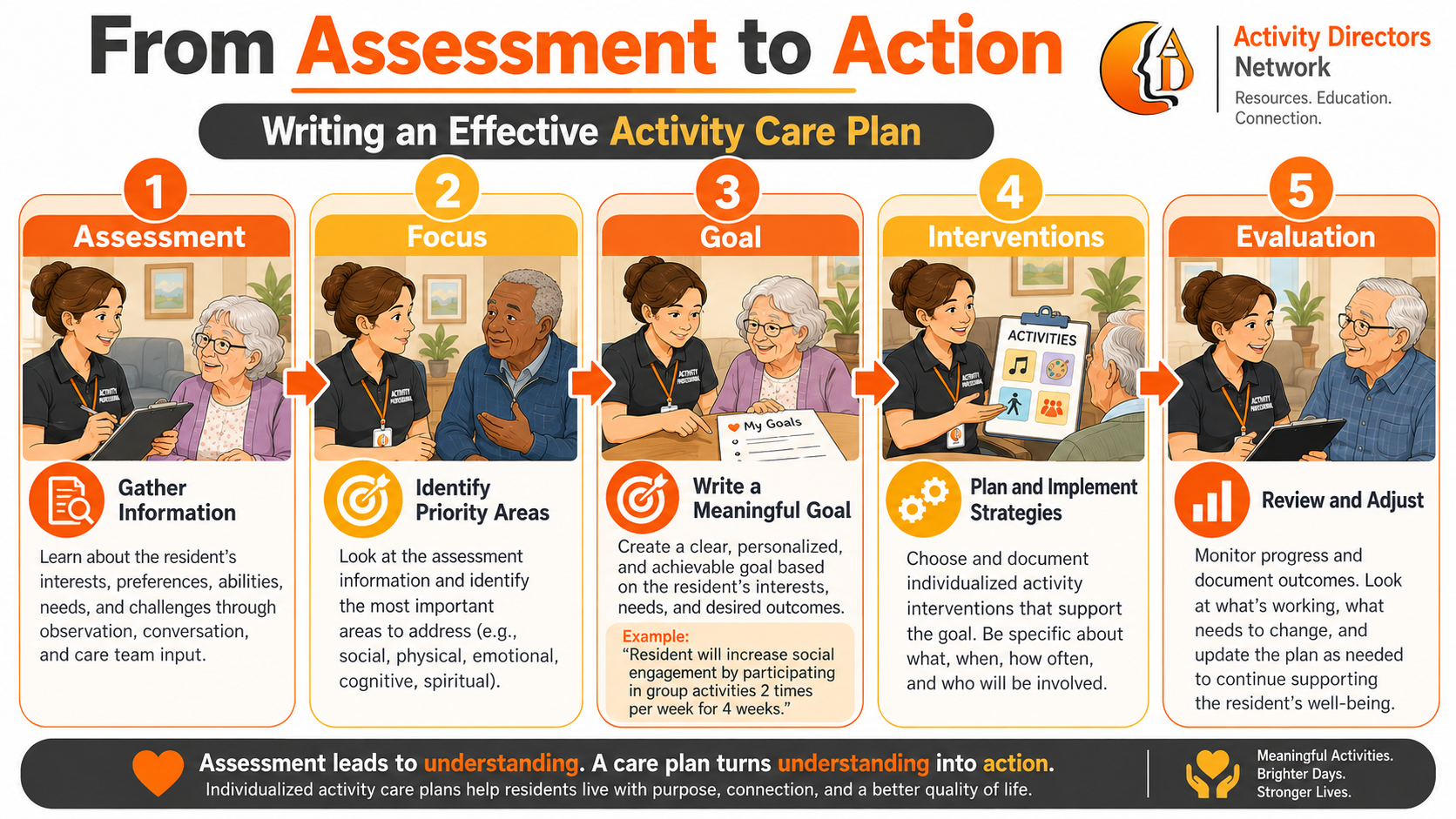
For everyday care planning, it helps to think in four connected parts: assessment findings, focus, goal, and interventions. Evaluation closes the loop and informs revisions.
Assessment
What does the resident enjoy, value, prefer, avoid, or need help accessing?
Focus
What individual strength, desire, barrier, or engagement need should the plan address?
Goal
What resident-centered outcome are staff working toward, and by when?
Interventions
What specific actions, adaptations, and assistance will staff provide?
A care plan is not finished when it is written. Staff must implement the plan, observe resident responses, and participate in appropriate review and revision.
Start With the Resident, Not a Generic Diagnosis
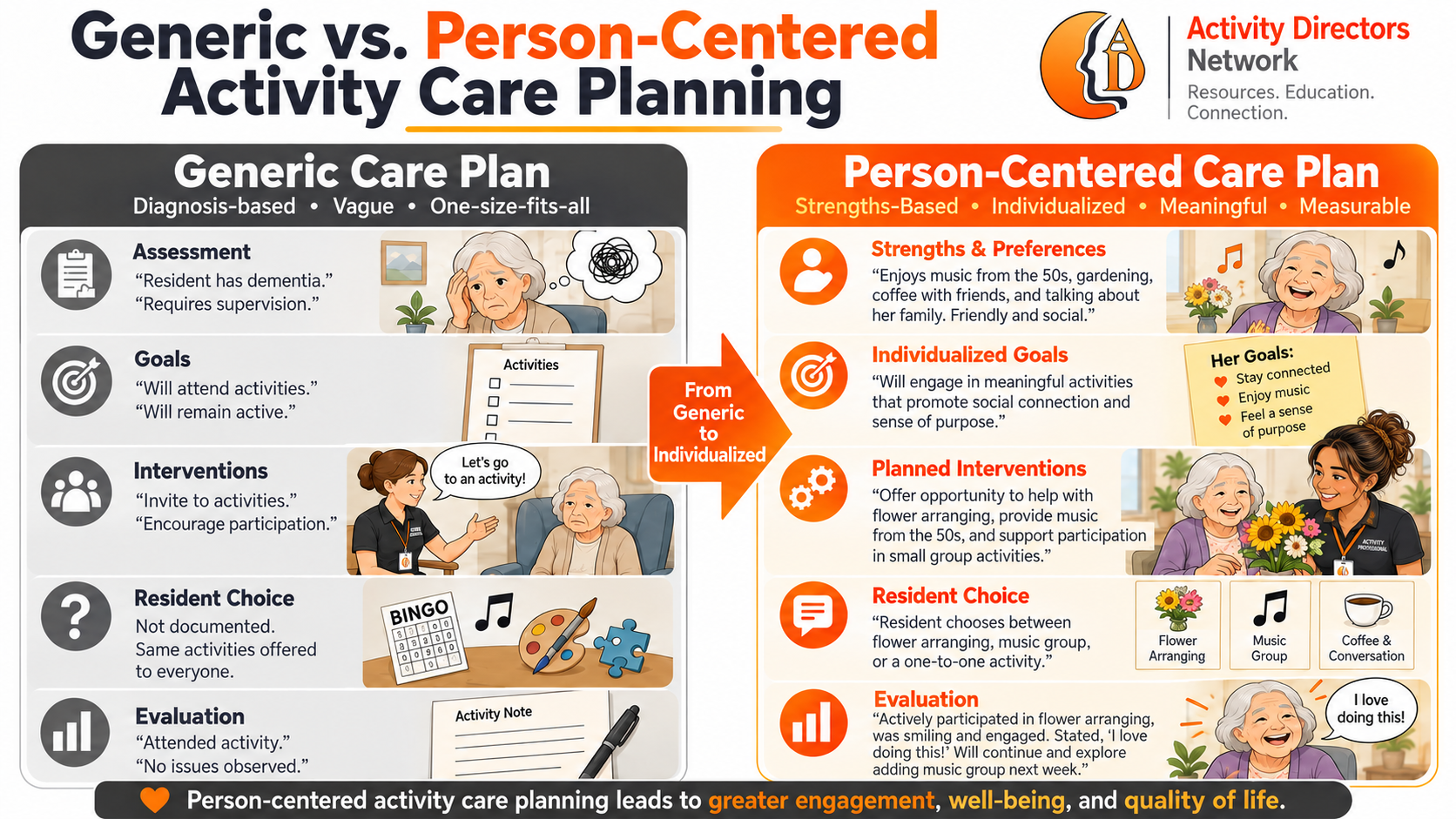
A diagnosis may explain why an accommodation is needed, but it does not tell the activity professional what makes life meaningful to someone.
Two residents living with dementia may have completely different histories, personalities, preferences, and responses. One may enjoy small music groups, while another prefers quiet gardening experiences. Their activity plans should not be identical.
Questions That Improve Assessment
- What did the resident enjoy before moving into the community?
- What activities, routines, relationships, and roles matter now?
- Does the resident prefer groups, one-to-one interaction, or independent pursuits?
- What times of day work best?
- What physical, sensory, cognitive, communication, or environmental supports are helpful?
- What does the resident want to try, continue, change, or decline?
MDS Section F addresses preferences for customary routines and activities. Those findings can contribute to individualized planning, but the assessment should also consider resident interviews, observations, life history, and other relevant interdisciplinary information.
How to Write Meaningful Activity Goals
Good goals are connected to the resident’s own interests and desired outcomes. They should be clear enough that staff can recognize and evaluate progress.
Not every goal needs to measure the number of activities attended. Resident choice, access to meaningful pursuits, social connection, continued involvement in familiar routines, and supported independent participation can all be appropriate areas of focus.
The improved goal describes an individualized approach, a timeframe, an observable process, and a way to evaluate the resident’s response. It does not require the resident to accept an activity to demonstrate that staff provided appropriate opportunities.
Three Complete Activity Care Plan Examples
The following fictional examples illustrate useful care-planning language. Goals and timeframes must be individualized, approved through the facility’s care-planning process, and revised as appropriate.
What Makes an Intervention Useful?
An intervention tells staff what to do. Strong interventions are specific enough that another team member can understand how to support the resident without having to guess.
Vague: Encourage resident to attend activities.
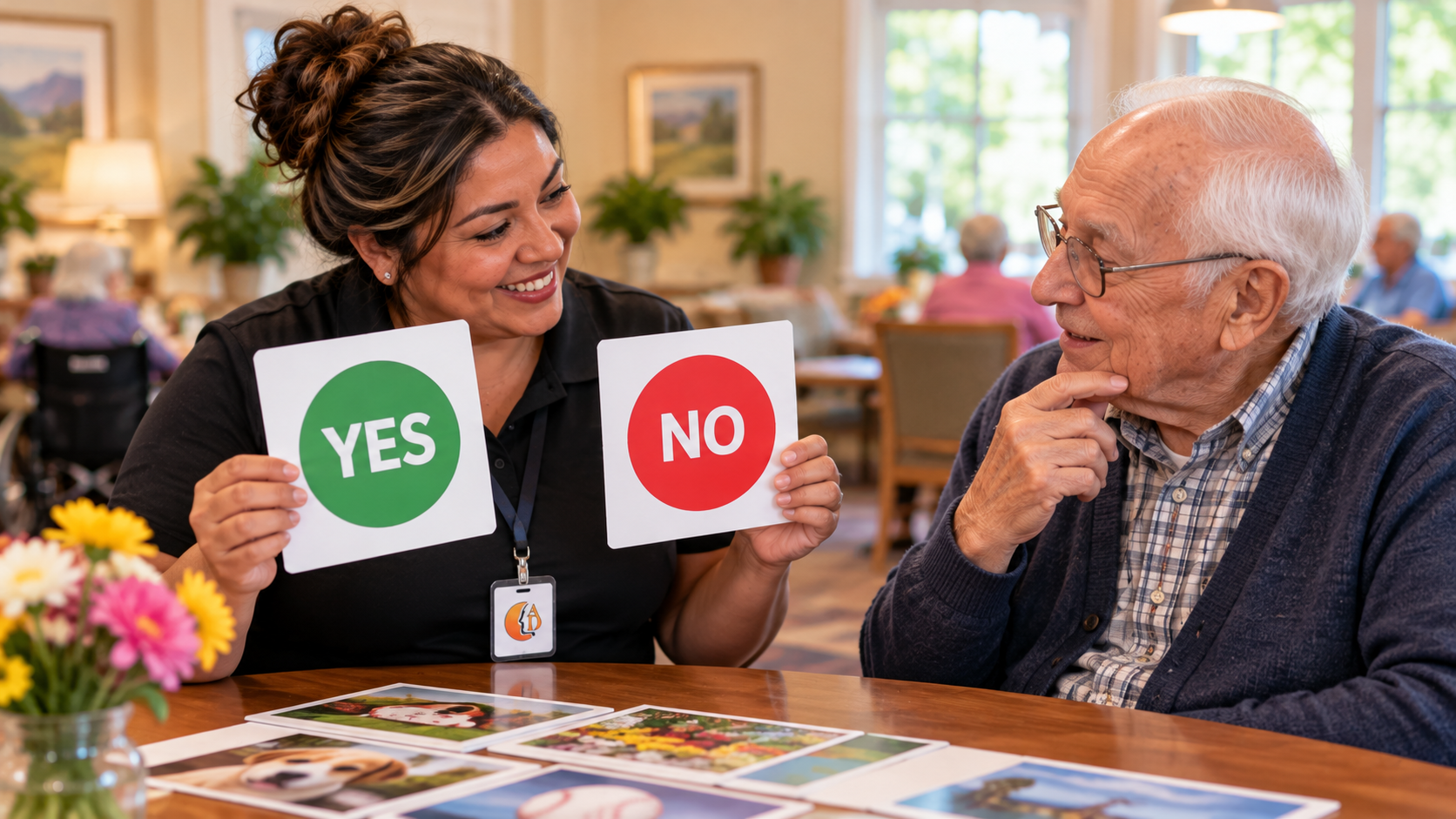
Specific: Offer resident a choice between afternoon music, small-group reminiscence, or a quiet one-to-one visit. Explain options using the resident’s preferred communication approach. Respect refusal and offer alternatives when desired.
Why it works: Staff know what to offer, how to offer it, and how to support the resident’s choices.
Interventions should consider the appropriate frequency, assistance, adaptive materials, environmental modifications, communication strategies, and resident preferences. The exact level of detail depends on the resident’s needs.
How to Review and Revise Activity Care Plans
A care plan is a working guide, not a form completed once and forgotten.
Federal regulations require the interdisciplinary team to review and revise the comprehensive care plan after each assessment, including comprehensive and quarterly review assessments. Meaningful changes in resident condition, preference, or response may also call for timely reassessment and adjustments.
For example, a resident who previously enjoyed group music may now prefer quieter experiences. Rather than continuing to measure success by group attendance, the team can review whether individual listening opportunities better reflect the resident’s preferences.
Common Activity Care Planning Mistakes
Residents may share diagnoses or interests without sharing the same preferences, goals, or support needs.
Meaningful engagement can also involve choice, conversation, listening, independent interests, or supported participation.
Generic directions leave staff uncertain about which support, activities, or adaptations the resident needs.
A care plan should support informed preferences and rights, including the choice to decline an activity.
Before You Finalize an Activity Care Plan
Use with your facility’s approved documentation system and interdisciplinary care planning policies.
A Good Activity Care Plan Protects the Resident’s Story
The strongest activity care plans do more than satisfy documentation requirements. They help staff understand who the resident is, what brings meaning to daily life, and what practical support may help the person continue enjoying familiar interests or discover new ones.
A thoughtful care plan connects assessment, resident choice, meaningful goals, specific interventions, and ongoing evaluation. Most importantly, it treats the resident as a person—not a diagnosis, room number, or attendance statistic.
Make Documentation and Planning Easier With Calendar Club
Activity Directors Network’s Calendar Club offers a growing collection of practical activity department resources, including assessment and documentation forms, person-centered planning tools, activity materials, and department management resources.
Find useful templates to help organize resident information, record preferences, and support individualized programming—without starting every form or activity from scratch.
Calendar Club materials are professional support tools and should be adapted to your facility’s approved policies, care planning system, and regulatory requirements.
Continue Learning
Frequently Asked Questions
What should an activity care plan include?
It should include an individualized focus, meaningful goal with a timeframe, appropriate interventions, and a process for evaluating and revising approaches as part of comprehensive care planning.
What is an example of an activity care plan goal?
Over 30 days, resident will be offered preferred music and reminiscence opportunities twice weekly, with resident responses and choices documented for review.
How are care plan goals different from interventions?
Goals describe the intended outcome. Interventions explain what staff will do to help the resident work toward that outcome.
How often should activity care plans be reviewed?
The comprehensive care plan is reviewed and revised by the interdisciplinary team after required assessments, including quarterly reviews, and should be updated as appropriate when resident needs or preferences change.
Can a resident decline an activity included in the care plan?
Yes. Resident choice and rights remain central to care planning. The team should respect the resident’s decision, understand preferences, and offer appropriate alternatives where desired.
Official Regulatory References
- 42 CFR §483.21 — Comprehensive Person-Centered Care Planning
- 42 CFR §483.10 — Resident Rights
- CMS State Operations Manual — Appendix PP, F656 and F657
- CMS MDS 3.0 RAI Manual — Section F and Assessment Guidance
Reviewed October 2026. Educational examples only. Apply current federal and state regulations and your facility’s interdisciplinary care planning procedures.