Activity Documentation Examples: What Good Notes Actually Look Like
Clear activity notes do more than record attendance. They show participation, response, preferences, refusals, adaptations, and meaningful engagement in a way the care team can actually use.
Original article by Activity Directors Network
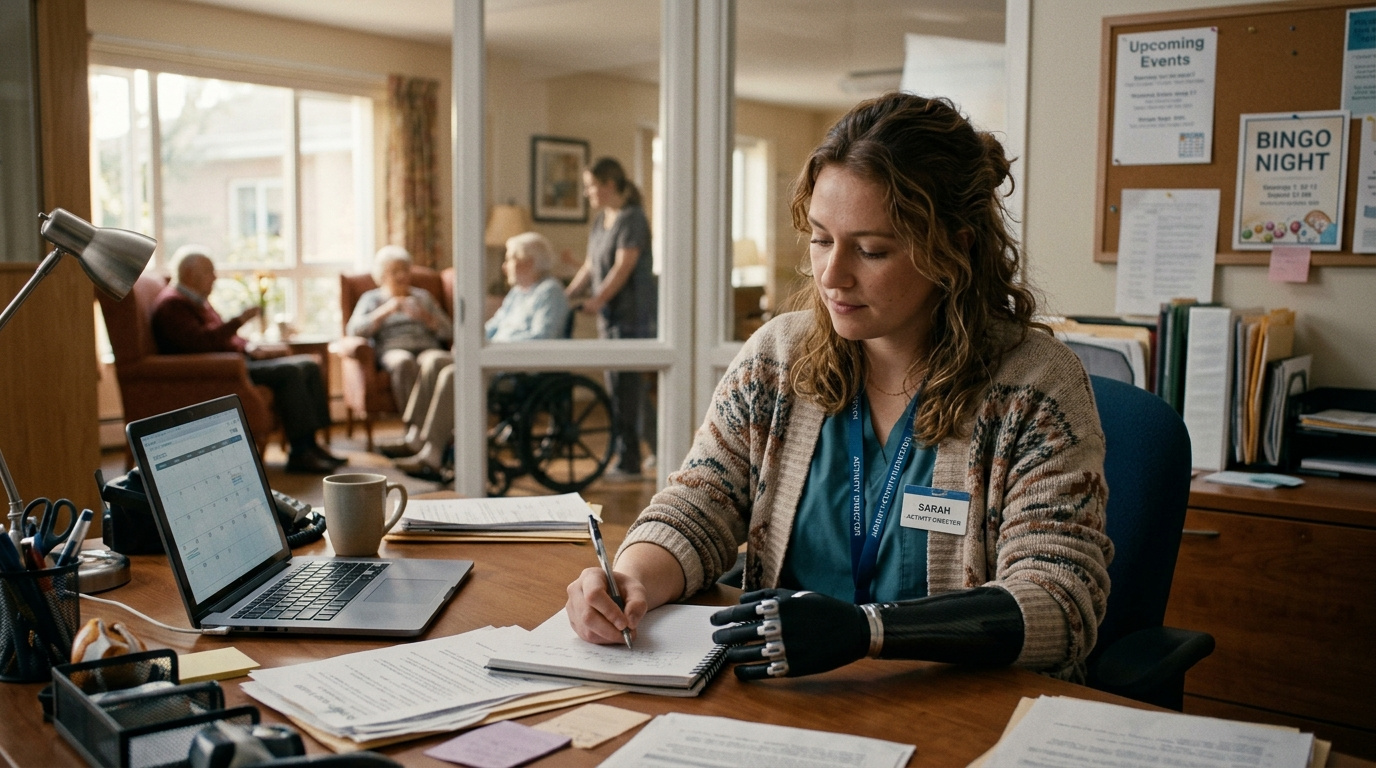
Activity documentation can feel intimidating when you are trying to write notes that are professional, useful, and survey-ready. Many Activity Professionals know what happened during a program, but they are not always sure how to put it into words.
Good documentation does not need to be fancy. It needs to be clear. A strong activity note helps the care team understand what the resident did, how the resident responded, what support was provided, and whether the activity appears to meet the resident’s interests, needs, or care plan goals.
The goal is not to write more words. The goal is to write better observations. Strong activity documentation supports what activity documentation should say and helps show the difference between simple attendance and meaningful engagement.
Quick Answer
What should a good activity note include?
A good activity note should describe the resident’s participation, response, level of engagement, support or adaptations provided, preferences observed, refusals when applicable, and any follow-up information that may help the care team support the resident more effectively.
Weak Notes vs. Strong Notes
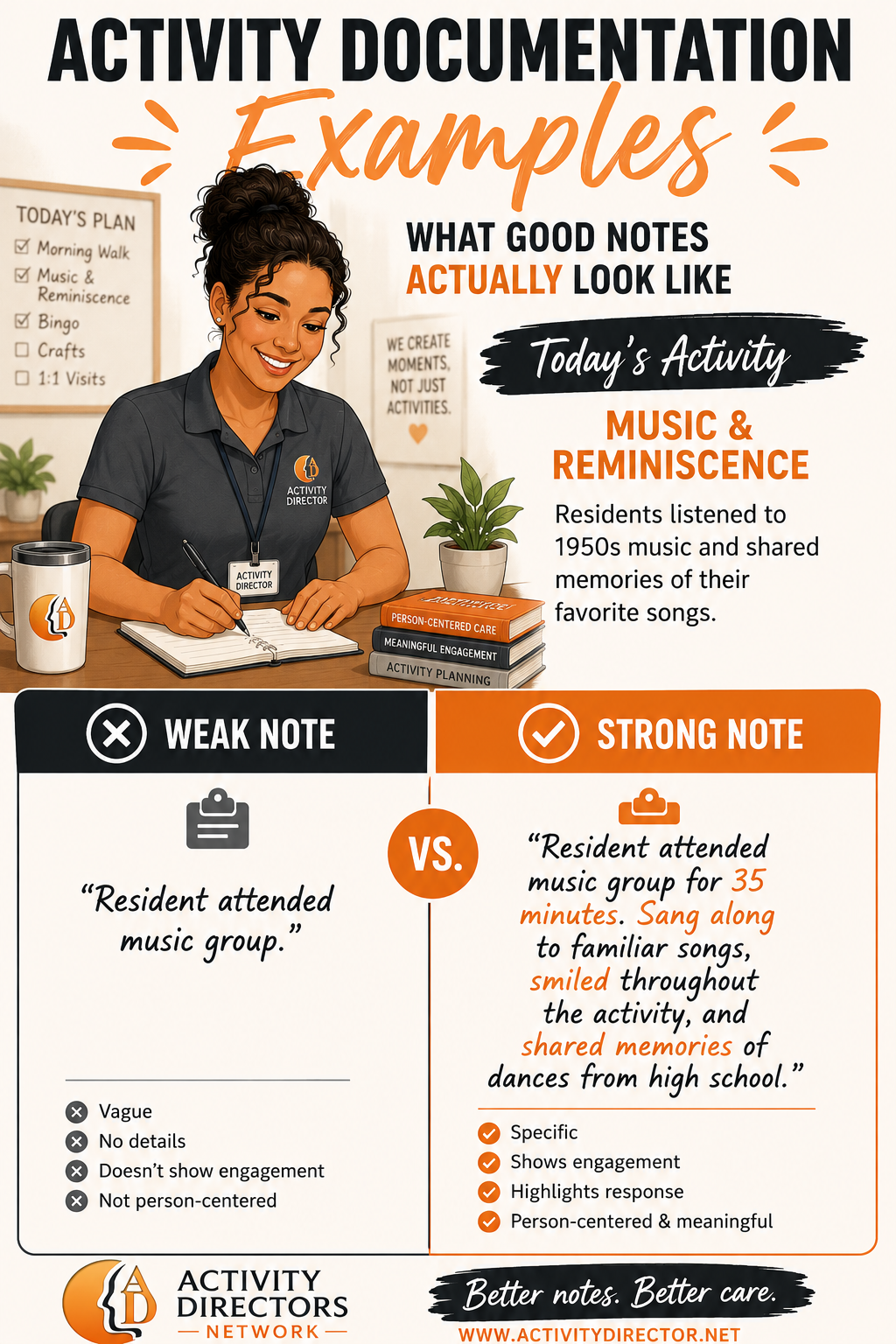
A weak activity note usually says what the resident attended. A strong activity note says what happened, how the resident responded, and why the observation matters.
Weak Note
Resident attended music group.
Strong Note
Resident attended music group for 35 minutes. Sang along to familiar country songs, smiled throughout program, and initiated conversation with peer after hearing a song from childhood.
The strong note gives the team a clearer picture of engagement. It shows participation, emotional response, preference, social interaction, and possible life history connection.
Participation Examples
Participation notes should describe more than physical attendance. A resident may participate by speaking, listening, watching, smiling, choosing, reminiscing, helping, encouraging others, or remaining peacefully engaged.
Example: Active Participation
Resident participated in trivia group by answering four questions, laughing with peers, and sharing a personal story related to the topic. Resident remained engaged for the full 40-minute program.
Example: Quiet Participation
Resident attended afternoon poetry reading and listened quietly. Resident maintained eye contact with reader, nodded during familiar poems, and stated, “That was beautiful,” at the end of the program.
Example: Support Needed
Resident joined craft group with staff encouragement. Required step-by-step cueing to begin project but was able to choose colors independently and complete project with moderate assistance.
Refusal Examples
Refusals should be documented with dignity. Avoid wording that sounds judgmental, irritated, or blaming. Instead, document the invitation, the resident’s response, possible reason if known, and any alternate support offered.
- Weak: Resident refused activity again.
- Strong: Resident was invited to morning exercise group and declined, stating she felt tired. Staff offered later one-on-one visit, which resident accepted.
- Weak: Resident did not want to do anything.
- Strong: Resident declined group program but agreed to remain in common area and listen to music. Resident tapped fingers to rhythm and appeared relaxed.
A refusal can still give the care team useful information. It may show fatigue, pain, timing preferences, overstimulation, mood changes, or a need for a different activity approach.
The Activity Directors Bible
A complete operational guide for Activity Professionals who want stronger systems, better documentation, and more confidence in daily practice.
Built to help you organize your department, support survey readiness, and stop reinventing everything from scratch.
Care Plan Support
Policies & Procedures
Memory Care Documentation Examples
Memory care documentation should focus on response, comfort, cueing, sensory connection, emotional tone, and individualized support. A resident may not complete an activity in a traditional way and may still be meaningfully engaged.
Example: Resident participated in sensory reminiscence activity using lavender sachets and garden photos. Resident smiled when shown flower images and stated, “My mother had those.” Resident required verbal cueing but remained calm and attentive for approximately 20 minutes.
Example: Resident appeared restless before lunch. Staff offered familiar hymn music in a quieter area. Resident relaxed in chair, hummed along to two songs, and remained seated comfortably until meal service began.
These notes matter because they show what helps the resident feel connected, calm, and supported. They also help staff repeat approaches that work. For more dementia-related ideas, see Visual Stimulation for Alzheimer’s Disease and Dementia.
Group Activity Documentation Examples
Group notes should not sound identical for every resident. Even when residents attend the same program, each resident may respond differently. Documentation should reflect the individual experience when charting on a specific resident.
Better wording for group activities:
- Resident attended baking group and assisted with stirring batter after setup.
- Resident watched peers play balloon volleyball and cheered for others throughout activity.
- Resident participated in discussion group by answering prompts related to family traditions.
- Resident remained in group setting for 30 minutes and appeared calm while listening to live music.
- Resident declined hands-on craft but chose colors and gave verbal direction to staff.
This type of wording helps show resident choice, participation style, social response, and adaptation. It also supports stronger person-centered planning because it gives the team real observations to build from.
Documentation Example
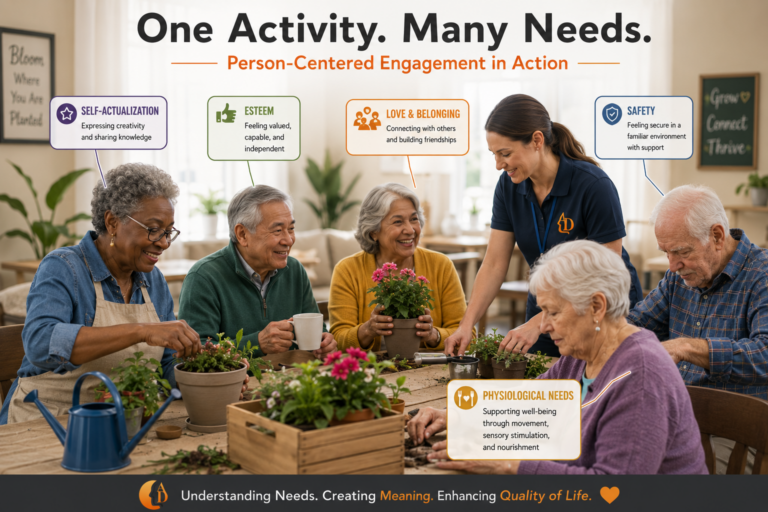
Progress Note Example: Resident attended afternoon gardening program for approximately 30 minutes. Resident chose seed packets, smelled herbs, and shared memories of growing tomatoes with spouse. Required setup assistance due to limited hand strength but completed planting task with encouragement. Resident smiled throughout program and stated, “I used to love doing this.” Continue offering garden-related sensory and reminiscence activities as tolerated.
This note works because it includes the activity, time, support provided, resident response, life history connection, observed preference, and follow-up recommendation. For survey-focused support, see What Surveyors Really Look for in Activity Documentation.
Final Thoughts
Good documentation helps protect the resident’s story. It shows that the activity department is not simply filling a calendar. It is observing, adapting, supporting, and responding to the real person in front of them.
The best notes are usually clear, specific, and resident-centered. They do not need to be long. They need to help the care team understand what matters, what worked, what changed, and what should happen next.
Strong notes turn activity moments into meaningful care team information.
Frequently Asked Questions
What makes an activity note strong?
A strong activity note includes the resident’s participation, response, support provided, preferences observed, and any follow-up information that may help the care team.
Should activity documentation include refusals?
Yes. Refusals should be documented respectfully, including the invitation, the resident’s response, any reason given, and alternate support offered when appropriate.
Do activity notes need to be long?
No. Activity notes do not need to be long. They need to be clear, specific, and useful to the care team.
What should be avoided in activity notes?
Avoid vague wording, judgmental language, identical copy-and-paste notes, and notes that only say the resident attended without describing response or engagement.

Keep Exploring Documentation Resources
Continue building stronger activity documentation and survey-ready systems with these related Activity Directors Network resources: