What Every Activity Professional Should Know About
CMS, DHHS & F-Tag
Understanding the organizations, regulations, and resident protections that shape senior living and activity programming today.

If you work in senior living, long-term care, memory care, or adult day services, many of the standards guiding your role are connected in some way to the U.S. Department of Health & Human Services (DHHS).
From resident rights to survey regulations, activity documentation expectations, and quality-of-life standards, these systems influence how Activity Professionals provide care, engagement, and meaningful programming every day.
What Is DHHS?
The Department of Health & Human Services (DHHS) is a federal department responsible for protecting public health and supporting the delivery of health and human services across the United States.
For Activity Professionals, DHHS matters because many long-term care regulations, survey processes, and resident protections originate through agencies operating under DHHS oversight.
These systems help establish:
- Resident rights protections
- Quality-of-life expectations
- Survey and compliance standards
- Medicare and Medicaid participation requirements
- Care planning and documentation expectations
If you’re new to the profession, this may help provide context:
What Does an Activity Director Do?
Key Agencies Activity Professionals Should Recognize
Several agencies connected to DHHS influence senior living and healthcare operations.
Centers for Medicare & Medicaid Services (CMS)
CMS plays one of the largest roles in long-term care regulation and oversight.
CMS helps establish:
- Federal nursing home regulations
- Survey expectations
- Resident care standards
- F-Tag guidance
- Medicare and Medicaid participation requirements
Many Activity Professionals become familiar with CMS through surveys, care planning, documentation, and compliance processes.
Related reading:
What Survey Tags Apply to Activity Departments?
National Institute on Aging (NIA)
The National Institute on Aging (NIA) supports aging-related research and education, including dementia care, healthy aging, caregiver support, and cognitive health initiatives.
Its research influences many best practices now used in:
- Memory care programming
- Dementia engagement approaches
- Person-centered care
- Quality-of-life interventions
You may also enjoy:
Visual Stimulation for Alzheimer’s Disease and Dementia
Food and Drug Administration (FDA)
The FDA regulates medications, medical devices, food safety, and health-related products that impact healthcare communities nationwide.
While Activity Professionals do not directly work under FDA regulations, the broader healthcare environment surrounding resident care is influenced by FDA oversight.
Understanding OBRA ’87 and Resident Rights
One of the most important pieces of legislation affecting long-term care is commonly referred to as OBRA ’87 (Omnibus Budget Reconciliation Act of 1987), also known as the Nursing Home Reform Act.
This legislation strengthened protections for nursing home residents and emphasized:
- Resident dignity
- Individualized care planning
- Quality of life
- Resident choice
- Meaningful activities
- Interdisciplinary care approaches
Modern activity programming is deeply connected to these principles.
Today’s Activity Professionals are expected to support:
- Person-centered engagement
- Resident preferences and interests
- Psychosocial well-being
- Choice and autonomy
- Emotional connection and purpose
Related article:
One Small Shift for More Meaningful Activities in Senior Living
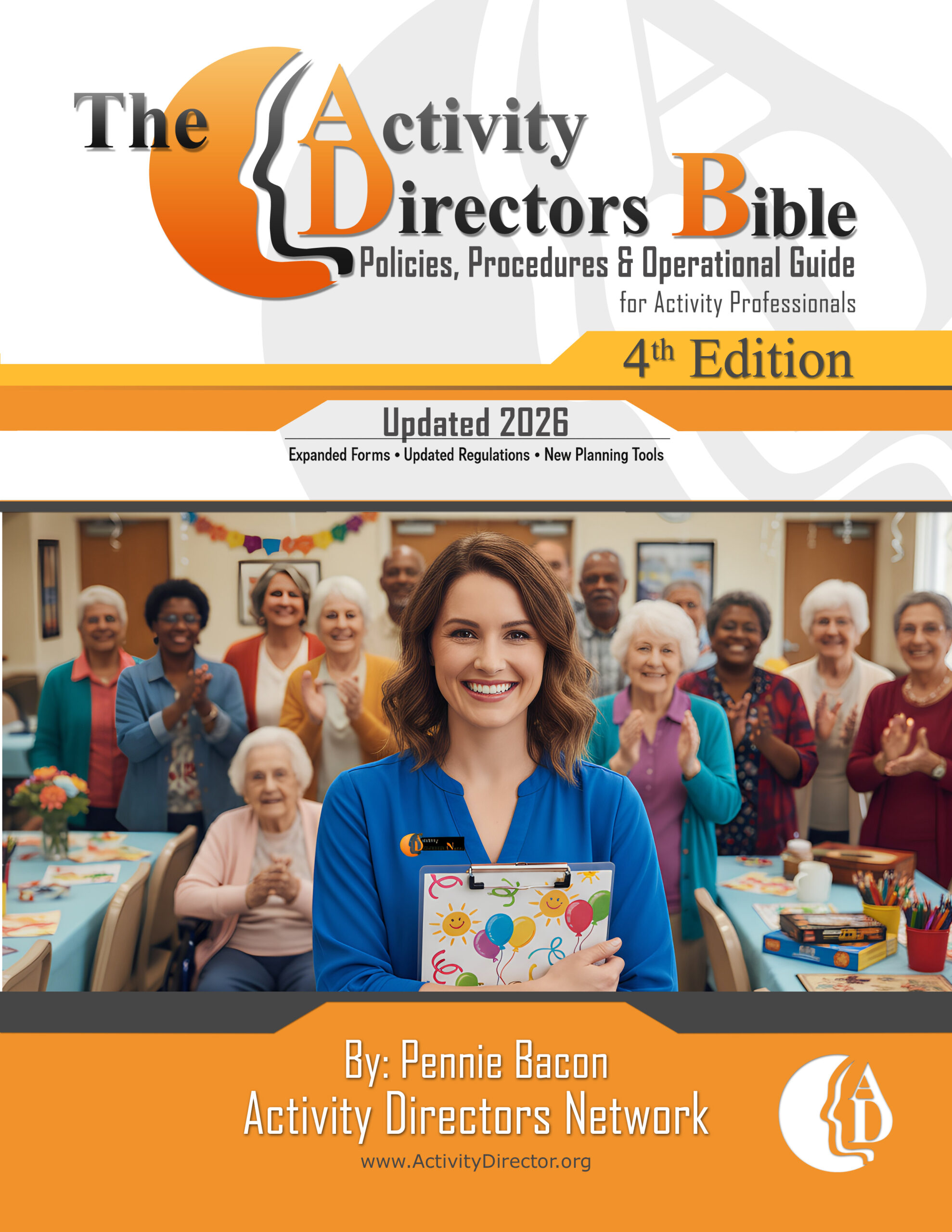
The Activity Directors Bible
A complete operational guide for Activity Professionals who want stronger systems, better documentation, and more confidence in daily practice.
Built to help you organize your department, support survey readiness, and stop reinventing everything from scratch.
Care Plan Support
Policies & Procedures
F-Tags Activity Professionals Should Know
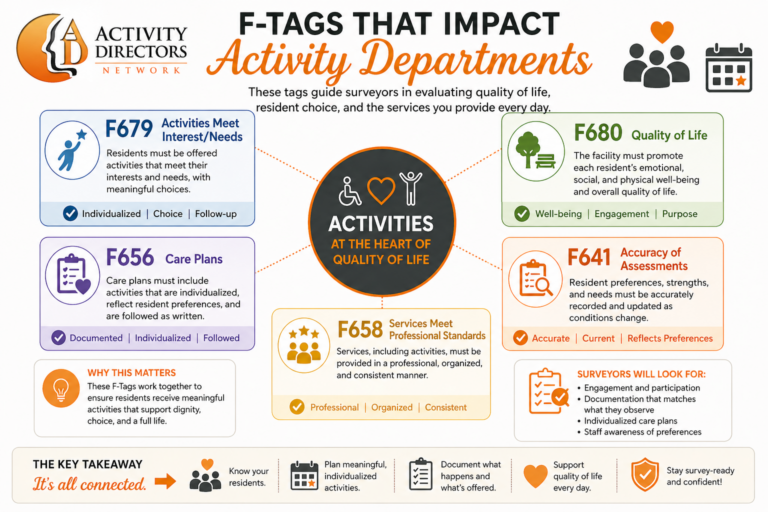
Activity departments are especially connected to two commonly referenced federal F-Tags:
- F679 – Activities Meet the Interests and Needs of Each Resident
- F680 – Qualifications of Activity Professionals
These regulations emphasize that activities should not simply fill time — they should support each resident’s:
- preferences
- abilities
- background
- interests
- physical and emotional well-being
Documentation and programming should reflect individualized engagement whenever possible.
Additional reading:
What Surveyors Really Look for in Activity Documentation
These key F-Tags work together to shape how surveyors evaluate engagement, documentation, individualized care, and overall quality of life within Activity Departments.

Modern Terminology and Evolving Standards
Healthcare terminology has evolved significantly over the years, and many older terms used historically in healthcare regulations or educational materials are no longer considered appropriate today.
For example:
- “Mentally retarded” has been replaced with intellectual disability
- “Patients” are often referred to as residents in long-term care settings
- “Activities” increasingly includes concepts like engagement, enrichment, connection, and person-centered programming
Modern senior care continues moving toward:
- dignity-focused language
- trauma-informed care
- resident-directed approaches
- person-centered engagement
- quality-of-life outcomes
This shift reflects the profession’s growing understanding that emotional well-being, identity, autonomy, and meaningful connection matter deeply throughout the aging process.
Related reading:
Missed Signs of Trauma in Senior Care
Why This Knowledge Matters for Activity Professionals
Understanding the broader healthcare system helps Activity Professionals:
- advocate for residents more effectively
- understand survey expectations
- improve interdisciplinary communication
- strengthen documentation practices
- deliver more meaningful programming
- support compliance while preserving dignity and joy
The best Activity Professionals balance:
- regulatory awareness
- human connection
- creativity
- documentation skills
- resident-centered care
Your Next Step
If you’re exploring the Activity Profession or advancing your career in senior living, understanding CMS, DHHS, F-Tags, and resident-centered care is an important foundation.
You may also want to explore:

Frequently Asked Questions
What does DHHS stand for in healthcare?
DHHS stands for the Department of Health & Human Services, the federal department overseeing many public health and healthcare-related agencies in the United States.
What is CMS in senior living?
CMS stands for the Centers for Medicare & Medicaid Services. CMS helps oversee regulations, surveys, and participation requirements for many nursing homes and long-term care communities.
What are F-Tags in long-term care?
F-Tags are federal regulatory guidelines used during nursing home surveys to evaluate compliance with resident care standards, safety expectations, and quality-of-life practices.
What F-Tags apply to activity departments?
The two primary F-Tags connected to activity departments are:
- F679 — Activities Meet Interests and Needs
- F680 — Qualifications of Activity Professionals
Why do Activity Professionals need to understand CMS regulations?
Understanding CMS regulations helps Activity Professionals strengthen documentation practices, support resident-centered care, prepare for surveys, and better advocate for resident quality of life.
What is OBRA ’87?
OBRA ’87, also called the Nursing Home Reform Act, established federal standards focused on resident rights, individualized care, meaningful activities, and quality of life in long-term care settings.