Can a CNA Become an Activity Director?
Yes. CNA experience can be a meaningful starting point for an Activity Director career because it already gives you resident care experience, senior living exposure, and firsthand understanding of resident needs.
Original article by Activity Directors Network
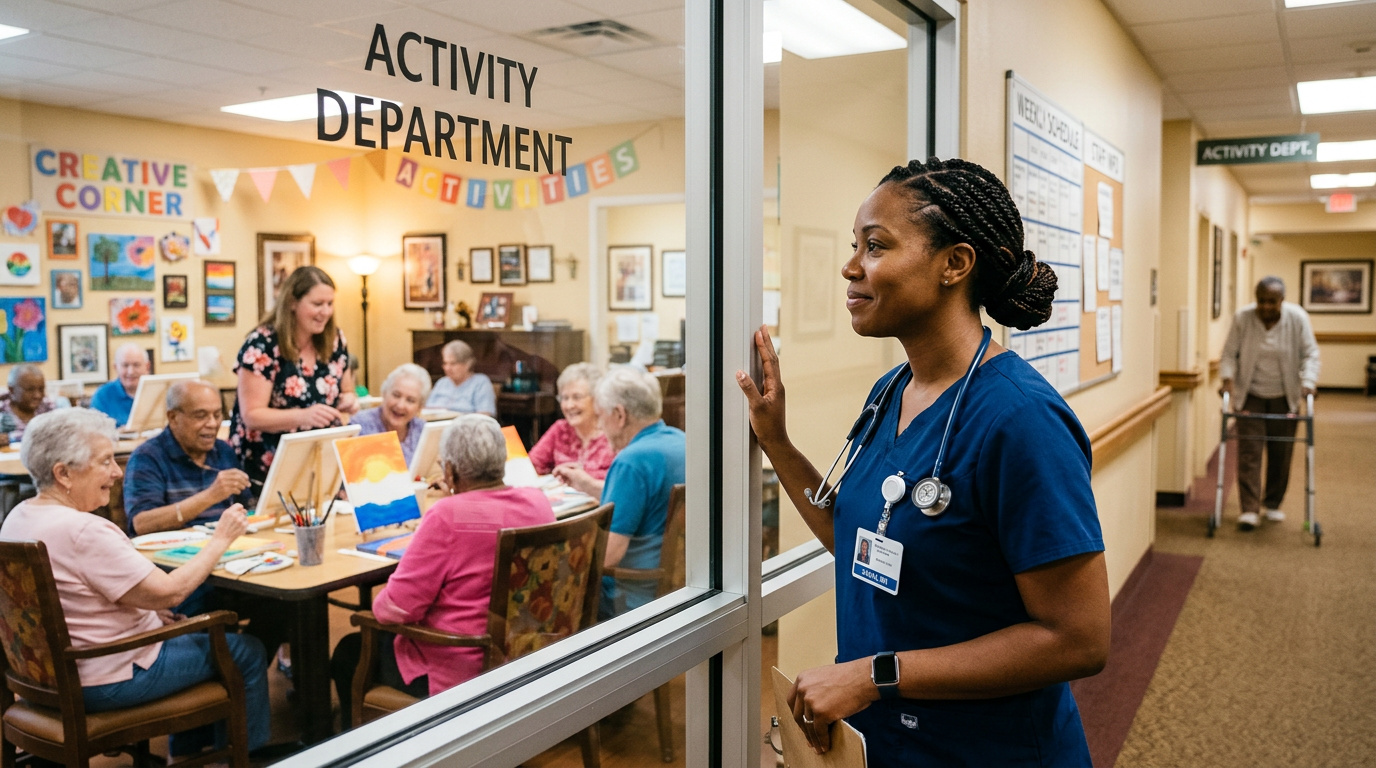
If you are a CNA and you have ever found yourself enjoying the relationship side of care — talking with residents, learning their stories, helping them feel seen, or noticing who needs encouragement — you may have wondered whether there is another role in senior living that fits those strengths.
For many CNAs, the Activity Director path can be a natural next step. It allows you to stay connected to residents while moving into a role focused on engagement, quality of life, care planning, programming, documentation, and leadership.
A CNA background does not automatically make someone an Activity Director, but it can give you a strong foundation. If you already understand resident routines, mobility challenges, dementia behaviors, family concerns, and the pace of long-term care, you are not starting from zero. You are building from experience.
Quick Answer
Can a CNA become an Activity Director?
Yes. A CNA can become an Activity Director, especially with the right training, documentation skills, activity programming knowledge, and understanding of certification requirements. CNA experience can be valuable because it provides direct resident care experience and familiarity with senior living environments.
Why CNA Experience Can Help
CNAs often know residents in ways that are deeply practical and personal. They may notice who becomes anxious before meals, who loves music, who needs extra encouragement, who responds better to humor, or who feels most comfortable with familiar routines.
That kind of observation matters in activities. Activity Professionals do not simply fill a calendar. They create opportunities for connection, purpose, movement, memory, creativity, routine, and dignity. CNA experience can help you understand how real resident needs show up during the day.
Resident Awareness
CNAs often understand resident habits, preferences, routines, and comfort needs.
Care Team Experience
CNAs already understand teamwork, communication, safety, and the pace of senior care.
Dementia Insight
Many CNAs have firsthand experience supporting residents with confusion, anxiety, or changing abilities.
Compassionate Presence
The best Activity Professionals know how to build trust, listen well, and make residents feel valued.
What Changes When You Move from CNA to Activities?
The Activity Director role is different from direct care. Instead of focusing mainly on physical care tasks, the Activity Director focuses on quality of life, resident engagement, individualized programming, activity assessments, care planning, documentation, team communication, and department leadership.
This means a CNA moving into activities may need to strengthen skills in planning, documentation, group leadership, calendar development, resident assessment, regulations, and survey readiness. These are teachable skills, especially when you already understand the residents and the care setting.
- As a CNA: You may assist with daily care, mobility, meals, comfort, and resident safety.
- As an Activity Professional: You support engagement, participation, preferences, purpose, social connection, and quality of life.
- As an Activity Director: You may lead the department, complete assessments, create care plan approaches, document services, supervise staff, and prepare for survey expectations.
- The bridge: Your CNA experience helps you understand the resident. Training helps you understand the activity profession.
Do CNAs Need Activity Director Training?
In many cases, yes. CNA experience can help, but Activity Director work has its own body of knowledge. Training helps you understand activity programming, documentation, regulations, assessments, care plans, group leadership, resident rights, dementia support, and professional expectations.
If your goal is to become an Activity Director, start by learning the certification pathway and what training may be expected in your state or facility type. Activity Directors Network’s How to Become an Activity Director guide is a helpful starting point.
You may also want to review Do You Need Certification to Be an Activity Director? so you can better understand how training, experience, and certification may work together.

Curious About This Career?
Download the free Activity Director Career Pack to get a clearer look at the role, who it’s right for, and how people get started in this meaningful path.
- See what the role really involves
- Learn why people switch into it from caregiving and healthcare
- Explore the first step toward certification
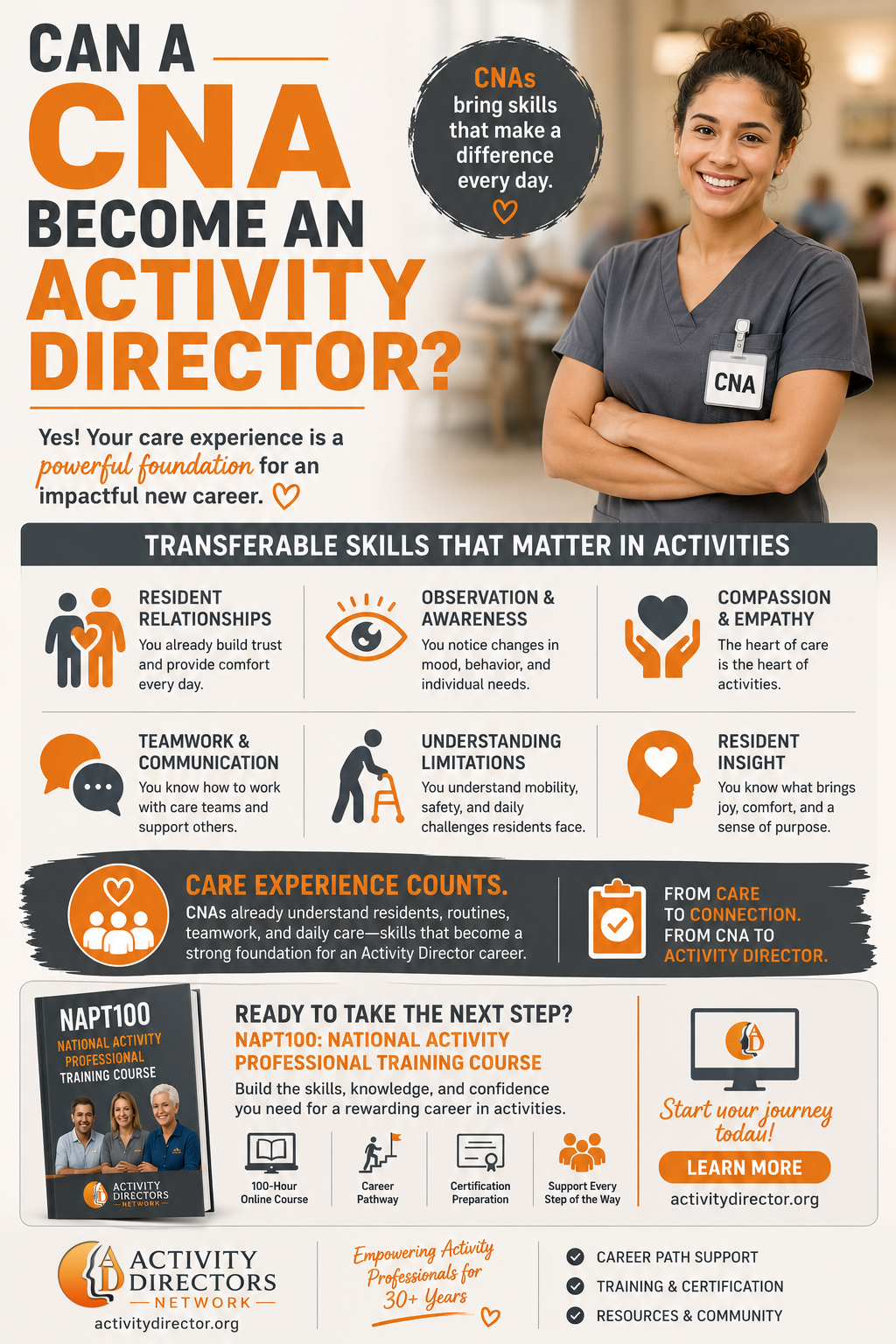
Skills CNAs Already Bring to the Activity Department
Many CNA skills transfer beautifully into the activity department. The key is learning how to use those skills in a new way.
Helpful CNA strengths include:
- Knowing how to communicate with residents who need patience and reassurance
- Understanding mobility limitations and safety concerns
- Recognizing changes in mood, appetite, participation, or behavior
- Being comfortable around residents with dementia or confusion
- Understanding how important dignity, choice, and routine are in daily care
- Working as part of a senior living care team
These strengths can help you become a more observant and compassionate Activity Professional. However, they need to be paired with activity-specific knowledge, especially when it comes to assessments, care plans, programming, and documentation.
How to Start Moving Toward the Activity Director Role
If you are currently working as a CNA, you do not have to make the entire leap overnight. You can begin building experience and confidence while you are still in your current role.
1. Volunteer to Help With Activities
Ask if you can assist with group programs, special events, one-on-one visits, or transporting residents to activities when appropriate.
2. Learn What Activity Directors Actually Do
The role includes much more than games and events. Read about what an Activity Director does so you understand the full scope of the profession.
3. Build Documentation Confidence
Activity documentation is a major part of the role. Practice observing engagement, resident response, preferences, refusals, and changes in participation.
4. Begin Formal Training
A structured Activity Director training course can help you connect your care experience to professional activity practice.
Documentation Example
Progress Note Example: Resident attended morning music program with encouragement from CNA familiar to resident. Resident appeared hesitant at first but smiled when familiar gospel music began. CNA remained nearby for reassurance. Resident sang along to two songs and remained in group for 25 minutes. Continue offering familiar music programs and trusted staff encouragement when available.
This example shows how a CNA’s relationship with the resident can support activity participation. It also shows why communication between nursing assistants and the activity department can be so valuable.
Final Thoughts
A CNA can absolutely become an Activity Director. In fact, many CNAs already have the heart of the work: patience, resident awareness, compassion, flexibility, and firsthand understanding of daily life in senior care.
The next step is learning the professional side of activities: programming, documentation, assessments, care planning, regulations, leadership, and certification pathways. With the right training and support, CNA experience can become a powerful foundation for a meaningful Activity Director career.
Your care experience may already be pointing you toward your next professional chapter.
Frequently Asked Questions
Can a CNA become an Activity Director?
Yes. A CNA can become an Activity Director with the right training, experience, and understanding of activity programming, documentation, care planning, and certification expectations.
Does CNA experience help in activities?
Yes. CNA experience can be very helpful because it gives you direct resident care experience, familiarity with senior living routines, and insight into resident needs, preferences, and comfort.
Do CNAs still need Activity Director training?
Usually, yes. CNA experience is valuable, but Activity Director work requires additional knowledge in programming, documentation, assessments, care planning, regulations, and department leadership.
Is becoming an Activity Director a good next step for a CNA?
It can be a strong next step for CNAs who enjoy resident relationships, creativity, planning, communication, and quality-of-life support in senior living settings.



Keep Exploring Activity Director Career Resources
Continue learning about the Activity Director career path with these related Activity Directors Network resources: