Resolving Resident Conflict: Discover Patterns That Lead to Outbursts
How to recognize behavior patterns, identify possible triggers, and support residents with dignity before conflict escalates.
Original article by Celeste Chase · Updated by Activity Directors Network
Author Credit: This article is based on the original work of Celeste Chase for Activity Directors Network’s Consultant’s Help Desk series. It has been updated and reformatted by Activity Directors Network to fit today’s person-centered activity programming, care team support, and blog format.
In Part I of this resident conflict series, we looked at what actions fall under the “combative behavior” umbrella and reviewed basic behavior intervention reminders. Part II moves deeper into the patterns that may lead to resident outbursts.
A resident’s outlook toward the aging experience can be unique from one individual to another. It may be influenced by heredity, lifestyle, emotional health, personal attitudes, environment, physical comfort, cognitive changes, and past life experiences.
The more clearly a team can recognize patterns, the more effectively they can prevent avoidable distress, support dignity, and build stronger person-centered planning around the resident’s actual needs.
Quick Answer
How do you identify patterns that lead to resident outbursts?
Look for repeated triggers such as environmental discomfort, fatigue, sensory loss, pain, medication changes, poor nutrition, lack of stimulation, confusion, memory loss, or unmet needs. Patterns become clearer when staff observe consistently, document carefully, and adjust the care plan based on what is actually happening.
Difficult Behaviors Staff May Notice
Difficult behaviors can appear in different ways. Some residents may become restless or agitated, while others may become mistrustful, demanding, withdrawn, or overwhelmed. These behaviors should not be viewed only as “problems.” They may be clues that something in the resident’s body, environment, routine, or emotional experience needs closer attention.
Restlessness
Pacing, fidgeting, repeated movement, or difficulty settling may signal discomfort, anxiety, boredom, or unmet needs.
Agitation
Agitation may appear when a resident feels overstimulated, rushed, confused, frightened, tired, or unable to communicate clearly.
Aggressiveness
Combativeness or aggression may be a response to fear, pain, overstimulation, loss of control, or misunderstanding what is happening.
Mood Changes
Mood swings, mistrust, hallucinations, critical behavior, or demanding behavior may reflect deeper physical, cognitive, or emotional stress.
Changes that challenge many aging adults can affect self-worth, independence, self-esteem, confidence, and identity. Multiple losses and adjustments may leave a resident feeling unsure of who they are, where they belong, and whether they still have control over their daily life.
The first step is to recognize patterns that lead to outbursts and identify the triggers that may initiate combative behavior. A behavior care plan should address predicted patterns, realistic goals, prevention strategies, and safe intervention steps. Regardless of the circumstances, residents must always be treated with respect and dignity.
Possible Causes and Supportive Solutions
When behavior changes occur, look for the cause. The trigger may be visible, such as a loud room or uncomfortable temperature, or it may be less obvious, such as pain, fatigue, sensory changes, hunger, or confusion.
Environmental Surroundings
The room may be too cold or too hot, too bright or too dark, or too loud. Shadows from poor lighting may feel frightening to a resident, even when staff do not see the same threat. Adjust temperature, dim lights, close blinds, reduce noise, and observe the environment carefully for possible triggers.
Fatigue
Residents who become overwhelmed or overtired may be at higher risk for unwanted behavior. When fatigue appears, offer a quiet place, reduce stimulation, and allow the resident to rest and reset.
Sensory Loss
Vision or hearing loss can cause residents to misinterpret communication, movement, shadows, sounds, or unfamiliar surroundings. Make sure corrective lenses and hearing aids are available when needed. Environmental and sensory supports may also help; see Visual Stimulation for Alzheimer’s Disease and Dementia.
Pain or Physical Illness
Older adults may become less able to communicate pain clearly due to illness, cognitive change, or declining health. Staff should watch for nonverbal signs of pain, constipation, urinary tract infections, dehydration, or other physical concerns and seek appropriate clinical follow-up.
Medication Interactions or Side Effects
Medication changes or drug interactions may affect mood, alertness, behavior, sleep, appetite, balance, or confusion. Nursing should evaluate, monitor, and communicate concerns to the physician as needed.
Inadequate Nutritional Intake
Changes in taste or smell, poor dental health, missing teeth, poorly fitting dentures, illness, or lack of appetite can affect nutrition and well-being. Familiar flavors, preferred foods, improved seasoning, and mealtime observation may help identify patterns.
Decreased Physical and Cognitive Stimulation
Lack of stimulation can contribute to frustration and outbursts. Work with nursing, therapy, and the care team to offer appropriate physical activity, cognitive engagement, comfort-based programming, and meaningful choices.
Confusion or Memory Loss
Maintain a calm environment, reassure the resident, use familiar routines, and avoid unnecessary changes to furnishings or surroundings. Consistency and calm communication can help residents feel safer. Familiar words and cues may also support connection in memory care.
Calendar Club Monthly Activity System
Need fresh, resident-centered activity ideas every month? Calendar Club gives Activity Professionals practical planning support, printable resources, and monthly inspiration for real senior living communities.
Built to help you plan meaningful programs, support engagement, and stop starting from scratch every time a new month rolls around.
Printable Resources
Activity Ideas
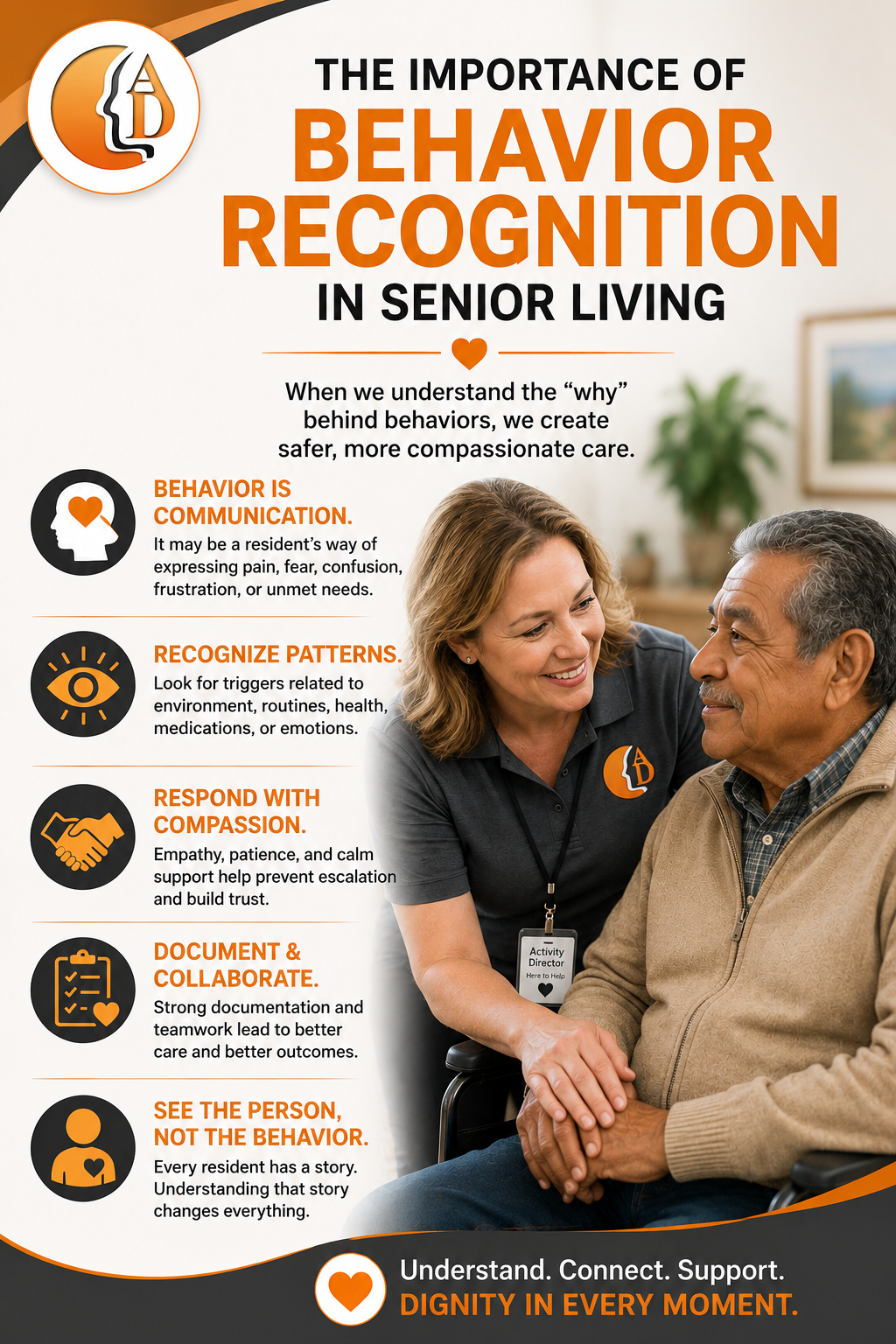
Why Pattern Recognition Matters
The resident’s perception of reality may be altered because of cognitive changes, illness, pain, sensory loss, or emotional distress. A care interaction that seems non-threatening to staff may feel frightening or invasive to the resident.
Residents who cannot verbalize hunger, pain, thirst, toileting needs, discomfort, body temperature changes, or disrupted sleep may use combative words, threatening gestures, or resistance as a way to express need.
Assessments should include daily observation, identification of triggers, review of the behavior care plan, and adjustments when current interventions are not working. Strong activity documentation can help the team see whether patterns are improving, worsening, or repeating.
Documentation Example
Progress Note Example: Resident was observed pacing near the dining room before lunch and became verbally agitated when approached by staff. Staff noted increased noise level, crowding near doorway, and resident rubbing lower back. Resident was redirected to a quieter seating area, offered reassurance, and nursing was notified to assess possible discomfort. Team will continue monitoring time of day, noise level, pain indicators, and response to quieter transitions.
Final Thoughts
A successful behavior support plan cannot be fully integrated unless every healthcare professional responsible for the resident’s care understands the plan and follows it consistently.
Patterns matter because they help the team move from reacting to behavior toward understanding what the resident may be experiencing. When the team observes carefully, communicates clearly, and adjusts the care plan thoughtfully, residents are more likely to feel safe, respected, and supported.
Patterns help us see what the behavior is trying to tell us.
Frequently Asked Questions
What kinds of patterns should staff look for?
Staff should look for repeated connections between behavior and time of day, noise level, care routines, hunger, pain, fatigue, toileting needs, environmental changes, or specific interactions.
Can the environment really trigger outbursts?
Yes. Noise, temperature, lighting, shadows, crowding, clutter, unfamiliar rooms, and sudden changes can all contribute to fear, confusion, and agitation.
Why is pain so important to consider?
Pain may not always be verbalized clearly, especially when a resident has cognitive impairment or communication difficulty. Behavior changes may be one of the first visible signs that something is wrong.
Who should follow the behavior care plan?
Everyone responsible for the resident’s care should understand and follow the plan consistently. Behavior support is most effective when the entire team uses the same approach.






Keep Exploring Resident Support Resources
Continue building stronger, more person-centered support with these related Activity Directors Network resources: