“I’m Bored.” What Residents May Really Be Telling Us
How resident-led brainstorming sessions can transform your activity calendar into something more meaningful, personal, and engaging.
Original article by Kathleen “Kathy” Hughes, ADC · Updated by Activity Directors Network
Author Credit: This article is based on the original work of Kathleen “Kathy” Hughes, ADC. It has been updated and expanded by Activity Directors Network to fit today’s person-centered activity programming and blog format.
Few phrases challenge Activity Professionals more than:
“I’m bored.”
You may hear it from residents, families, or even staff members who feel activities have become repetitive or disconnected from what people truly enjoy.
But boredom is often not a lack of activities. It may be a lack of ownership.
Residents may not want more things placed on a calendar. They may want meaningful opportunities to help create it.
Quick Answer
How do you reduce resident boredom?
Rather than simply adding more activities, involve residents in creating them. Resident brainstorming sessions help uncover meaningful memories, personal interests, seasonal traditions, and opportunities for ownership.
Why Traditional Calendars Sometimes Miss the Mark
Many Activity Professionals experience situations where residents request activities but do not attend, younger residents avoid group programs, or families say programming feels repetitive.
The issue is not usually effort. The issue is often fit.
Person-centered engagement asks, “What matters to this person?” instead of only asking, “What activity should we schedule?”
This is why strong person-centered care planning matters so much in activity programming. The calendar should not only reflect available supplies, holidays, or staff routines. It should reflect the real people who live there.
The Brainstorming Method Kathy Hughes Shared
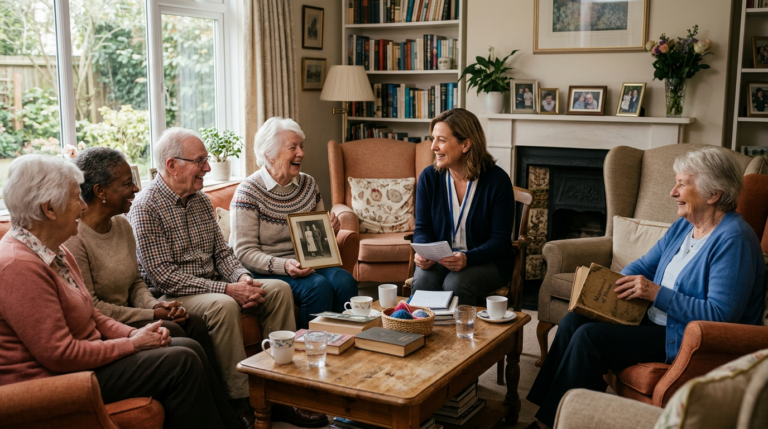
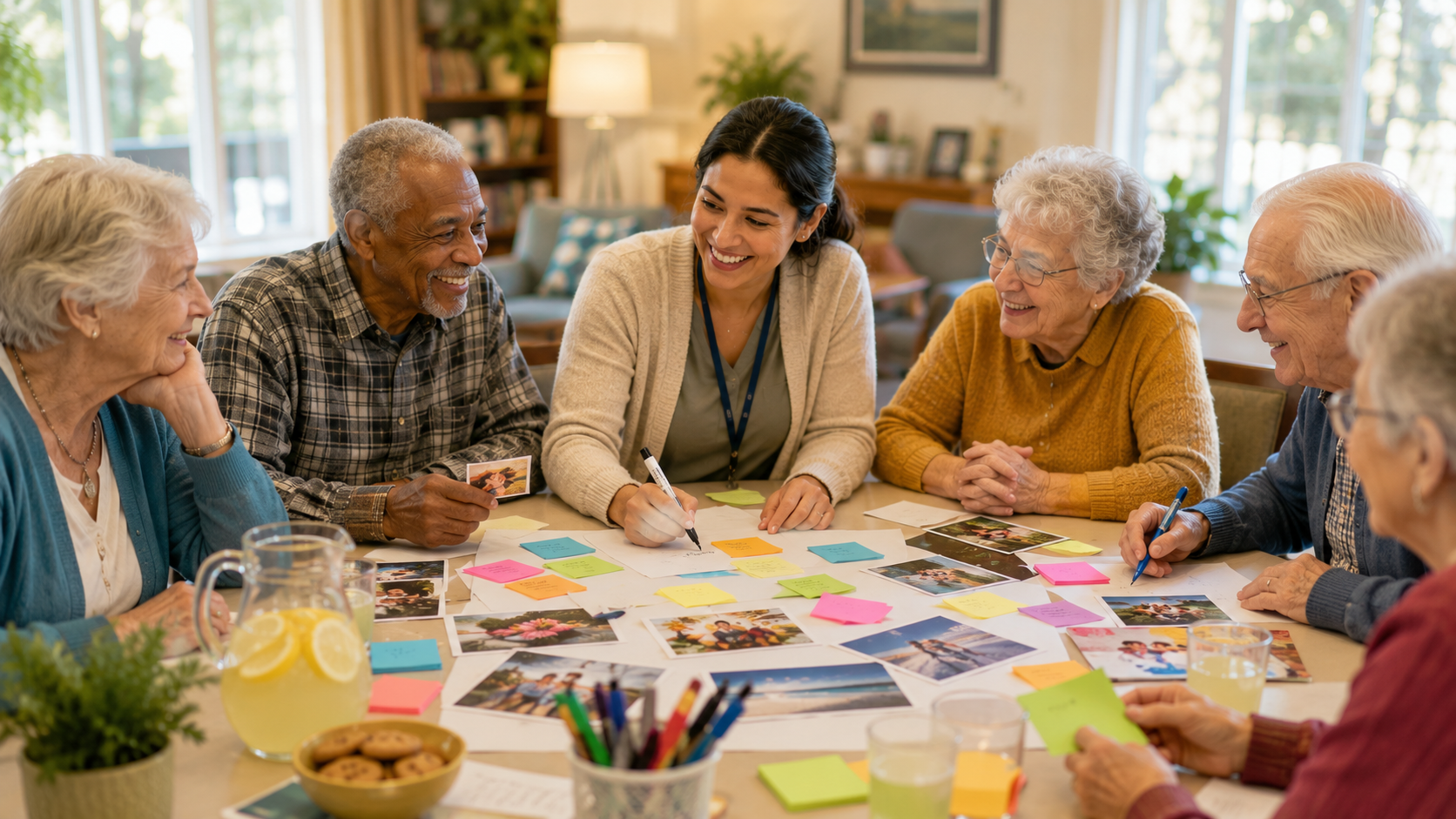
Kathy Hughes described using structured brainstorming sessions with residents and staff to create seasonal calendars. Her process encouraged residents to share memories, generate ideas, and participate in the planning of future programs.
Supplies
- Flip chart paper
- Markers
- Tape
- Snacks and drinks
- Comfortable seating
Participants
- Resident Council members
- Activity Committee members
- Interested residents
- Staff support team
Important Rule: No idea is a bad idea during brainstorming.
Seasonal Conversation Starters
Kathy’s original summer brainstorming questions remain powerful today:
- What did you do as a child during the summer?
- What did your family do together in the summer?
- What is your fondest memory of a summer vacation?
- What is the best thing you ever did in the summer?
These questions can be adapted for spring, fall, winter, holidays, music memories, favorite jobs, travel experiences, family traditions, or community events.
From Memory to Activity Idea
The power of brainstorming is that one memory can become a meaningful activity experience.
| Resident Memory | Activity Idea |
|---|---|
| Catching lightning bugs | Evening glow jar activity |
| Camping with family | Indoor campfire social |
| Lemonade stands | Resident-run fundraiser |
| Swimming at the lake | Beach day theme |
| Gardening | Raised garden project |
Calendar Club Monthly Activity System
Need fresh, resident-centered activity ideas every month? Calendar Club gives Activity Professionals practical planning support, printable resources, and monthly inspiration for real senior living communities.
Built to help you plan meaningful programs, support engagement, and stop starting from scratch every time a new month rolls around.
Printable Resources
Activity Ideas
Why Ownership Changes Everything
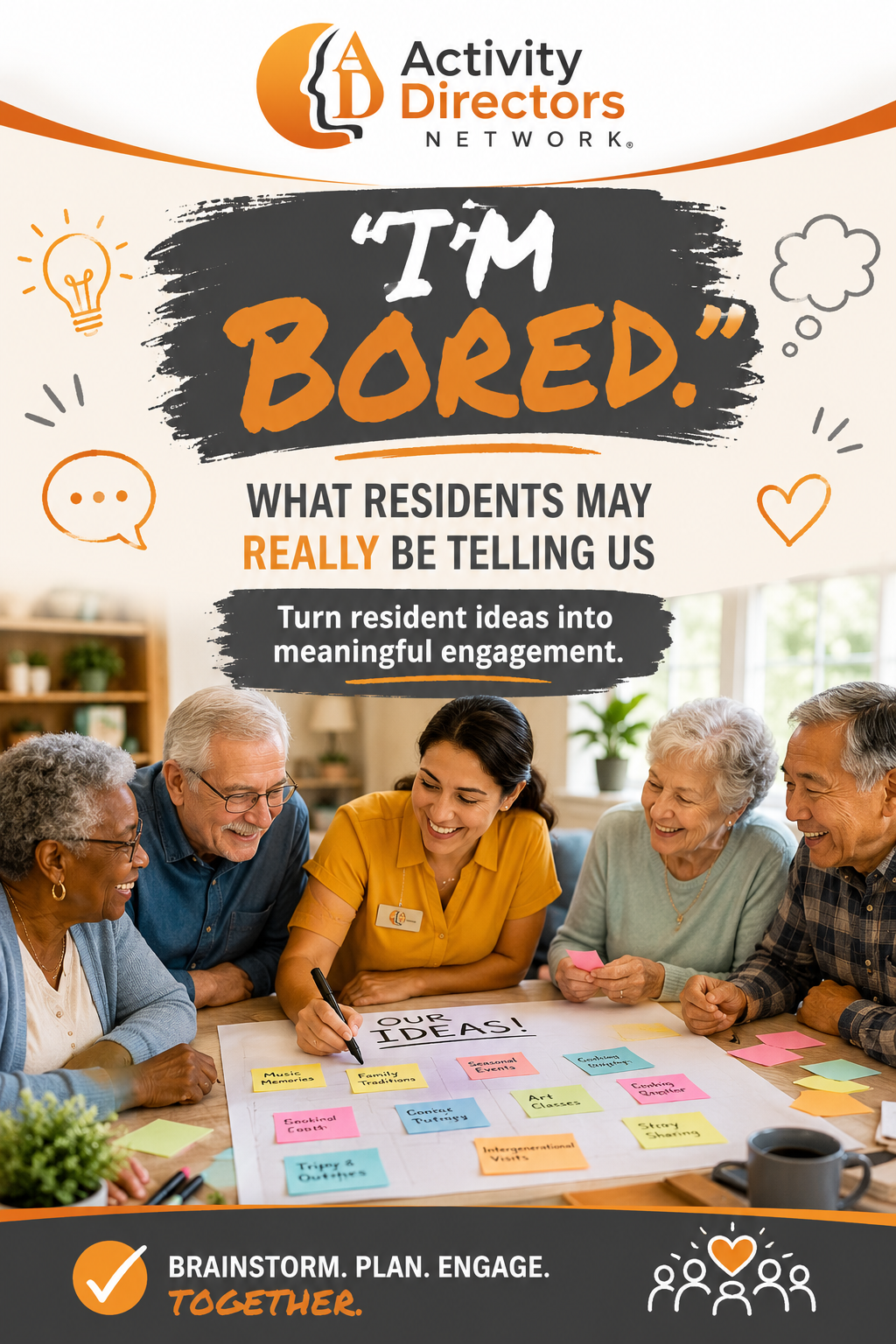
Kathy shared that residents who helped create activities often became more involved in the entire process. They helped decorate, made invitations, prepared handouts, created door prizes, encouraged others to attend, and took pride in the finished event.
That shift matters.
People naturally engage more deeply in experiences they helped create. When residents see their memories reflected on the calendar, the activity becomes more than entertainment. It becomes identity, connection, and purpose.
Documentation Example
Progress Note Example:
Resident participated in seasonal brainstorming group and independently shared childhood memories related to summer activities. Resident demonstrated positive affect, social interaction, and active participation in planning future programming opportunities.
Final Thoughts
Residents rarely want a calendar full of random events. They want purpose. They want connection. They want their histories, interests, and identities reflected in daily life.
Sometimes “I’m bored” is not asking for something new.
It may be asking, “Do I still have a voice here?”
Frequently Asked Questions
How often should resident brainstorming sessions happen?
Quarterly works well because it allows seasonal planning and gives the activity team enough time to prepare.
Should residents with cognitive impairment participate?
Yes. Adapt the process with photos, music, sensory items, shorter questions, smaller groups, and supportive prompting.
What if residents suggest unrealistic ideas?
Capture all ideas first. Adapt later. The brainstorming stage should encourage creativity before narrowing ideas into realistic calendar plans.
Can brainstorming improve participation?
Often, yes. Residents are more likely to attend and promote activities when they helped shape the idea.



Keep Exploring Activity Planning Resources
Continue building stronger, more person-centered activity programs with these related Activity Directors Network resources: