New Developments in Activity Therapy
(And How to Use Them in Your Department)
A practical look at what’s evolving in activity programming—and simple ways to apply it right away.
Activity therapy continues to evolve—and many of the most effective changes are simple shifts you can start using immediately.

If you’ve noticed that traditional activities don’t always land the same way they used to, you’re not alone.
The field is shifting—not toward more complicated programming, but toward **more adaptable, engaging, and resident-centered approaches**.
Here are a few developments happening right now—and how to actually use them.
Sensory-Based Programming Is Expanding
There is a growing focus on engaging the senses—especially for residents with cognitive changes.
This includes:
- familiar sounds and music
- textures and hands-on materials
- scents tied to memory and routine
How to use this:
You don’t need a separate program.
Add one sensory layer to something you already do:
- play music during activities
- incorporate textured items into crafts
- use simple, familiar scents like coffee or vanilla
Flexible, Come-and-Go Activity Formats
Long, structured activities are being replaced with more flexible formats.
Instead of requiring full participation from start to finish, activities are being designed so residents can:
- join at any point
- participate briefly or fully
- leave and return comfortably
How to use this:
Set up one activity this week as a drop-in format:
- a table activity running for an extended period
- repeating short sessions instead of one long one
- open participation without pressure
Purpose-Driven Participation
There is more emphasis on giving residents a **role within the activity**, not just participation.
This can include:
- helping set up or pass out materials
- leading a small portion of the activity
- supporting other residents
How to use this:
Identify one resident during an activity and give them a simple, meaningful role.
This creates engagement without changing the activity itself.
Adaptation Instead of Replacement
Instead of removing activities that don’t “work,” the focus is shifting toward adapting them.
That means:
- simplifying steps
- adding visual or verbal cues
- allowing multiple ways to participate
How to use this:
Take one activity you already run and create:
- a simplified version
- a guided version
- an observational or sensory option
Same activity—more access points.
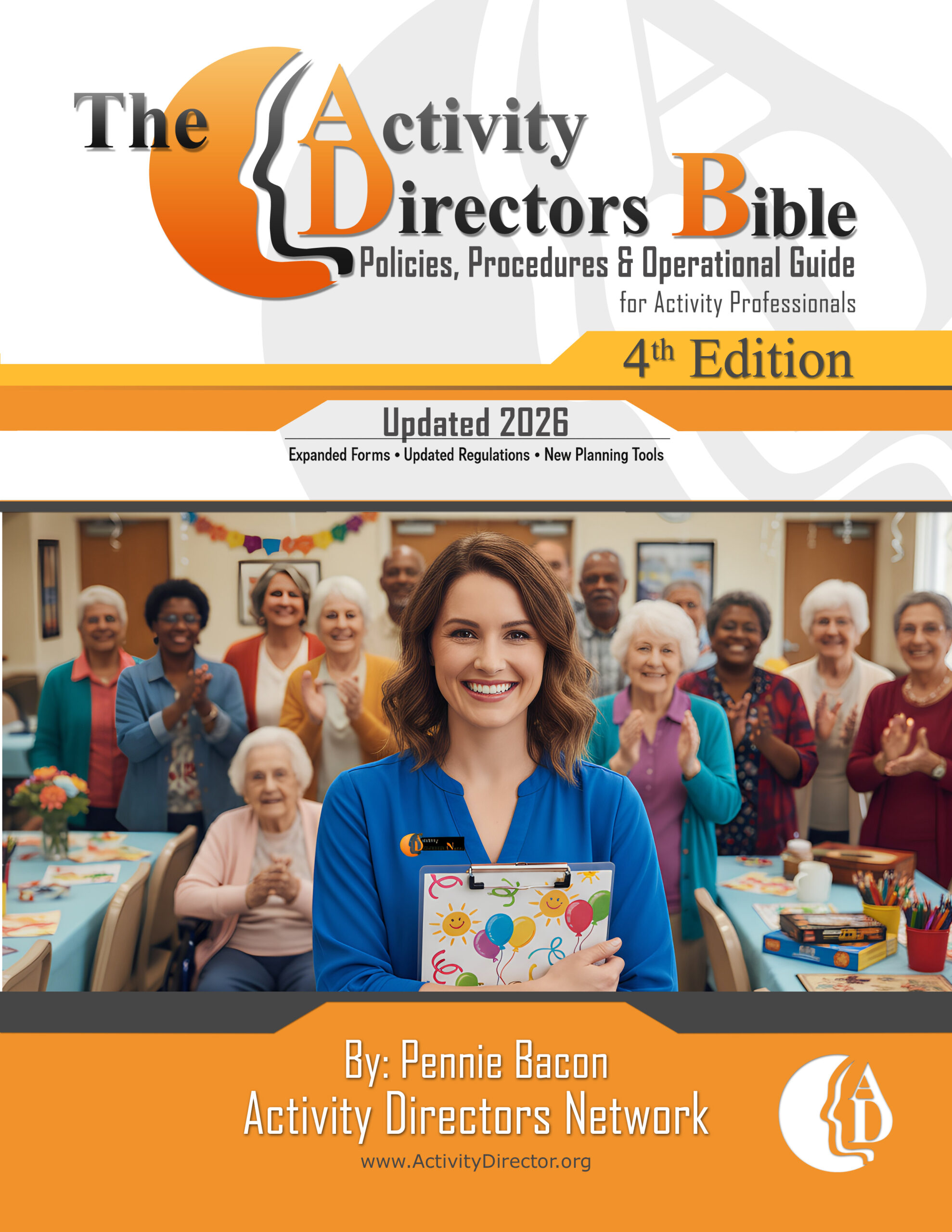
The Activity Directors Bible
A complete operational guide for Activity Professionals who want stronger systems, better documentation, and more confidence in daily practice.
Built to help you organize your department, support survey readiness, and stop reinventing everything from scratch.
Care Plan Support
Policies & Procedures
Where This Is Headed
Activity therapy is becoming less about structured perfection and more about **flexibility, access, and meaningful engagement**.
Most of these changes don’t require new programs.
They come from adjusting how activities are delivered.
Small shifts can make a noticeable difference in participation and connection.
Keep It Simple and Practical
You don’t need to overhaul your entire program.
Start with one activity this week and apply one of these shifts.
That’s how departments evolve—one practical adjustment at a time.