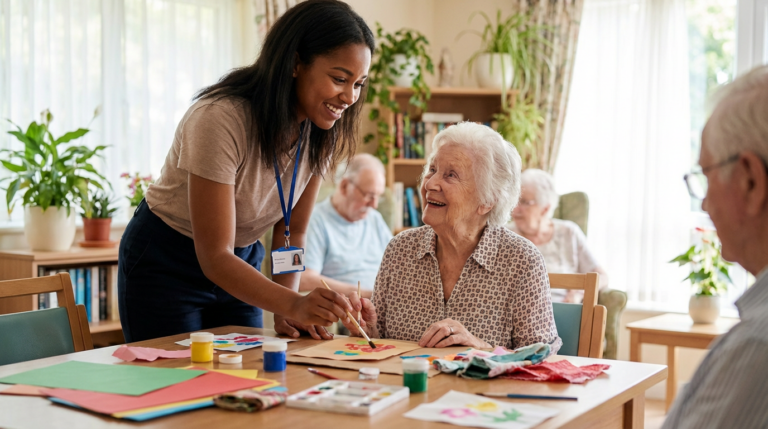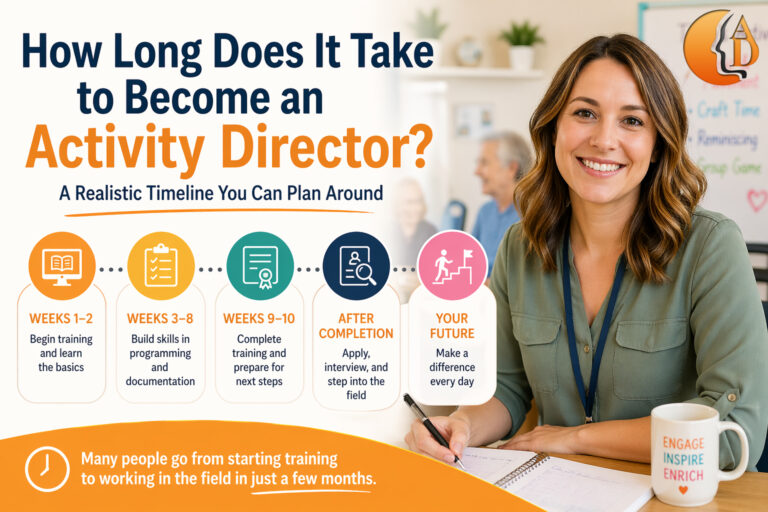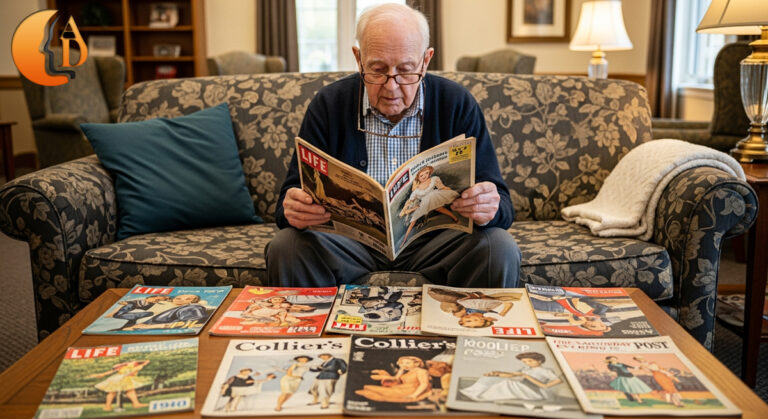
Activity Assistant Training Center
Activity Assistant Certification Training for Senior Living
A supportive guide to Activity Assistant roles, CAAP training, meaningful engagement, senior living career growth, and practical department teamwork.
Created by Activity Directors Network
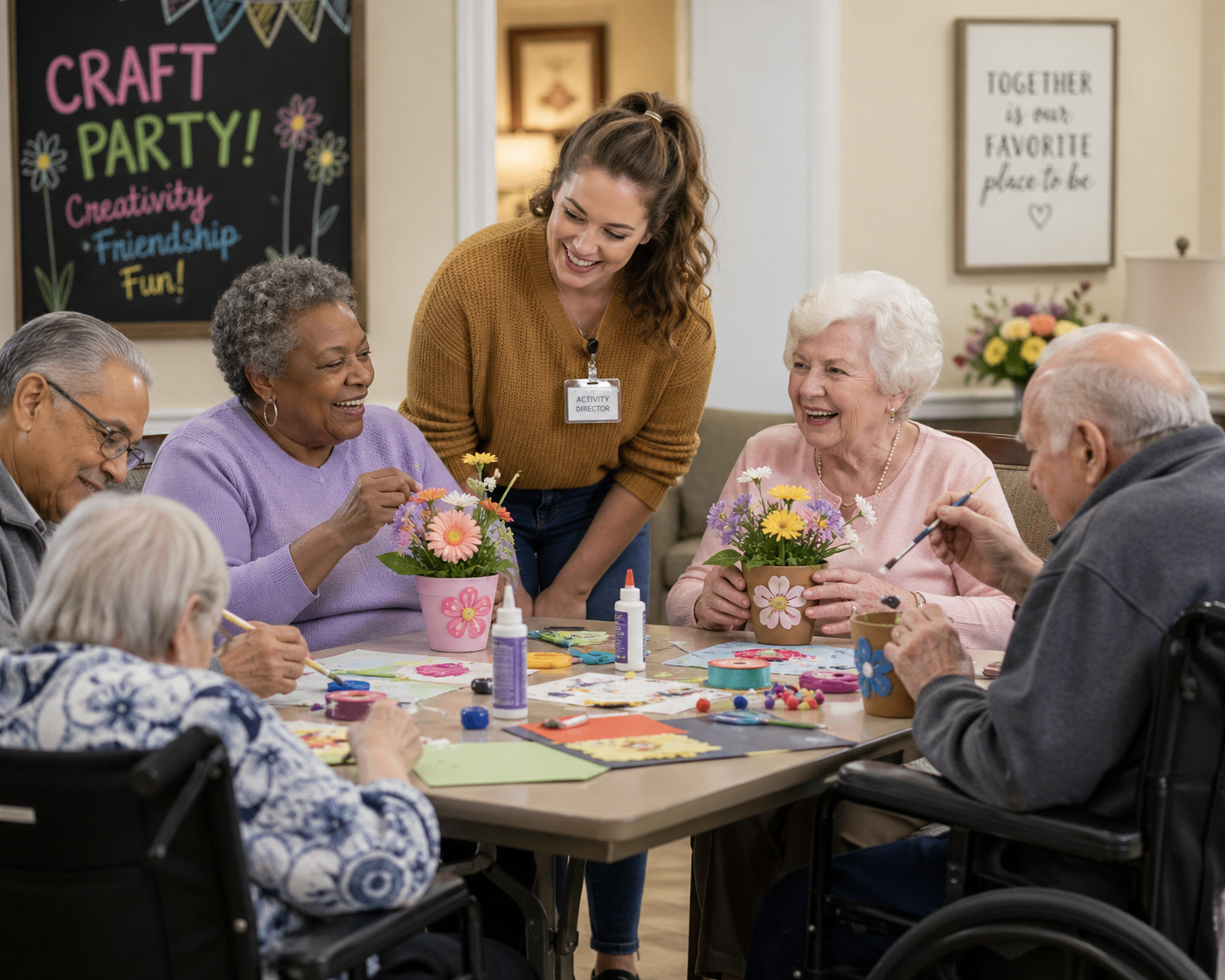
Many people become Activity Assistants unexpectedly. Sometimes they begin helping with activities after working as a caregiver or CNA. Sometimes they discover they enjoy connecting with residents and creating meaningful moments throughout the day.
Activity Assistants help shape the emotional environment of a senior living community every single day. Their work supports connection, comfort, dignity, participation, and quality of life.
Start Here
Your Complete Activity Assistant Resource Guide
This page serves as ADN’s central Activity Assistant hub covering the role itself, meaningful engagement, practical training, career growth, dementia support, and Activity Department teamwork.
Use this as your starting point and continue exploring the related resources throughout the page.
Quick Answer: Activity Assistants support resident engagement, activities, emotional connection, and quality of life inside senior living communities. Many communities provide on-the-job learning, while others seek additional Activity Assistant training and professional development such as CAAP.
What Is an Activity Assistant?
An Activity Assistant helps support the daily activity program in senior living. The role may include group activities, one-on-one visits, supplies, setup, encouragement, documentation support, memory care engagement, and helping residents feel included in community life.
For people who are new to the field, it can also be a meaningful entry point into a long-term senior living career. Learn more about entry pathways in Entry-Level Jobs in Senior Living.
What Does an Activity Assistant Do?
This role goes far beyond helping with games or events. Activity Assistants often help residents feel included, connected, encouraged, and emotionally supported throughout the day.
- Assisting with group activities and events
- Supporting residents one-on-one
- Helping prepare supplies and room setups
- Encouraging participation gently
- Building relationships with residents and families
- Supporting residents living with dementia
- Helping create a positive atmosphere throughout the community
- Communicating observations to the Activity Director
Activity Assistant vs Activity Director
Activity Assistants and Activity Directors work together, but their responsibilities are not exactly the same. Assistants often focus on direct support, setup, engagement, encouragement, and helping activities run smoothly. Directors are usually responsible for the larger department plan, calendar, documentation systems, care planning, compliance, staffing, and leadership.
For a deeper breakdown, read Activity Assistant vs Activity Director: What’s the Difference?
Why Activity Assistants Matter So Much
Residents may spend more daily time interacting with Activity Assistants than almost anyone else in the department. Those everyday interactions matter deeply.
Residents may not remember every activity. But they often remember how someone made them feel.
A strong Activity Assistant can change the tone of the whole department. Read more in Why Strong Activity Assistants Change Everything.
You Don’t Need a Perfect Background
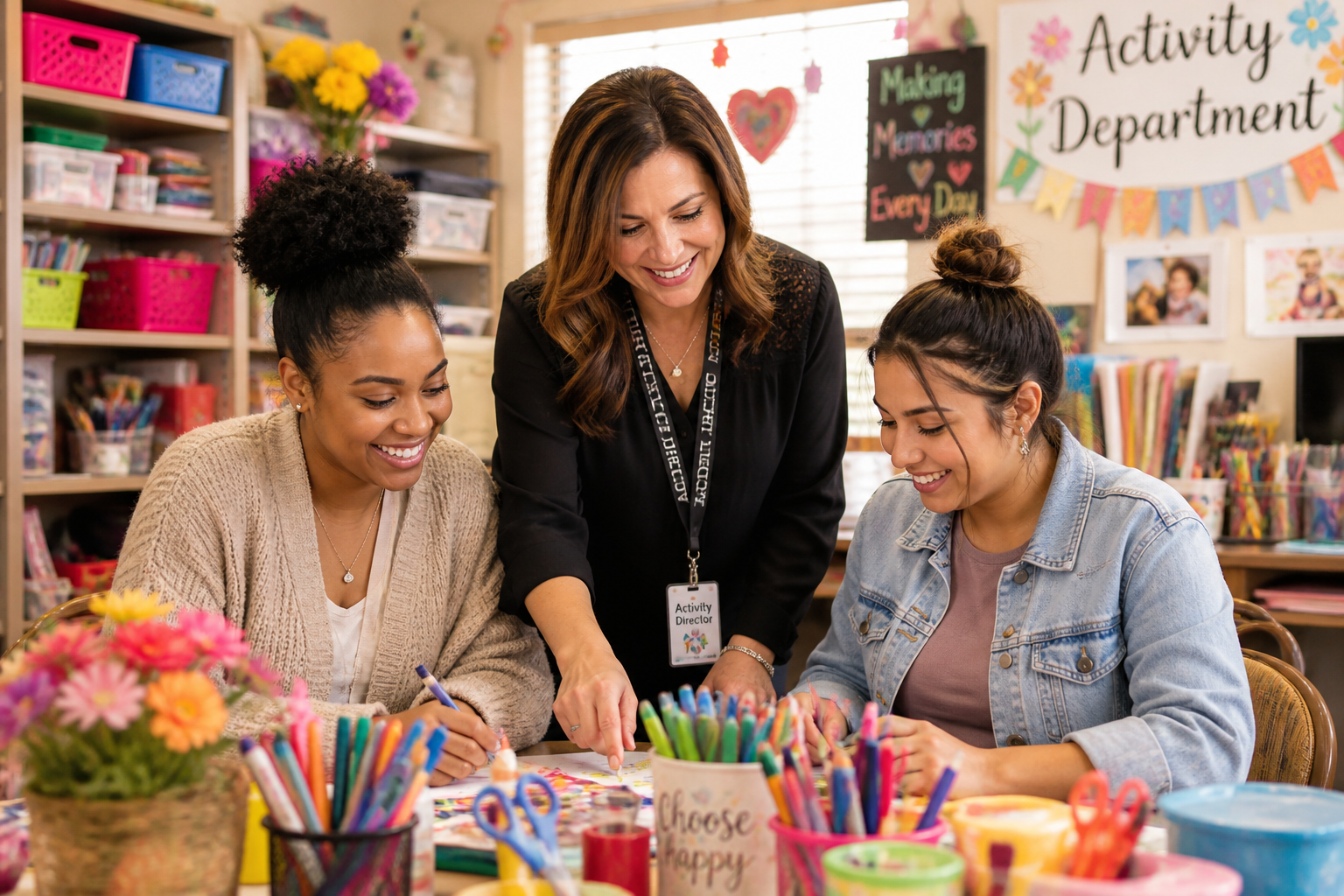
Many successful Activity Assistants come from caregiving, CNA work, hospitality, education, customer service, church or volunteer programs, and family caregiving. What matters most are qualities like empathy, patience, flexibility, encouragement, creativity, and emotional intelligence.
If you are coming from direct care, read Can a CNA Become an Activity Director? If you are exploring career paths after high school, read Graduated High School? No College? Here’s a Meaningful Career Path.
Professional Development
CAAP Training for Activity Assistants
CAAP Training was designed to support Activity Assistants with practical real-world engagement skills for senior living environments.
- Meaningful engagement skills
- Dementia awareness support
- Communication and professionalism
- Activity Department teamwork
Activity Assistant Training and Career Growth
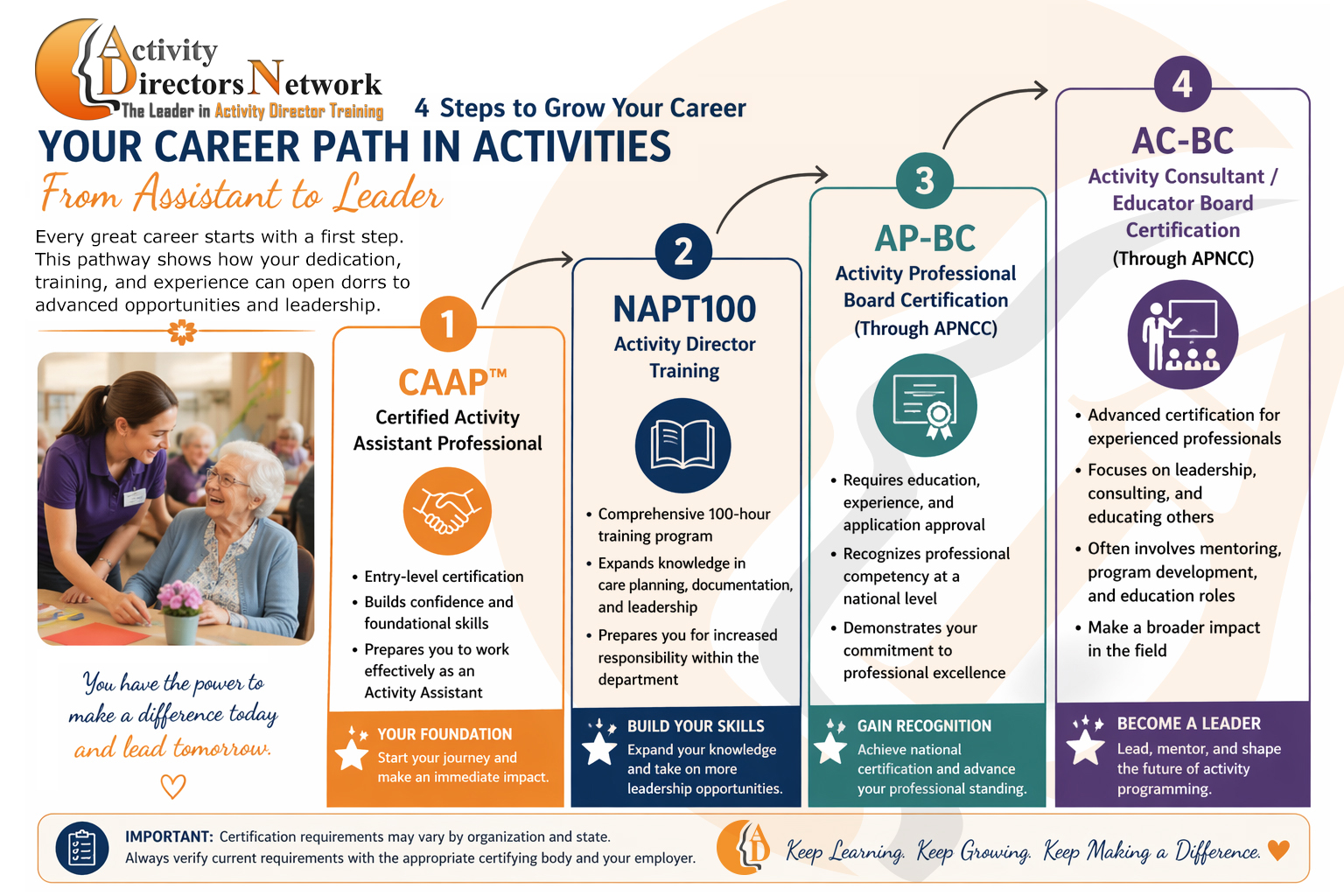
Some Activity Assistants eventually continue growing into roles such as Lead Activity Assistant, Memory Care Activities, Life Enrichment Professional, Activity Director, Dementia Programming Specialist, Consultant, or Educator.
A Role Centered Around Meaningful Engagement
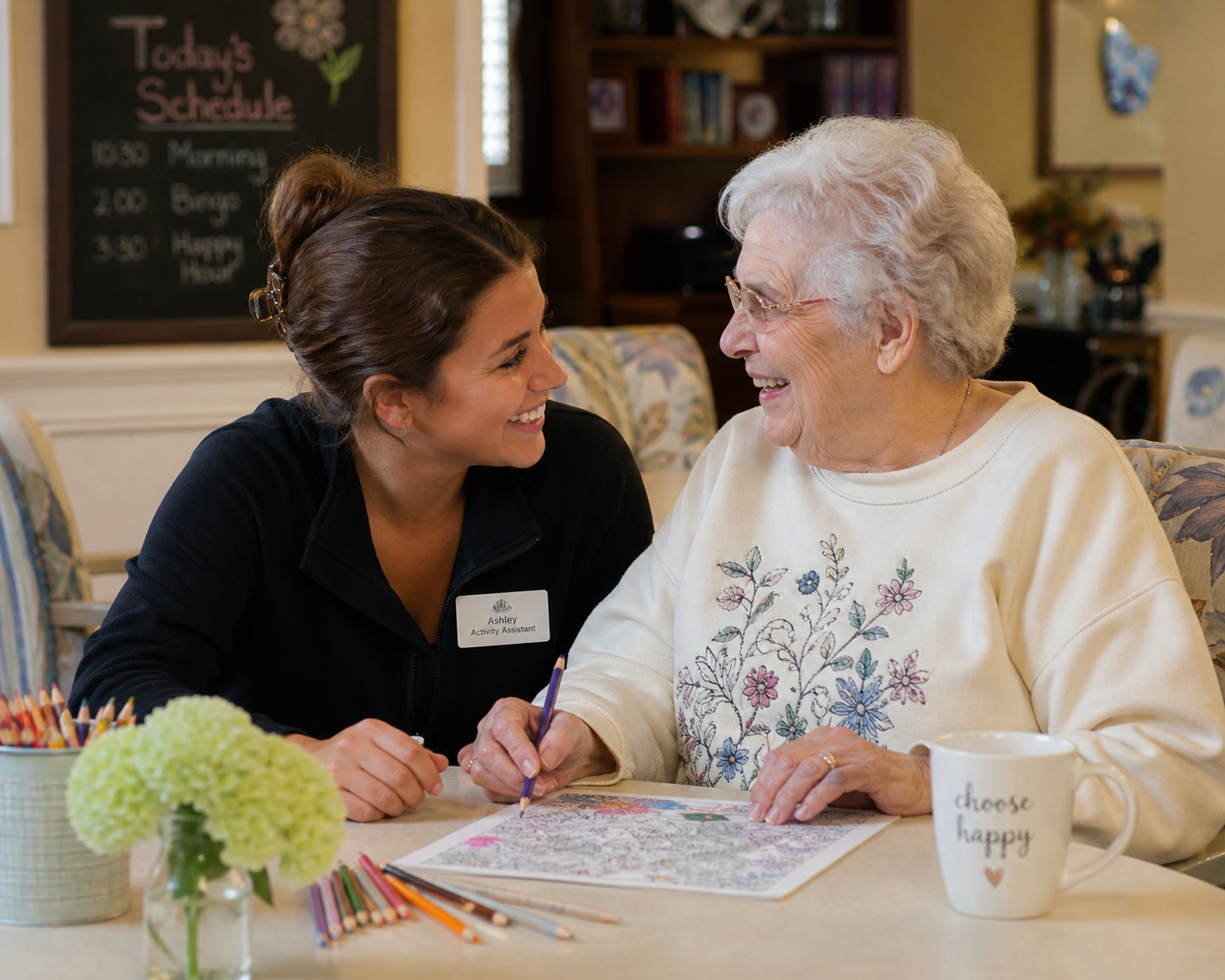
Meaningful engagement supports connection, comfort, purpose, self-esteem, emotional well-being, cognitive stimulation, reduced isolation, and better quality of life. Activity Assistants help bring these experiences to life every day.
For simple ways to strengthen engagement, read One Small Shift for More Meaningful Activities in Senior Living.
Memory Care and Dementia Support
Activity Assistants often support residents living with dementia. This does not mean every activity needs to be complicated. Familiar words, visual cues, music, sensory items, short prompts, and calm encouragement can all support meaningful connection.
- Familiar Words as a Gentle Bridge in Memory Care
- Visual Stimulation for Alzheimer’s Disease and Dementia
The Future of Activity Assistant Support
The Activity Assistant role continues evolving as senior living communities place greater focus on person-centered engagement, dementia support, quality of life, emotional well-being, and meaningful daily experiences.
As the profession grows, strong Activity Assistant support and education become increasingly important.
Activity Assistant Resource Hub
Helpful Resources for Activity Assistants
Explore related Activity Directors Network articles that support activity assistants, new team members, senior living career growth, dementia engagement, documentation awareness, and meaningful resident connection.

CAAP Training
Certified Activity Assistant Professional • $198
Activity Assistant Certification Training
Practical training designed to help Activity Assistants build confidence, support meaningful engagement, and strengthen the daily resident experience.
CAAP focuses on the real-world skills assistants use every day, including communication, professionalism, dementia awareness, teamwork, and resident-centered activity support.
A strong option for Activity Directors, administrators, and senior living communities who want to support onboarding, improve consistency, and help Activity Assistants feel more prepared in the department.
- Activity Assistant Training
- Certified Activity Assistant Professional
- Meaningful Engagement
- Dementia Awareness
- Department Teamwork
Supporting Activity Professionals Since 1996 • Practical training for stronger resident engagement