What Happens When Residents Stop
Experiencing the Outside World?
For decades, residents lived with sunlight, weather, seasons, fresh air, birds, gardens, porches, and the natural rhythm of everyday life. Meaningful engagement may sometimes begin by restoring pieces of what once felt normal.
Many residents spend most of their day inside the same building, under the same lights, surrounded by the same walls, following the same routines.
That may feel normal inside a care setting, but it is not how most people lived for 60, 70, 80, or 90 years before moving into senior living.
Residents lived with morning light coming through windows. They noticed the weather. They watched trees change. They sat on porches, walked to mailboxes, tended gardens, fed birds, opened windows, smelled rain, and felt the difference between seasons.
Then, sometimes almost overnight, daily life becomes mostly indoors.
Nature becomes something residents “visit” during a scheduled activity instead of something woven naturally into the flow of everyday life.
Residents do not retire from nature simply because they move into care.
Quick Answer: When residents stop experiencing the outside world, they may lose access to familiar rhythms, sensory comfort, seasonal awareness, memory cues, and everyday moments that once supported identity, routine, and emotional connection. Nature-based programming helps Activity Professionals restore pieces of normal life through simple, meaningful experiences.
Nature Is Not Just an Activity
One of the biggest mindset shifts Activity Professionals can make is this:
Nature is not just another box on the activity calendar.
Nature is part of the normal human experience.
For many residents, the outside world was never separate from daily life. It was part of how they marked time, noticed change, found comfort, and stayed connected to familiar routines.
A farmer may still notice the weather.
A gardener may still respond to flowers, soil, herbs, and seasons.
A parent may remember children playing outside after dinner.
A bird lover may still light up when hearing birdsong near a window.
A resident who rarely joins group programs may still respond deeply to fresh air, sunshine, or the smell of cut grass.
These moments matter because they are connected to continuity.
Why Continuity Matters in Senior Living
Continuity means helping residents remain connected to familiar parts of life, identity, routine, and personal history.
In senior living, this matters deeply.
Residents experience many changes at once. Their home may change. Their schedule may change. Their independence may change. Their physical abilities may change. Their social world may change.
When so much feels unfamiliar, small pieces of normal life can become powerful anchors.
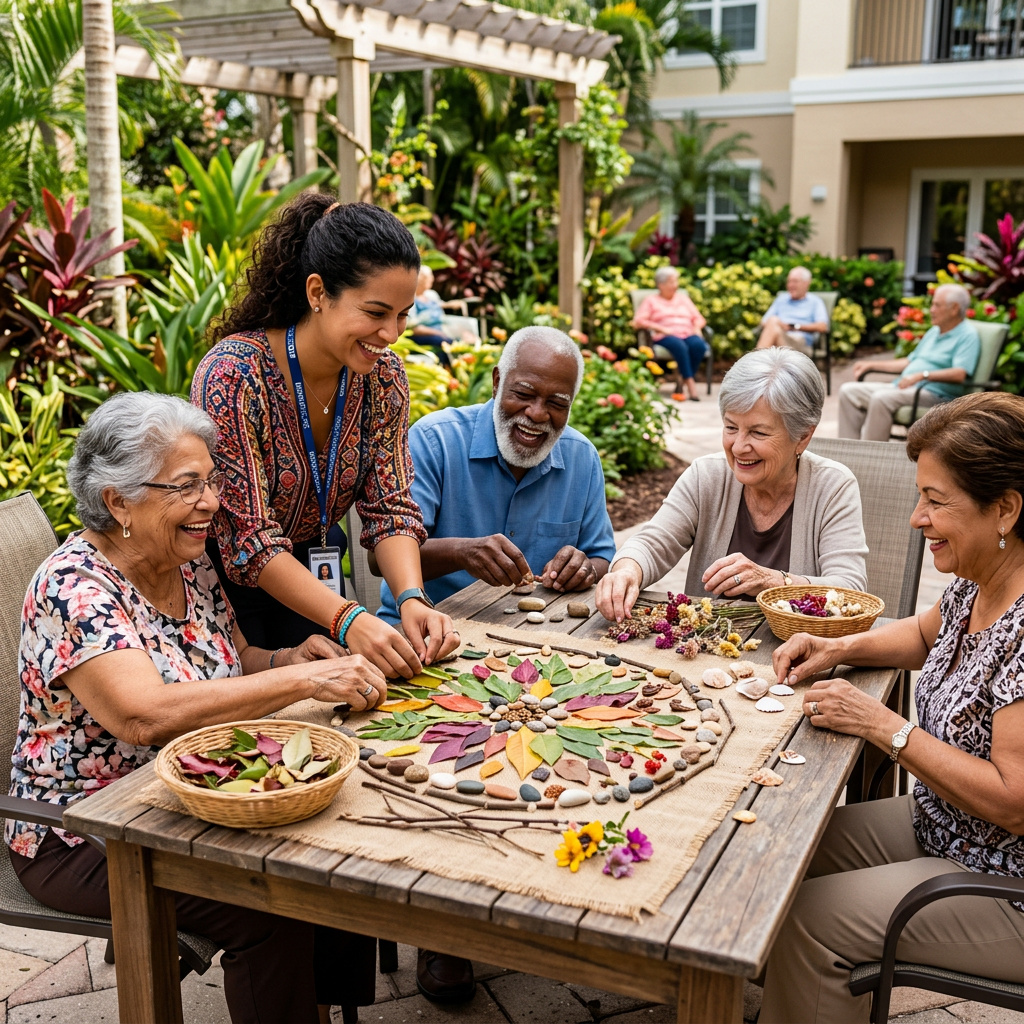
Natural light, seasonal decorations, fresh flowers, outdoor sounds, courtyard visits, bird feeders, window views, and sensory nature experiences can all help reconnect residents to the world they knew before care became part of daily life.
Related reading:
One Small Shift for More Meaningful Activities in Senior Living
When Every Day Starts Looking the Same
Many care environments are built for safety, efficiency, and routine.
Those things matter.
But when residents spend most of their time in spaces where lighting, temperature, scenery, sounds, and routines rarely change, daily life can begin to feel flat.
Activity Professionals may notice residents who:
- watch activities but do not fully participate
- say “maybe later” more often
- seem restless or withdrawn
- sleep through programs
- leave activities early
- respond more during casual one-on-one moments than structured groups
- light up when something familiar from the outside world is brought in
These signs do not always mean a resident has “lost interest.”
Sometimes the activity may simply not be connected strongly enough to the resident’s familiar world.
Nature Gives Residents Familiar Pathways Back to Engagement
Nature-based engagement works because it can reach residents through many different pathways at once.
It can be visual, sensory, emotional, spiritual, social, physical, cognitive, or memory-based.
A flower arranging activity may support creativity, reminiscence, sensory stimulation, and choice.
Listening to birds near a window may create calm, conversation, and orientation to the season.
Touching herbs may trigger memory, appetite, language, or storytelling.
Sitting outside with coffee may feel less like an “activity” and more like life.
That distinction matters.
Sometimes residents do not need more entertainment.
Sometimes they need more normal.

The Activity Directors Bible
A complete operational guide for Activity Professionals who want stronger systems, better documentation, and more confidence in daily practice.
Built to help you organize your department, support survey readiness, and stop reinventing everything from scratch.
Care Plan Support
Policies & Procedures
Nature Does Not Have to Mean Outside
One of the most important things Activity Professionals can remember is that nature-based programming does not always require a large outdoor space.
It does not require perfect weather.
It does not require every resident to walk outside.
It does not require a big garden, courtyard, or expensive supplies.
Nature can be brought into daily life in small, realistic ways.
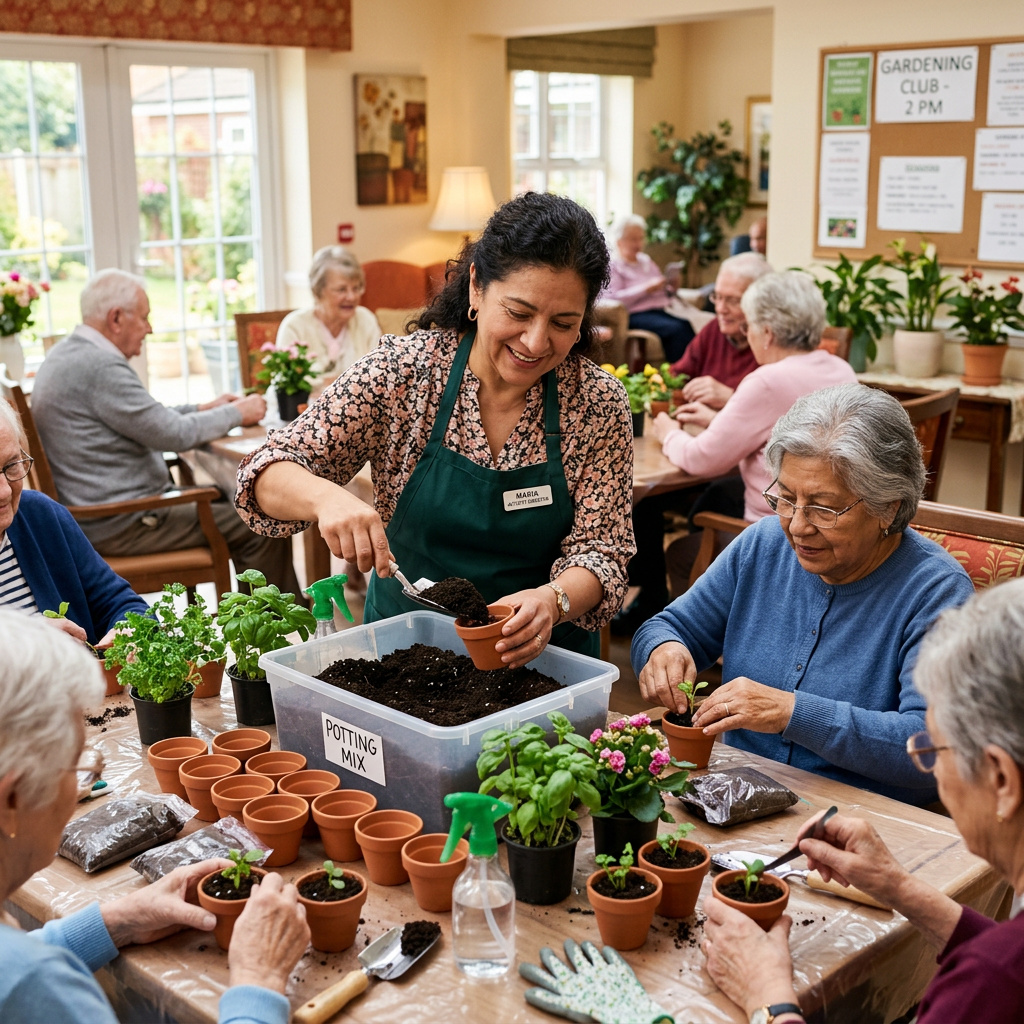
- fresh flowers on a table
- bird feeders outside common windows
- seasonal nature photos
- herb-scented sensory experiences
- window garden observation
- nature soundscapes
- leaf sorting or flower arranging
- courtyard coffee groups
- weather conversations
- seasonal memory prompts
For some residents, a five-minute moment near a sunny window may be more meaningful than a full structured group activity.
For others, a simple conversation about tomatoes, birds, rain, fishing, flowers, or changing seasons may open the door to memory, identity, and connection.
Related article:
What Activity Directors Actually Plan
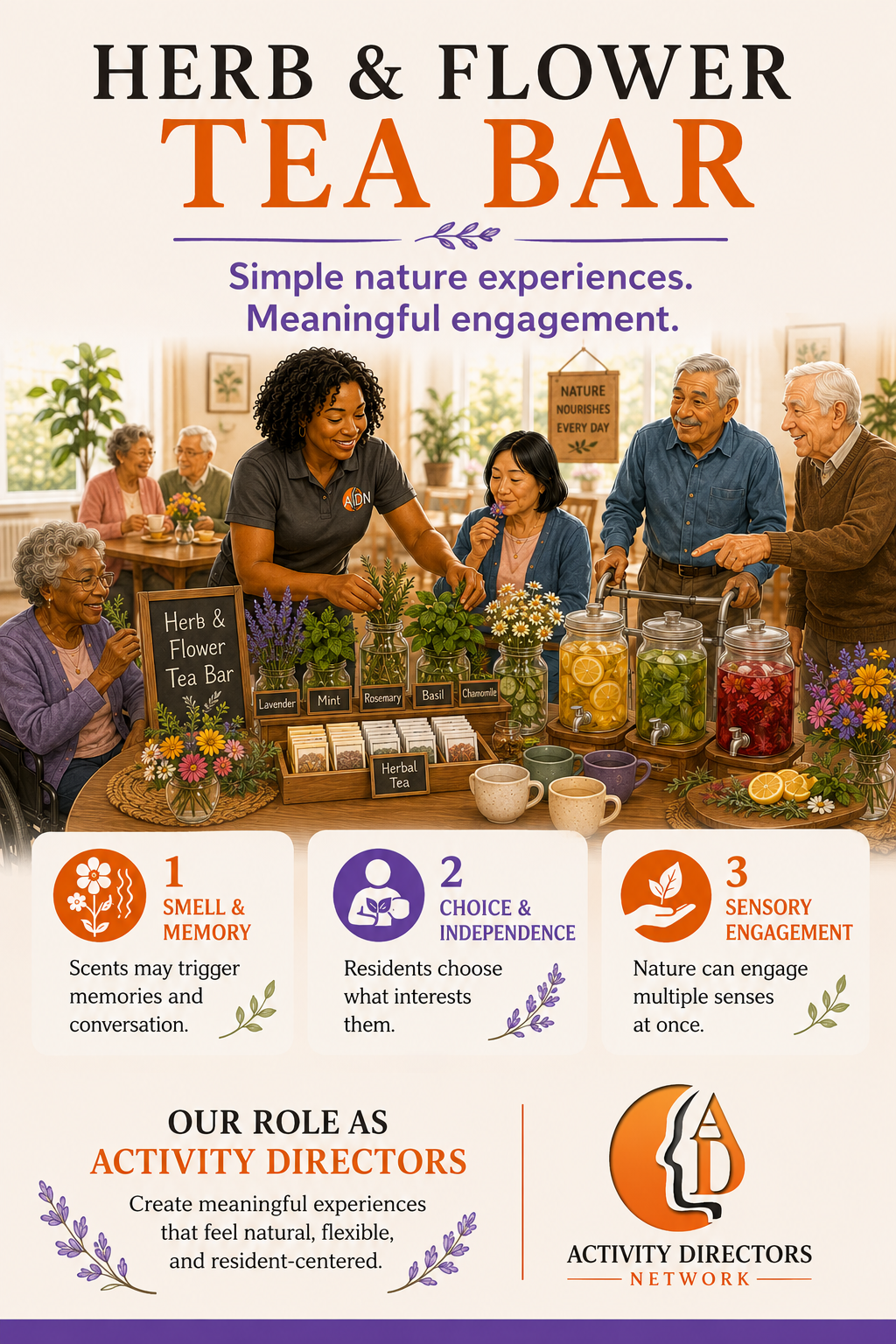
Save this idea for future activity planning, resident engagement discussions, and nature-based programming inspiration.
Small Nature Moments Can Create Strong Documentation
Nature-based engagement also gives Activity Professionals meaningful observations to document.
Instead of only recording attendance, professionals can document response, memory, mood, participation, choice, sensory engagement, social connection, and resident preference.
For example, instead of writing:
“Resident attended outdoor group.”
An Activity Professional might document:
Documentation Example: Resident sat outdoors near the garden area and began discussing memories of planting tomatoes with family members. Smiled frequently, remained engaged for approximately 20 minutes, and responded positively to the smell of fresh herbs.
That kind of note tells a much stronger story.
It shows preference.
It shows response.
It shows meaningful engagement.
It shows connection to life history.
And it helps the activity department demonstrate that programming is not just about filling time. It is about supporting quality of life.
Bringing the Outside World Back Into the Flow of Life
Outdoor engagement does not have to be complicated.
It begins with noticing what residents are missing when life becomes mostly indoor, routine-based, and disconnected from natural rhythms.
It asks better questions:
How can we help residents experience the season today?
How can we bring natural light, texture, scent, sound, or memory into this moment?
How can we make the outside world feel less distant?
How can we help residents remain connected to normal life?
That is where Activity Professionals can make an enormous difference.
They can turn nature from an occasional outing into a familiar thread running through daily programming, documentation, care planning, memory support, and resident-centered engagement.
Residents deserve more than activities.
They deserve connection to life.
You may also want to explore:


Frequently Asked Questions
Why is outdoor engagement important for residents?
Outdoor engagement helps residents remain connected to natural rhythms, familiar routines, sensory experiences, seasonal awareness, memory cues, and everyday parts of life that may support comfort and meaningful engagement.
Does nature-based programming have to happen outside?
No. Nature-based programming can include indoor experiences such as flowers, herbs, bird sounds, window gardens, seasonal objects, nature photography, sensory trays, and conversations about weather or seasons.
How can Activity Professionals use nature with residents who have limited mobility?
Activity Professionals can adapt nature-based experiences through window views, tabletop gardening, flower arranging, herb-scented activities, birdwatching from indoors, courtyard visits, sensory materials, and one-on-one engagement.
How does nature support meaningful activity documentation?
Nature-based activities often create observable responses such as reminiscence, sensory engagement, social interaction, mood changes, choice-making, comfort, participation, and personal connection, all of which can support stronger activity documentation.