Music, Memory &
Meaningful Engagement
How personalized music can support connection, comfort, reminiscence, and quality of life in senior living communities.

Music has a unique way of reaching people emotionally, socially, and cognitively — even during moments when communication becomes more difficult.
In senior living communities, personalized music is often used to encourage reminiscence, reduce anxiety, support emotional connection, and create meaningful moments of engagement.
For many older adults, hearing a familiar song can instantly bring back memories of:
- family gatherings
- school dances
- military service
- faith traditions
- weddings and celebrations
- favorite artists from their generation
Why Music Matters in Dementia Care
Research continues exploring the relationship between music, memory, and emotional processing in the brain.
While music is not a cure for dementia or Alzheimer’s disease, many professionals have observed that familiar songs may help support:
- emotional comfort
- reduced agitation
- social interaction
- participation in activities
- reminiscence and storytelling
- non-verbal connection
Music can sometimes help residents reconnect with emotions, memories, and routines that feel familiar and grounding.
This is especially important in person-centered care environments where emotional well-being and quality of life are central goals.
Related reading:
Visual Stimulation for Alzheimer’s Disease and Dementia
The Power of Personalized Music
One of the most important concepts in music-based programming is personalization.
Not every resident will connect with the same genres, artists, or eras of music.
The strongest responses often happen when music reflects:
- the resident’s teenage and young adult years
- faith background
- cultural identity
- family traditions
- favorite artists
- important life events
Music tied to meaningful personal memories may encourage:
- conversation
- singing
- movement
- eye contact
- emotional expression
- group participation
Related article:
One Small Shift for More Meaningful Activities in Senior Living
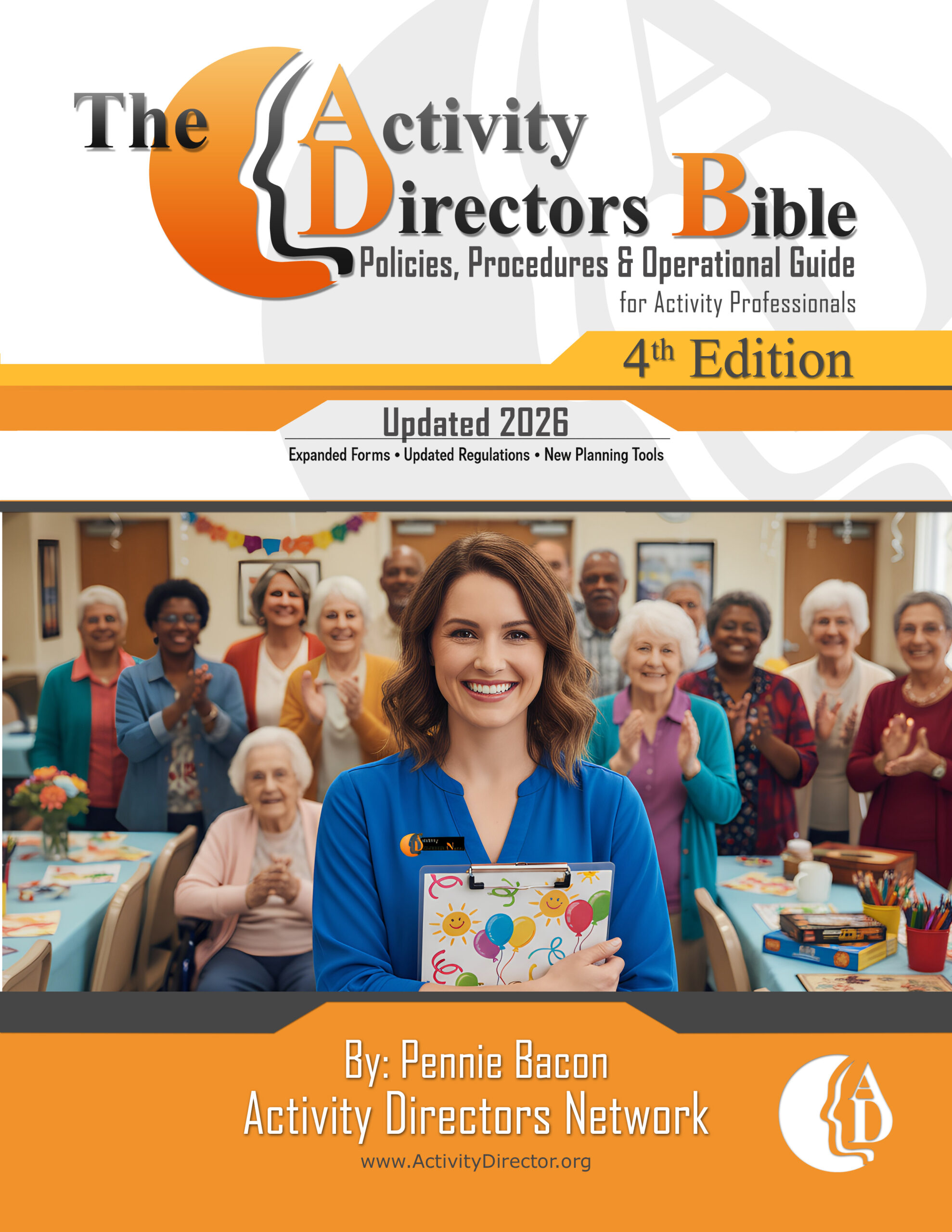
The Activity Directors Bible
A practical resource designed to help Activity Professionals build stronger programming, documentation systems, and resident-centered engagement.
Includes programming ideas, department tools, care-planning support, and activity development guidance for real-world senior living environments.
Popular Music Eras Older Adults May Connect With
Generational music preferences often influence participation and emotional response during music activities.
While every resident is unique, many older adults today may connect with:
- 1930s–1940s: Big Band, Jazz, Swing
- 1950s: Early Rock & Roll, Doo-Wop, Crooners
- 1960s: Folk, Motown, British Invasion, Classic Rock
- 1970s: Soft Rock, Country, Disco, Soul
- 1980s: Pop, New Wave, Classic Country, Arena Rock
Popular categories in senior living often include:
- gospel and worship music
- patriotic songs
- Christmas music
- Broadway and musical soundtracks
- sing-alongs
- classic love songs
- dance music
Music-Based Activity Ideas
Music programming can be incorporated into many types of engagement experiences.
Examples include:
- generation-themed music hours
- name-that-tune games
- karaoke and sing-alongs
- movement-to-music groups
- music and reminiscence discussions
- vinyl record displays
- resident playlist projects
- faith-based music programs
- family-submitted favorite song lists

Save this guide for future activity planning ideas and music-based engagement inspiration.
Supporting Emotional Well-Being Through Music
Music may help support:
- comfort during stressful moments
- emotional regulation
- social connection
- routine and familiarity
- self-expression
- reduced loneliness
For some residents, music can become one of the most accessible forms of engagement — especially when verbal communication becomes more difficult.
Even simple interventions like:
- a calming playlist
- a resident-preferred artist
- soft background music during care
- live acoustic performances
- small group sing-alongs
can sometimes create meaningful shifts in mood and participation.
Modern Language & Person-Centered Care
As dementia care continues evolving, healthcare language has also become more person-centered and dignity-focused.
Modern best practices encourage:
- using respectful language
- focusing on strengths and abilities
- supporting identity and autonomy
- avoiding stigmatizing labels
- recognizing emotional needs alongside physical care
Today’s Activity Professionals play an important role in helping residents feel:
- seen
- heard
- connected
- valued
- emotionally supported
Music is often one of the most powerful tools available for creating those moments.
Your Next Step
If you want to strengthen your dementia programming, reminiscence activities, and resident engagement strategies, music-based programming can become a meaningful part of your activity toolbox.
You may also want to explore:

Frequently Asked Questions
Why is music important in dementia care?
Music may help support emotional comfort, reminiscence, participation, and social connection for some individuals living with dementia.
What type of music do older adults enjoy most?
Many older adults connect most strongly with music from their teens and young adult years, along with faith-based music, patriotic songs, sing-alongs, jazz, big band, classic country, and classic rock.
Can music help reduce anxiety in senior living?
Calming and familiar music may help support relaxation, emotional comfort, and reduced stress for some residents.
What are good music activities for seniors?
Popular music activities include sing-alongs, name-that-tune games, karaoke, movement-to-music, resident playlists, reminiscence discussions, and generation-themed music programs.