Bringing the World Back to Residents
Through Immersive Activity Programming
Residents may not always be able to travel, revisit favorite places, or return to the familiar settings that shaped their lives. But Activity Professionals can still bring pieces of those places into the community in meaningful, creative, and realistic ways.

One of the quiet losses that can happen in senior living is the shrinking of a resident’s everyday world. A person who once drove to favorite stores, visited family, attended church, worked in a familiar town, traveled with a spouse, stopped at roadside diners, walked through garden centers, or spent summers at the lake may suddenly find that most of life now happens inside one building.
That change can affect more than entertainment. It can affect identity, routine, memory, choice, conversation, and a resident’s sense of connection to the wider world. Many residents are not simply missing “activities.” They are missing places, roles, habits, sounds, smells, foods, scenery, and small freedoms that once made life feel normal.
That is where immersive programming can become so valuable. At its best, immersive travel programming is not about decorating a room and pretending everyone went on vacation. It is about using meaningful places and sensory details to help residents reconnect with memory, culture, identity, curiosity, and choice.
Quick Answer: Immersive travel programming helps Activity Professionals bring meaningful destinations, cultures, familiar places, and sensory experiences into senior living communities. These programs can support reminiscence, social connection, dignity, choice, identity, and quality of life without requiring expensive trips or large activity budgets.
Immersive Programming Is Really About Place
Place matters in people’s lives. We remember where we grew up, where we worked, where we worshiped, where we shopped, where we vacationed, where we raised children, and where we gathered with people we loved. A place can hold memories of independence, family, work, romance, pride, grief, comfort, culture, and belonging.
For residents in care settings, those places may feel far away. Some may be physically impossible to visit. Others may no longer exist. A hometown may have changed. A spouse may be gone. A favorite vacation may now live only in photographs and stories. But even when residents cannot return to a place, parts of that place can still be used to create meaningful engagement.
An Italy-themed experience might connect to travel, food, music, family heritage, art, or old movies. A beach theme might bring back memories of vacations, seafood, boardwalks, sand, sunscreen, fishing, or family road trips. A pop-up thrift store might bring back the ordinary joy of browsing, choosing, comparing, remembering, and finding something unexpected. These are not just themes. They are doorways into real life.
The Best Destination Is Not Always a Famous One
When planning travel-style activities, it is easy to start with obvious destinations like Paris, Hawaii, Rome, London, or New York City. Those can be wonderful programs, especially when they connect to residents’ interests or past experiences. But the most meaningful destination for a resident is not always a famous landmark. Sometimes it is a small-town diner, a county fair, a church basement, a hardware store, a garden center, a local lake, a military base, a schoolhouse, a farm, or a favorite shopping spot.
This is why resident input matters so much. A strong immersive program begins by asking better questions. What places do residents talk about? Where did they travel? Where did they work? What stores, restaurants, churches, neighborhoods, or vacation spots shaped their lives? What places do they miss? What places did they always want to see?
Activity Professionals can gather this information through interviews, interest surveys, family conversations, life history forms, observation, and casual conversation. A resident who does not seem interested in a “travel program” may still become deeply engaged when the destination connects to something personal.
A Better Planning Question
Instead of asking, “What travel theme should we do this month?” ask, “What places have meaning for the residents we serve?”
Immersive Does Not Have to Mean Expensive
The word “immersive” can make a program sound complicated or costly, but it does not have to be. A meaningful immersive experience can be built with simple materials, thoughtful details, and a clear purpose. Music, photographs, printed signs, maps, postcards, food samples, familiar objects, resident-made props, volunteers, family input, and donated items can all help transform an ordinary activity space.
The goal is not to create a perfect movie set. The goal is to help residents feel that something familiar, interesting, or meaningful is happening around them. A room can feel different with a welcome sign, themed music playing as residents arrive, a small display table, a few sensory objects, a simple menu, or a slideshow of destination images. These details tell residents, “This experience was created with care.”
Immersive programming also works well because it can be scaled. A large group may enjoy music, food, trivia, storytelling, and visual displays. A smaller group may prefer hands-on objects and deeper conversation. A one-to-one visit may use a postcard, a photo book, a scent, a song, or a short conversation prompt. A memory care version may focus less on facts and more on familiar sensations, music, rhythm, food, and emotional response.
The 5-Part Place Check
A strong destination or place-based program usually connects to at least two or three of these areas:
Identity
Choice
Sensory Detail
Conversation
If a destination gives residents something to remember, notice, choose, taste, hear, touch, discuss, or help create, it has strong programming potential.
A Pop-Up Thrift Store Can Be Just as Meaningful as Paris
One of the most useful shifts in thinking is realizing that immersive travel programming does not always have to focus on vacation destinations. Sometimes the most engaging “destination” is a familiar everyday place residents have not experienced in a long time.
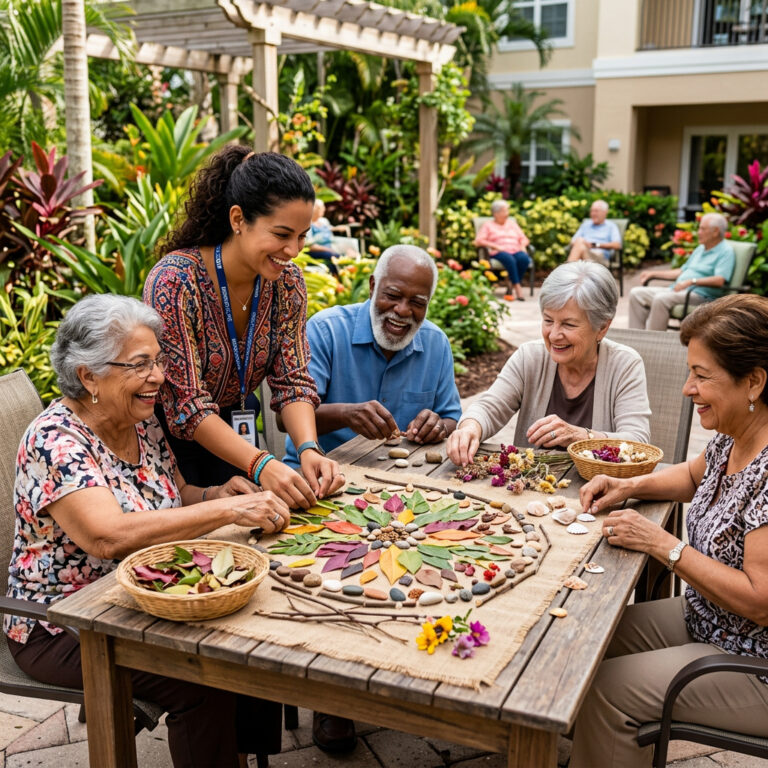
A pop-up thrift store, for example, can become a surprisingly rich activity experience. Residents can browse donated items, talk about favorite finds, sort jewelry or scarves, help arrange displays, compare prices, share shopping memories, choose items for a pretend storefront, or participate in a treasure-hunt style activity. For residents who loved bargain shopping, collecting, decorating, fashion, antiques, or simply getting out and looking around, that kind of program can feel deeply familiar.
The same idea can be applied to a garden center, café, general store, county fair booth, farmers market, travel agency, art gallery, schoolroom, diner, fishing dock, library, or old-fashioned movie theater. These settings give residents more than something to look at. They give residents something to do, discuss, decide, remember, and enjoy.
The Room Should Help Carry the Experience
Immersive programming becomes stronger when the environment supports the theme. This does not mean every wall needs to be covered or every table needs an elaborate centerpiece. It means the room should offer enough cues for residents to understand the experience as soon as they arrive.
A few simple environmental cues can make a major difference. Music can set the mood before the program begins. A themed sign can make the entrance feel intentional. A display table can give residents something to notice and discuss. A slideshow, faux window, map, or backdrop can help the activity room feel less ordinary. Food samples, safe scents, fabric textures, postcards, books, hats, menus, souvenirs, or familiar objects can give residents something tangible to connect with.
These details help residents enter the experience instead of simply attending another group activity. They also give staff more ways to adapt the program for residents with different interests, attention spans, communication abilities, and care needs.
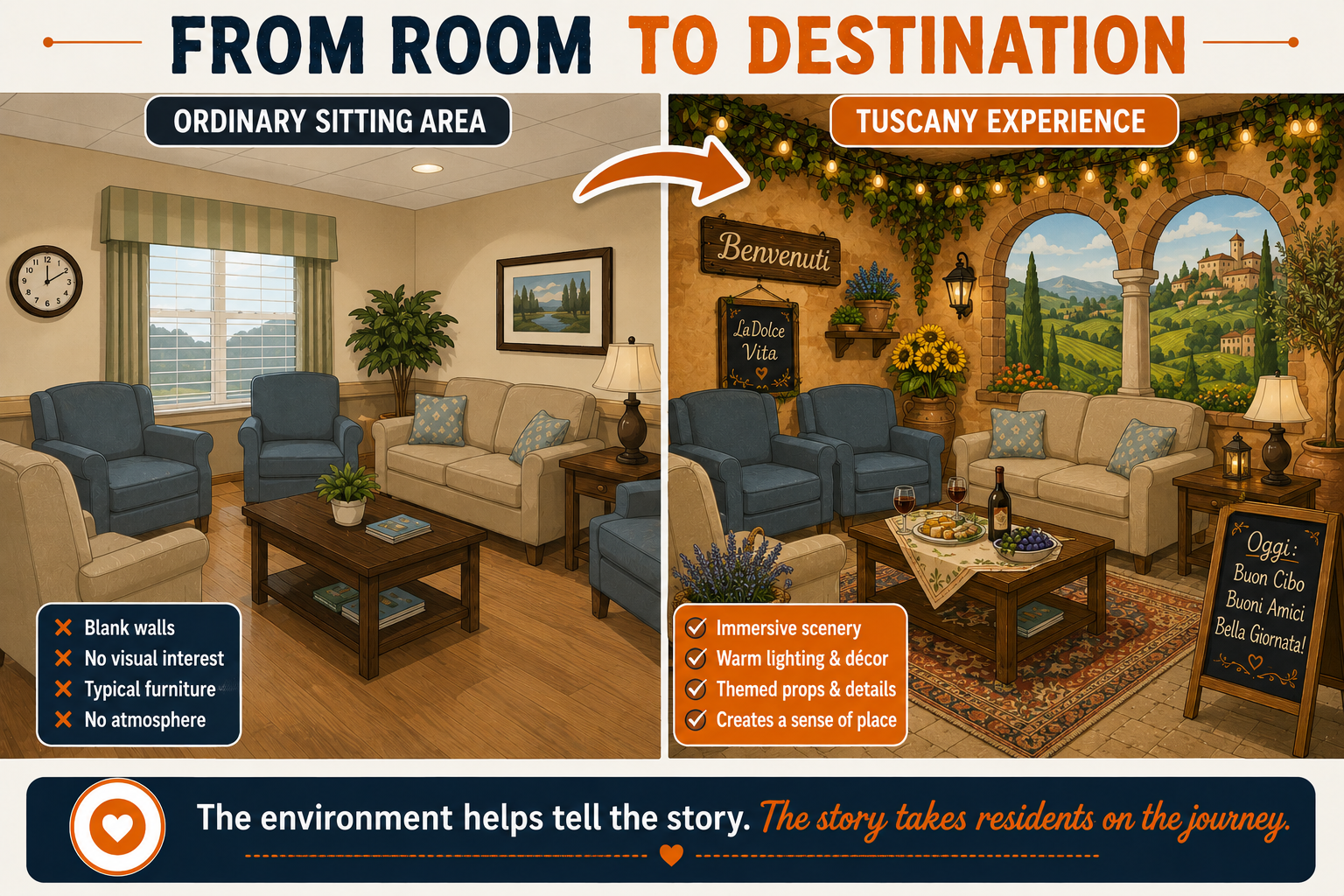
Save this idea for future activity planning, resident engagement discussions, and immersive programming inspiration.
Meaningful Experiences Create Better Documentation
Immersive programming can also help Activity Professionals document more than attendance. Because these programs often include memory, choice, conversation, sensory engagement, social interaction, and emotional response, they create stronger observations for progress notes and care planning.
Instead of writing only that a resident attended a travel activity, the note can describe what actually happened during the experience. Did the resident talk about a place from their past? Did they choose a favorite food sample? Did they sing along with familiar music? Did they handle props, ask questions, smile, laugh, reminisce, or interact with tablemates?
Documentation Example: Resident participated in an immersive Italy-themed program. Resident smiled while listening to familiar music, discussed memories of cooking pasta with family, selected a preferred food sample, and remained socially engaged with tablemates throughout the activity.
This kind of documentation tells a stronger story. It shows preference, response, social connection, memory, and meaningful engagement. It also helps demonstrate that the activity department is not simply filling time, but supporting quality of life through intentional, resident-centered programming.
The Real Goal Is Connection
Immersive travel programming can be fun, beautiful, and creative, but the real goal is connection. A well-planned experience can connect residents to places they have loved, cultures they value, memories they want to share, foods they recognize, music they enjoy, and conversations they may not have had in years.
Residents may not always be able to return to the places that shaped them, but Activity Professionals can bring meaningful pieces of those places into the present. That may happen through a themed destination event, a small-group sensory experience, a one-to-one memory visit, or a familiar everyday place recreated with care.
When done well, immersive programming helps residents feel less confined by the walls of the building. It gives them access to memory, imagination, culture, choice, and belonging. Most importantly, it reminds everyone involved that residents are still connected to a much larger world.
You may also want to explore:

Frequently Asked Questions
What is immersive travel programming in senior living?
Immersive travel programming is an activity approach that brings meaningful destinations, cultures, familiar places, and sensory experiences into the senior living setting through music, food, visuals, props, storytelling, resident participation, and environmental design.
Does immersive programming have to be expensive?
No. Immersive programming can be created with simple supplies, donated items, resident-made props, music, printed images, food samples, community partners, volunteers, and thoughtful room setup. The goal is meaningful engagement, not expensive decoration.
What kinds of destinations work best for residents?
The best destinations are the ones connected to resident identity, memory, culture, work history, family life, dreams, hobbies, or familiar routines. These may include famous travel destinations, hometown places, old neighborhoods, beaches, farms, churches, diners, thrift stores, gardens, fairs, or favorite local landmarks.
How does immersive travel programming support documentation?
Immersive experiences often create observable resident responses such as reminiscence, mood changes, sensory engagement, choice-making, social interaction, storytelling, cultural connection, and participation. These observations can support stronger activity documentation and care planning connections.