
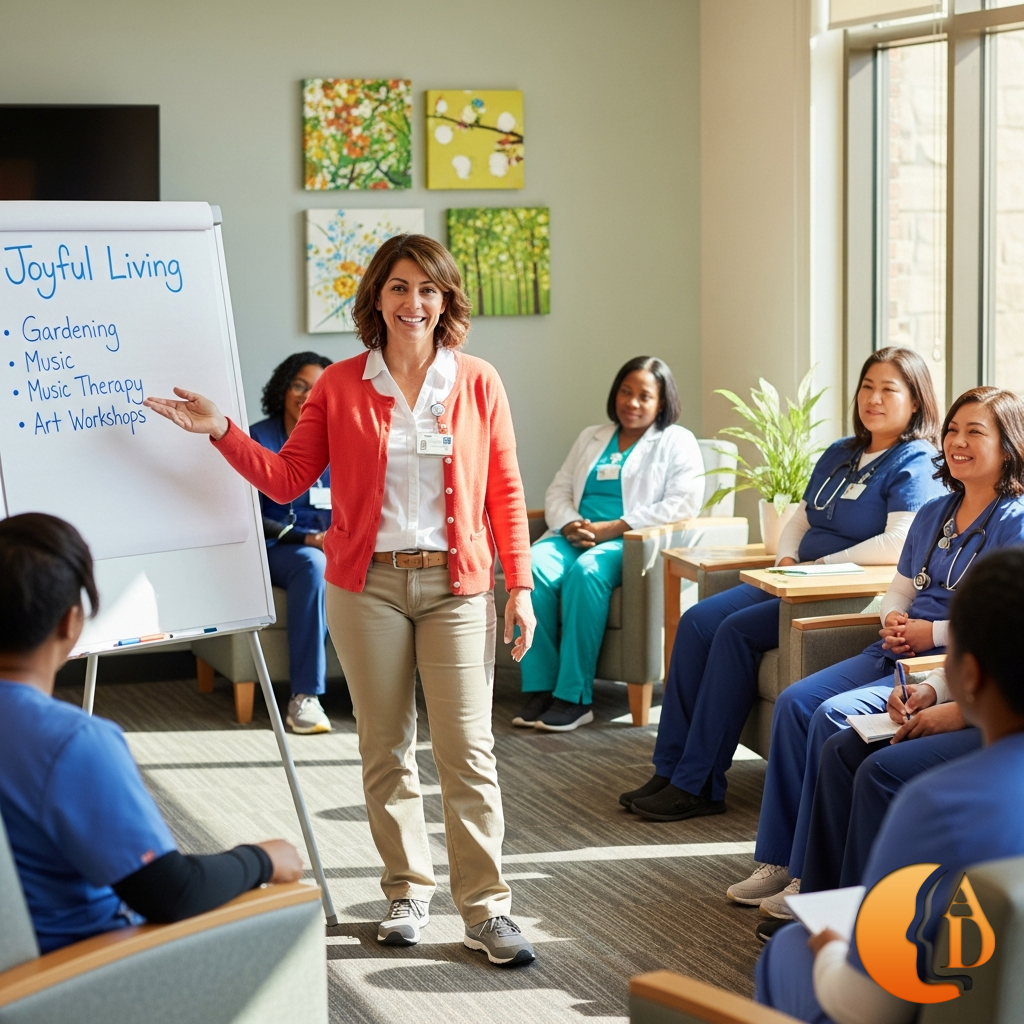
Creating In-Services
By Celeste Chase, AC-BC, ACC, CDP • Education & Staff Training
The Interpretive Guidelines provide excellent inspiration and “good bones” for in-service topics.
- Facilities must develop, implement, and maintain an effective training program based on the Facility Assessment.
- Training must be completed for new staff, existing staff, contracted individuals, and volunteers (consistent with their roles).
- Training content should reflect services provided and resident acuity identified in the Facility Assessment.
Required training topics include, but are not limited to:
- Communication
- Resident’s Rights
- QAPI — Quality Assurance & Performance Improvement
- Infection Control
- Compliance and Ethics
- Behavioral Health
Key Focus Areas
F941 Communication Training
Facilities must provide mandatory communication training for direct care staff, emphasizing information sharing across shifts, reporting changes in condition, and continuity of individualized care.
F942 Resident’s Rights Training
All staff — not only direct care — must be educated on resident rights and understand the facility’s responsibilities in
protecting dignity, choice, and autonomy.
The OBRA 87’ Interpretive Guidelines clearly define expectations for staff education and provide a reliable framework for developing compliant, meaningful in-services. Compare these topics with orientation and annual re-education plans to ensure alignment. Strong in-services support team synergy and mutual respect — helping staff feel engaged, valued, and invested in quality of life.
In-Service Foundation Plan

Each step below builds upon the next, creating an in-service program that strengthens understanding and respect for the role of Activity Professionals.
- Training Order — Present sessions from most urgent to foundational, or build progressively.
- Learning Styles — Blend reading, visuals, and hands-on strategies.
- Pre-Distribution — Share materials in advance to build interest and save time.
- Scheduling — Be predictable and respectful of staff coverage and availability.
- Breaks — Short pauses improve focus and retention.
- Refreshments — Simple food and beverages increase participation.