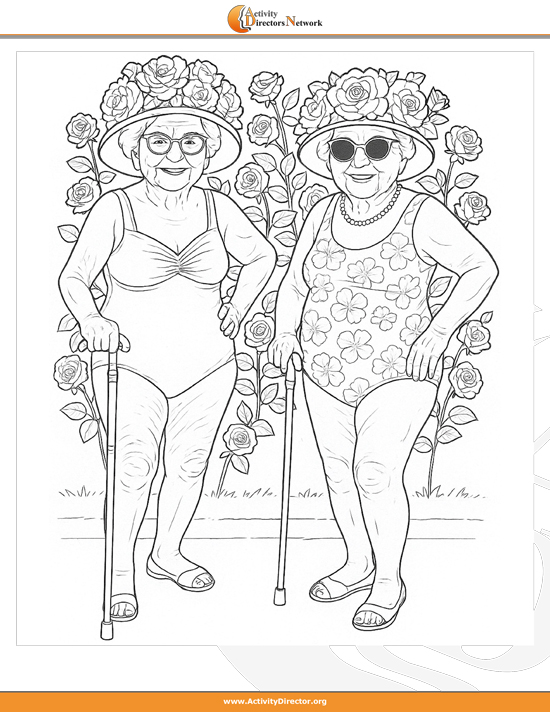
Coloring has become a staple activity in senior living — and for good reason. When done well, it supports focus,
fine motor skills, creativity, and calm engagement. But there’s an important distinction that doesn’t get talked about
enough:
Not all coloring pages are appropriate for older adults.
Too often, seniors are offered coloring pages clearly designed for children — cartoon characters, juvenile themes,
overcrowded patterns, or imagery that feels disconnected from their lived experience.
While well-intended, this kind of content can unintentionally feel infantilizing rather than engaging.

Coloring Should Reflect an Adult Life — Not a Childhood One
Today’s older adults raised families, worked careers, lived through cultural change, practiced faith traditions,
and created homes filled with meaning. Activities offered to them should reflect that depth of life experience.
Adult-oriented coloring pages acknowledge this by using:
- Familiar, realistic environments
- Scenes that reflect daily life, community, and home
- Simplified artwork without childish themes
- Imagery that invites memory and conversation
The difference is subtle — but residents feel it.
The Emotional Impact of Appropriate Design
Design matters. When residents recognize themselves in the activities being offered, engagement changes.
Adult-appropriate coloring can:
- Increase willingness to participate
- Reduce frustration or refusal
- Encourage longer attention spans
- Spark conversation and storytelling
- Create a sense of respect and inclusion
This is especially important in memory care, where familiarity and dignity are foundational to meaningful engagement.
Holiday Programming Brings This to the Surface
Holidays often highlight the issue even more. Christmas coloring pages, in particular, are frequently overly juvenile
or visually overwhelming.
Yet for many seniors, Christmas is tied to powerful memories — decorating a home, attending worship, baking with family,
listening to music, or simply sitting with loved ones.
When holiday coloring imagery reflects those experiences, something shifts. Coloring becomes less about “keeping busy”
and more about shared memory and emotional connection.

What to Look for in Senior Coloring Resources
When choosing or creating coloring activities for older adults, consider asking:
- Does this imagery reflect an adult life stage?
- Would I enjoy this as an adult?
- Is the level of detail accessible without being childish?
- Does it invite conversation or memory?
Resources that answer “yes” to these questions tend to see higher engagement and more meaningful outcomes.
A Thoughtful Approach to December Coloring
With that philosophy in mind, we recently added a Christmas Coloring Collection for Senior Living to our resource
library — created intentionally with adult-oriented design, large-print visuals, and familiar holiday scenes.
The goal wasn’t to create “another coloring pack,” but rather a set of pages that feel respectful, calming, and
appropriate for real adults living in senior communities.
Calendar Club members already have access inside the library, and the collection is also available as a standalone
download for communities looking for adult-appropriate Christmas coloring resources.
View the Christmas Coloring Collection →
Preserving Dignity Through Everyday Activities
The smallest choices — paper, imagery, tone — strongly shape how residents experience daily life. Choosing
adult-oriented activities is one simple but powerful way to preserve dignity, foster connection, and honor the lives
our residents have lived.
Coloring, when done thoughtfully, becomes more than an activity. It becomes a quiet act of respect.